

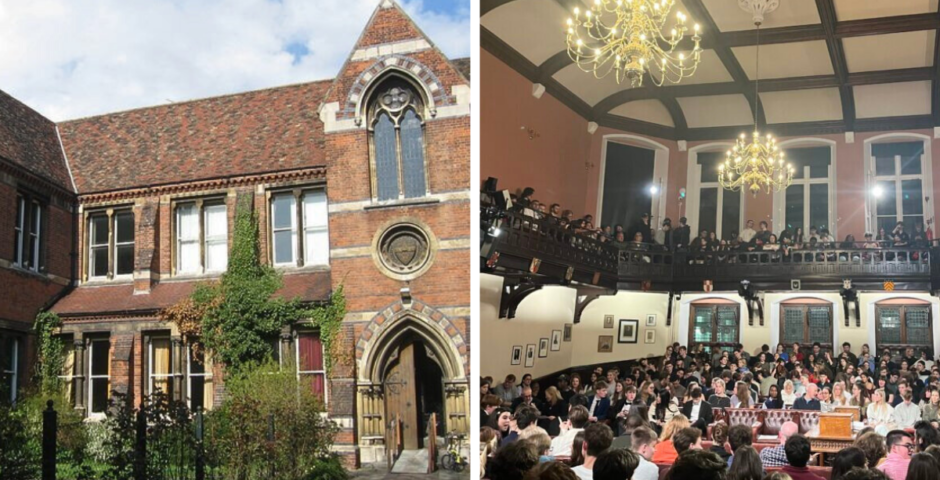
Exclusive: Former Cambridge Union committee member clashes with leadership over complaints
Pollyanna Greene-Wright resigned from her union position last week

Last week, the union’s Debates and Executive Officer Pollyanna Greene-Wright resigned over what she called “consistent, protracted institutional bullying.”
Speaking to The Cambridge Tab, Pollyanna reflected on her experience, saying: “It was incredibly difficult to find happiness [at the union]. I’ve had people say that they feel numb, that they feel depressed, that they feel like there’s no point anymore.”
Pollyanna claimed much of her unhappiness stemmed from the actions of vice-president, who she alleged used her power over internal investigations to target individuals. Pollyanna described the vice-president as “the judge, jury, and executioner.”
The vice-president has denied all the allegations Pollyanna made against her, saying they present a “deeply misleading account of events.”
In a recording obtained by The Cambridge Tab, the vice-president paused a democratic election for the next vice-president on the grounds of “anonymous” and “informal complaints.” She then suggested sanctions, including “recusal” from the right to vote, for those the complaints were about.
When asked by another union member “Is this your stance, or is it the Constitution’s stance?”, the vice-president replied: “This is my stance on this.”
Although the vice-president acknowledged written records of complaints can impact members’ “future prospects” and “careers”, she suggested keeping records that “can be shared with people afterwards” if members of Standing did not act under her advice on the basis of informal and anonymous complaints.
Under the union’s complaints procedure, all formal and actionable complainants must be named.

via Wikimedia Commons
During the recording, the vice-president said she called “everybody who was still members of Standing to see […] if they had heard anything” about the informal complaints. One member of the committee felt this action was “shaping narratives” and “starting rumours.”
The vice-president denied she “acted outside the union’s constitution or misused [her] role in any way.”
Pollyanna claimed her confrontation of the vice-president over anti-constitutional behaviour contributed to her being targeted by senior figures and blocked from running in the presidential election.
In messages seen by The Cambridge Tab, Pollyanna reached to the vice-president in the days leading up to the judgement to “discuss the evidence further and provide more evidence defending myself.”
Despite initially indicating she would meet Pollyanna, vice-president allegedly delayed the meeting, which never ended up happening.
Pollyanna said: “The next time I met with [the vice-president] it was at the judgement meeting, and I was given no prior indication that this meeting would be the judgement delivery, so felt blindsided.”
However, in messages shared by the vice-president to The Cambridge Tab, she reached out to Pollyanna offering her the opportunity to share her “perspective directly” with her.
Pollyanna complained the vice-president’s presence in meetings as both a welfare representative and leader of an investigation into her was a conflict of interest.

According to the vice-president, Pollyanna specifically requested she act as her welfare representative.
Pollyanna launched a formal appeal against the decision, but said she failed to do so within the allocated 24 hour time window because she felt “totally incapacitated with the impact on [her] mental health.”
In correspondence seen by The Cambridge Tab, Pollyanna requested copies of the evidence against her. She said she received a file “with spelling errors,” omitting the evidence she had provided that she believed would prove her innocence.

In a statement to The Cambridge Tab, Pollyanna said: “I did not resign because I felt pressured following the investigation against me. I resigned because I felt the investigation was one more instance of behaviour which illustrated a long-standing toxic environment on committee. I felt institutionally bullied and I did not want to continue to be on standing, as I considered this to be a legitimisation of further totally unacceptable and unconstitutional behaviour towards me.
“In the lead up to my resignation, I had multiple officers come to me and say they were terrified of the atmosphere on committee, but wouldn’t come forward due to fear of retribution and smears. They felt the union had totally failed them, as I have been failed throughout my entire time on standing.
“The only reason I remained as long as I did was to complete my duty to membership by serving out my final debate. I am proud of my actions and will never apologise for doing what I thought was right, especially in the face of intimidation meant to silence me. I sincerely hope the union will learn from this and make the changes needed to return to the welcoming and positive atmosphere I know it can be. I remain deeply respectful of the institution and wish the best for all future committees.”
The vice-president’s full statement to The Cambridge Tab reads: “The claims outlined above contain a number of factual inaccuracies and materially misleading characterisations of both my role and the constitutional procedures of the Cambridge Union. Officers must be able to discharge their constitutional responsibilities in good faith without being subjected to personal attacks or public mischaracterisation simply for carrying out the constitutional duties entrusted to them.
“As vice-president of the society, I am bound by the union’s constitution and governing rules, which require neutral officers to respond when concerns or complaints are brought to their attention. In such circumstances, an officer’s responsibility is not to adjudicate personally but to ensure that the matter is handled through the appropriate constitutional processes. Any suggestion that I exercised unilateral authority over investigations or disciplinary outcomes is therefore incorrect. The union operates through defined independent procedural bodies and committees, and no individual officer has the authority to act as a single decision-maker in disciplinary or investigatory matters.
“In the appointment matter referenced, several individuals raised procedural and welfare concerns regarding Pollyanna Greene-Wright’s conduct. Consistent with my responsibilities under the society’s laws, the vice-president asked to meet with Pollyanna in order to understand the circumstances and to ensure that any concerns raised were addressed through the appropriate constitutional procedures. The individuals who raised these concerns requested anonymity due to safeguarding risks, which is a legitimate and common feature of internal reporting processes where individuals may otherwise feel unable to come forward.
“Statements suggesting that I acted on the basis of a personal ‘stance’ rather than the constitution are also inaccurate. Officers of the society are required to act in accordance with the rules and obligations agreed to by members and volunteers, including those set out in the Volunteer Agreement. Any actions taken in the course of this matter reflected those constitutional responsibilities rather than personal discretion. The process was conducted confidentially to protect Pollyanna’s welfare and the safeguarding of all individuals involved.
“The approach taken was intended to address concerns at an early stage through discussion and internal resolution rather than escalating matters to higher disciplinary bodies, which have more serious consequences on students’ careers and long-term plans.
“Matters relating to electoral compliance fall within the separate jurisdiction of the returning officers, who operate independently under the constitution and electoral laws. Decisions relating to electoral eligibility are therefore made through those independent processes and not by individual officers.
“Pollyanna specifically requested that no decision be made until the vice-president was present, so that the vice-president could ‘better advise’ and see the ‘human impact of the situation’. On Monday 23rd February at 8.50am, she ‘spoke to the vice-president about the impact of the electoral matter,’ and the vice-president assured her that the matter ‘would be holistically considered and that the returning officers did not take one singular account to be true.’
Pollyanna was supported throughout the conversation in the presence of senior independent union personnel who were not a part of the investigation. The vice-president did not speak during the investigation interviews because Pollyanna requested that she [the vice-president] act as her welfare representative.
“For reasons of confidentiality and fairness to all parties involved, it would be inappropriate to comment in detail on internal processes or communications. However, I reject the implication that I acted outside the union’s constitution or misused my role in any way. At all times, my actions were guided by the society’s governing rules (laws seven, eight, nine, 10) and by the responsibility placed upon officers to ensure that complaints, safeguarding concerns, and electoral processes are handled constitutionally.”
A Cambridge Union spokesperson said: “Decisions of electoral practice are made by independent officers and overseen by our independent review committee. We are entirely satisfied that the constitution has been applied correctly. It is a long standing precedent that the union doesn’t make procedural documents public. Candidates choose to do so of their own volition. Our standing committee supports the work of all our returning officers.”
Featured image via Wikimedia Commons
Latest

How to spot a nightmare flatmate at UofG

Recognise the red flags early and save yourselves from hell

The Glasgow Uni Freshers starter pack

Essentials only… and some extras obviously cause we all need a treat
Sarah Paulson shares why playing Aileen Wuornos in Monster left her genuinely scared

She’s played witches and monsters, but the Lizzie Borden show was daunting
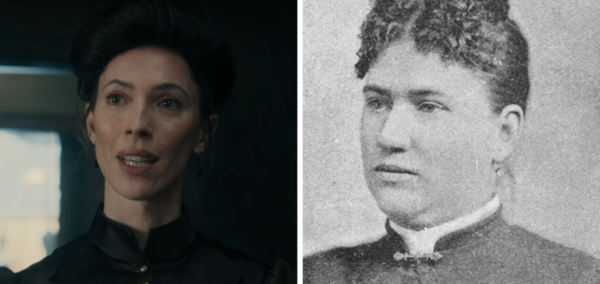
Justice for Mrs Borden! Every egregious lie Netflix’s Monster told about Lizzie’s stepmum Abby
Netflix turned victim into villain

Where the vibey Great British Bake Off 2026 cast went to university, and what they studied

Two contestants were uni students during the show
Newcastle University faces criticism over appointing oil billionaire as sustainability professor

‘Universities are supposed to be places that question power and hold corporations to account’
Director on why difficult scene in The Lizzie Borden Story made Netflix crew cry

‘It was really humbling’
Shannon left the Bake Off tent due to ‘something that really frightened her medically’
‘It was unexpected and scary’
The Cornell case is horrific, but sexual violence on campus is not just an American issue

The allegations are a reminder that university sexual violence is everywhere

Where the iconic Lizzie McGuire cast are now 25 years on, from Adam Lamberg to Hallie Todd

Hilary Duff just did five tour dates in the UK
New Cornell fraternity group chat messages have surfaced as the criminal case is reopened
The messages are from a Snapchat group
‘In an amazing place’: Inside wholesome life Ariana Grande is now enjoying away from the public
When she will be back has also been shared
Lizzie Borden’s neighbour who was first at murder scene spoke in court about what she saw
She was there before the doctor
Monster skipped the real Lizzie Borden’s attempt to buy poison the day before the murders
It became trial evidence
TikTok loves Jean Philanthrope, but ‘French Lord Farquaad’s’ backstory is disappointing
Need his hair care routine
Manchester farm shop introduces filming restrictions after Molly-Mae made it influencer hotspot

The Hollies Farm Shop is restricting visitors during certain hours
Real accounts of what Lizzie Borden’s maid Bridget Sullivan was like as a person
She kept herself to herself
Police release pic of 30 uni students crammed into hot basement covered in food as two arrested
Some had ‘visible injuries’