
Jmail is expanding: Here’s how to read Jeffrey Epstein’s emails and texts like it’s your own inbox
It’s like stepping into Jeffrey Epstein’s shoes

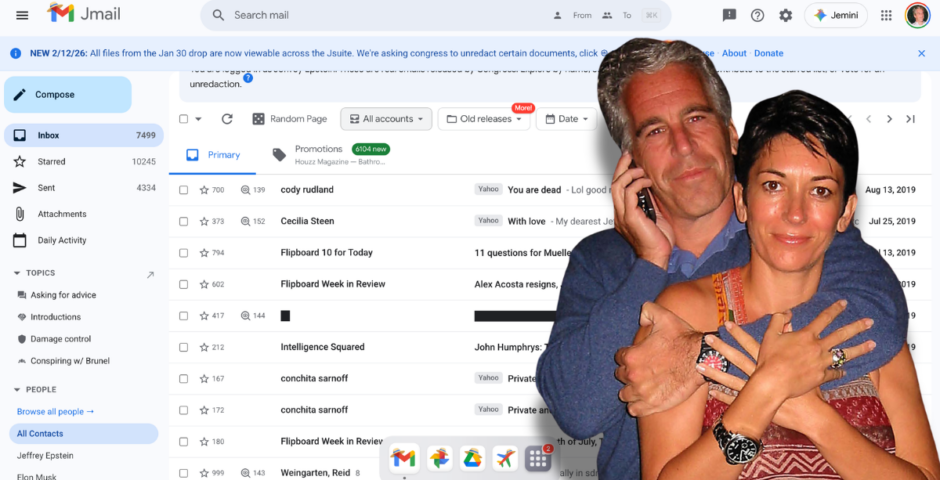
Browsing Jeffrey Epstein’s files on the Department of Justice’s website is clunky and confusing, which is why software developers created the Gmail clone, Jmail.
Under the Epstein Files Transparency Act, the DOJ was forced to release over three million files pertaining to the late and disgraced financier, Jeffrey Epstein. That includes thousands of videos, pictures, texts, and email exchanges, and people have been steadily combing through the mountains of information since January.
Though you can view the files through the DOJ website here, Jmail is undoubtedly easier to use.
What is Jmail, and is it actually real?

Credit: Jmail
Launching in November 2025, with the first drop of Epstein’s files, Jmail was created as a clone of the traditional Gmail. Aesthetically, it’s virtually identical, with the usual features like starred, contacts, spam, and sent. It was created by software engineer and internet arist, Riley Walz, and Luke Igel, co-founder of Kino AI.
Though not affiliated with the DOJ or any official channel, Jmail is comprised only of Jeffrey Epstein’s files.
By the end of 2025, the site had amassed views of 18.4 million. It’s now closer to 500 million.
Jmail has since expanded
Since launching, Jmail has expanded into a number of different areas, including JPhotos, JFlights, Jamazon, JDrive, Jacebook, JVR, Jemini, Jotify, and JWiki. All of the features were created by other web developers and then implemented on the Jmail site.
We built Jikipedia, a new wiki that compiles Jmail data into exhaustive reports on key figures in the Epstein scandal.
It lists all recorded visits to Epstein's estates, each person's possible knowledge of Epstein's crimes and laws that they may have violated.
Here is… pic.twitter.com/QOSWsQKMKd
— Jmail (@jmailarchive) February 14, 2026



Though most are self-explanatory, here’s what each feature contains:
- JPhotos is a collection of photographic evidence released under the Epstein Files Transparency Act (EFTA)
- JFlights is Epstein’s flight tracking data
- Jamazon contains his Amazon purchase history
- JDrive contains multimedia evidence, photos, and other documents
- Jacebook is just like Facebook, but with Epstein’s content
- JVR is a virtual reality feature that places you inside photos and videos
- Jemini is a dedicated AI chatbot that answers Epstein-related questions,
- Jotify is for audio evidence
- JWiki is a directory of all the notable figures in the Epstein files
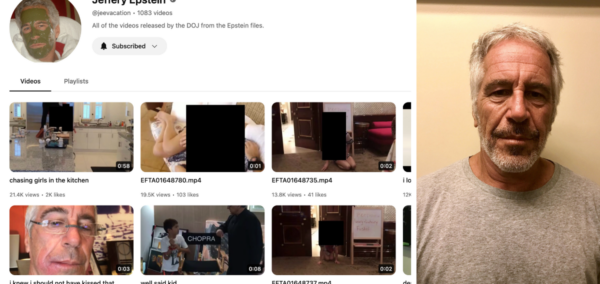
- JeffTube is the video evidence
People really like Jmail, and its features
Like is not the right word in this scenario, but people are appreciative of Jmail for cutting through the noise of the file release. It’s easily digestible and browseable, allowing everyone (regardless of access) to learn about arguably the biggest scandal of recent history.
One person wrote on Twitter: “No hyperbole, the JMail team are doing some of the most important work in the world right now.”
“These guys are doing PHENOMENAL work,” someone else wrote, as a third added, “This is fascinating and easy to navigate.”
Jmail and Jeffrey Epstein’s files can be accessed through this link.
For more like this, like The Tab on Facebook.
Featured image credit: Jmail and SDNY/ZUMA Press Wire/Shutterstock


Latest
UCL wrongfully gave over £5,000 in travel expenses to President and his wife

Michael Spence, UCL’s President and Provost, had previously come under scrutiny for expenses claimed in his old job as vice-chancellor of the University of Sydney

The oddly bland men from the Love Is Blind US season 11 cast, ranked by red flags

I can’t move beyond Blake’s mullet

Love Is Blind viewers are obsessed with Rob’s mum, so here’s a closer look at their bond
Rob called her ‘stronger than anyone’ he knows

Never heard of Falloween? A 2026 costume guide for all uninspired Manchester students

For the last-minute panic buyers who don’t want to join the clan of Ali G’s every year in Manchester
Don’t fall back on fast fashion this Halloween

For all those Bristol students desperate for an excuse to get back into the charity shop x
From the humanities students: Ten tips for your first term at Durham

Everything humanities students need to survive and thrive

UYRUFC achieve a ground breaking Ladies Day

The club successfully raised over £5,000 for Pink Ribbon Foundation, breaking UYRUFC club records

Altra Yorkshire Marathon sees record number turnout

Thousands of runners gathered on 18 October to set off from University of York campus for the marathon

The Celebrity Traitors has ‘off days’, but rules dictate what the cast can do off-camera
Joe Lycett painted Rob Beckett
How to have the spookiest Halloween in Cardiff without breaking the bank

If your bank balance isn’t keeping you up all night, these Halloween plans might

Selena Gomez to Doja Cat: The celebrities who’ve opened up about their vaping habits

Many are trying to quit

Revs or MASH? Cambridge students have finally spoken

Here’s how students actually feel about Cindies’ MASH takeover

How to spend 24 hours in Manchester like you’re in a Gilmore Girls episode

From crunchy leaf walks to here’s your very own guide to romanticise this season

Cambridge on a plate: Unique independent food spots around the city
I visited a range of proudly independent Cambridge food spots to give you my verdict

James Acaster reveals Celebrity Traitors contestants hear The Hanging Tree over and over again

It’s left people ‘traumatised’

This is exactly how you would win The Traitors, based on your Leeds degree

Now reveal yourself: Aare you a Traitor or Faithful?

The best Halloween costumes you can make with clothes you already have

Let’s beat the last-minute panic together
Human remains removed from Glasgow museums due to controversial ‘consent’ issues

Both the Kelvingrove Art Gallery and the Hunterian Museum have removed parts of their Egyptian display due to lacking ‘consent’ from the deceased

Here’s which type of player each Lancaster college would be on The Traitors

At Lancaster, anyone could be a traitor
The Love Is Blind UK S3 couple who didn’t get married on the show just split via text message
Sammy says she was about to move in with Jonathan