

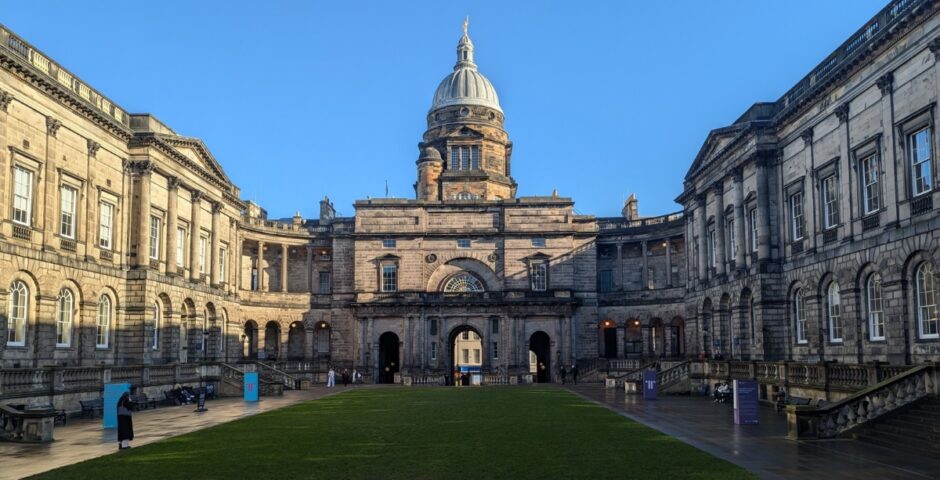
The University of Edinburgh confirms there is no funding deficit
Latest university accounts show a surplus of £43 million despite previous concerns over a £140 million funding black hole

Edinburgh University’s latest financial accounts have been released for the period 2024 to July 31st 2025, and the university has confirmed there is no funding deficit.
The accounts show the university’s total income for this period being a staggering £1,477 million. This is up from £1,424 million in the 2023/4 period.
This puts the university into a surplus of £43 million pounds. Tuition fees contributed the largest rise growing by £29 million.
The university set higher surplus targets in the summer of 2024, which increased the perception that it is not meeting its financial targets.
Additionally, the latest accounts show areas in which the university is improving and falling behind what its greatest expenses are.
The annual report shows a commitment to improve student satisfaction rating as part of the National Student Survey (NNS). Their most recent rating is 74.3 per cent, an increase of 3.9 per cent compared to the 2023/24 period.
In the accounts the university placed staff costs as their largest expenditure and noted a capital expenditure increase of 11 per cent.
The University and College Union President, Sophia Woodman, regarding the annual report told The Edinburgh Tab: “A preliminary analysis of the University of Edinburgh’s latest Annual Report by the Joint Unions confirms what we have been saying all along.
“The university’s finances are healthy, income from tuition fees is growing and management’s insistence that the budget for salaries needs to be reduced by about 10 per cent is unnecessary and unfair.
“Such a level of staff cuts will have an enormously damaging impact on education and research at the university, as well as degrading working conditions.
“When the University of Edinburgh continues to make significant surplus and attract more students that ever before.
“While management has been keen to blame staff costs and external headwinds, the perceived financial stress is due to mismanagement over a number of years.



“Without over-spending on buildings and equipment, the university’s surplus would be even higher than last year’s already large figure.”
Sophia explained the need for clarity and communication to staff at the university: “Staff and students at the university deserve better. Given the concern raised by many MSPs about the situation, it is essential that Edinburgh management clarifies their decisions to continue increasing depreciation costs to the university and what plans exist to reign this in.
“We deserve far greater clarity on the capital spending over the past ten years and options for minimising the harm to the university’s charitable mission.”
Scottish Greens MSP Lorna Slater also told The Edinburgh Tab: “The level of cuts the university is suggesting it needs to make to meet their monthly running costs, including staff losing their jobs are staggering.
“It is simply unacceptable that staff at the university are being failed and made to feel such stress and anxiety when there are risks of redundancies, while expenses are so high for the senior leadership team.
“Not only are they damaging our climate and on track to max out their carbon budget way before schedule, they are denting morale with this kind of excess.”
This is in response to university falling behind for its interim 2030 and 2035 climate change targets as it has already used 64 per cent of its carbon budget allocated from 2018/19 to 2024/5.
A spokesperson from the University of Edinburgh said: “Like many universities across the country, Edinburgh is facing serious financial pressures.
“It is widely accepted that, across the sector, geopolitical uncertainty, rising costs and unsustainable funding for Scottish and other UK students have created significant challenges.
“Our university is not in deficit, but costs are rising faster than income, and without the difficult decisions already taken, our position would be far more fragile.
“It remains our position that, wherever possible, we will seek to avoid compulsory redundancies.
“Every decision we take, including on capital investment, is focused on protecting high-quality education, our students’ experience and world-leading research, while safeguarding the university for generations to come.”
Latest


Plans for a mural to replace graffiti-tagged wall in Monkgate

Plans have been submitted to replace a graffitied wall in Monkgate with a commissioned mural

Lizzie Borden actress reveals why show portrayed her as a lesbian, despite no real evidence

Monster made it a main storyline

The Cardiff Tab is recruiting and we want you! Here’s why you should join the team

Join us for our open meeting at Misfits on October 6th at 6 pm

What actually happened to Lizzie Borden’s birth mother? Her untimely real life death explained

The Netflix show completely skipped over it

You’re not going to ‘find yourself’ at Glasgow University

You’re going to find out which version of yourself gets invited to the pub
UofG students and staff protest GTA cuts outside university library

Staff and postgraduate researchers continue to protest over ongoing financial precarity due to budget cuts as the university expands external defence partnerships
Cultural vandalism’: Uni of Edinburgh to close Scottish and Celtic programmes for 2027

‘It is also reflective of a wider institutional effort to undermine the arts and humanities. We must all stand together to resist this destructive pursuit’



Um, Mandi Vakili has issued the most painfully awkward apology after her breastfeeding rant

She’s suddenly ‘really sorry’


Monster creator reveals how they pick the show’s subjects and the stories they want to tell next
One they’ve thought about is so random

Love Island’s Priya is now throwing major shade at Aidan after the split and it’s brutal
The niceness didn’t last for long

Your day by day guide to Freshers’ Week 2026 at the University of Sheffield

Starting uni and unsure what to do? Here’s a daily guide of what’s on that you could get involved in

Calling all writers and content creators: The Newcastle Tab wants you!

Come along to our open meeting on Thursday 1st October at 6:30pm at Luther’s x

Channing Tatum’s alleged burner account has responded, so here’s why it might not be him
The evidence is piling up

Crying on stage to fearing for safety: Ed Sheeran’s ‘pity party’ weekend in its woeful entirety

‘I see 50,000 people who haven’t abandoned me’
Eight UK universities already plan to strike over job cuts in the 2026/2027 academic year

Staff at two Russell Group universities will strike this autumn

How Monster used some seriously grim tricks to film *that* Lizzie Borden vomiting scene
It also actually happened in real life

As Ed Sheeran cried on stage, his own cousin dropped brutal bombshell about his ‘malicious’ ways
‘I don’t like his music so I can’t say he’s even a good artist’