

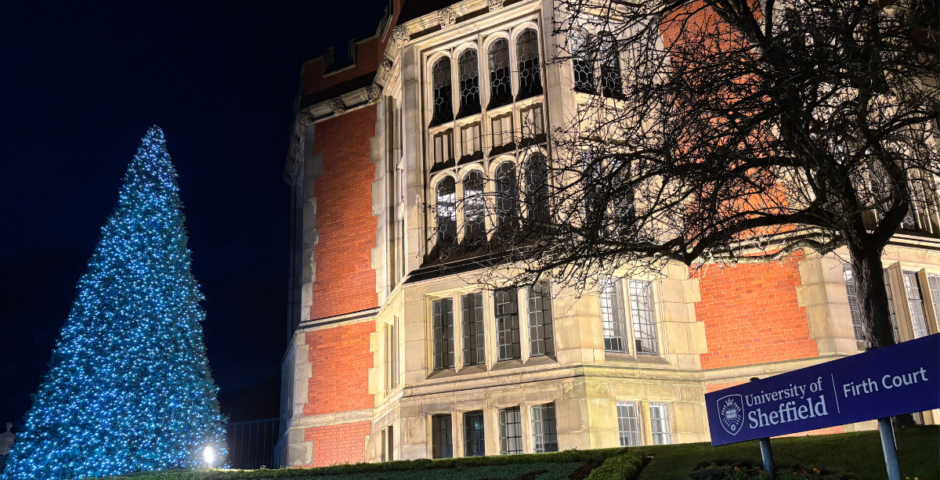
Union expects further University of Sheffield strike action in spring 2026
Mediators could be brought in for further negotiations

Sheffield University and College Union (UCU) expects there will be further University of Sheffield strike action in 2026 if a settlement has not been reached.
Sheffield UCU President Dr David Hayes said a motion passed by union members last month supported at least two weeks of industrial action in the upcoming spring semester.
A decision could be made by mid-January on whether this would take place closer to the start of the year or spread across a longer period. Under trade union law, they are required to give two weeks notice of action to the university.
It comes as some staff returned to the picket line for the fourth and final week of currently scheduled strike action over planned staff cuts and high workloads.
Dr Hayes told The Sheffield Tab the union “obviously” doesn’t want further strike action, but hopes they have “held our nerve enough” this semester to show they are “prepared to follow through on that threat” if a settlement isn’t reached.
The university and UCU met six times before strike action began on 17th November.
Offers made during this period included measures to extend the commitment for no compulsory redundancies – set to expire this month – to April or October 2026. These were rejected by the union.

A later offer made by the UCU would have seen this extended to just March in exchange for ending the strikes, but an agreement was not reached.
Dr Hayes claimed each offer had been “less beneficial, less desirable” and had been “rejected very strongly” by members.
He also cited the university-wide restructures as something the union is hoping to see paused. One university offer included a pause until April.
“We’ve been quite clear with management that our members are concerned about the pace and rate of restructures at the university,” he said. “They want a pause, a slowing down.”
“Just saying ‘We’ll make you redundant, but we’ll give you a sort of a stay of execution until May or September or October’, isn’t good enough anymore. Especially as a lot of the people facing job cuts will be academics who can’t very easily move to another department and who don’t have a lot of other jobs out there in the university sector at the moment.”
For negotiations moving forwards, a proposal to bring in the Acas conciliation service for mediated discussions is something the university has made “positive noises” about.
Hayes added: “Mediated negotiations aren’t a silver bullet. They don’t guarantee that we’re going to get an outcome, but they can be a good way of resetting everything, taking some of the emotion out of the room, and helping us get to the heart of where the disagreements are and how we can cross the chasms that sit between our positions.”
Striking staff have also been informed by the university that pay between 5th and 16th January 2026 could be withheld unless it is clear arrangements for lost learning have been made before any assessments or the start of next semester.
Office for Students guidance advises universities to reschedule teaching lost from strikes, and striking staff have already forfeited pay for days they have been on the picket line, as is standard.
Hayes said proposals to make up teaching during the exam period were “just chaos and it’s not going to work”.



“Talking to students who have seen some of the proposals for these timetables that they’re absolutely flabbergasted by the idea of making up 30 hours of teaching within the three weeks of the exam period, or in the period before that when they’re trying to revise, they’re trying to write their assessments.
“It’s just too little or too late.”
He added that the union also understands the “natural” frustration felt by some students over disrupted teaching.
“Striking is always something that we do as a last resort,” he said. “It’s always something that we only do when our back is up against the wall, when we have no other way. We’re trying to defend our jobs and we’re trying to defend our workload here, which means ultimately, we’re trying to defend the quality of education that students deserve from this university.
“I’d also say it takes two to tango: if you’re annoyed at us, you also need to be annoyed at university management.”
He further encouraged students to claim compensation for lost learning – something which has been advocated for by Sheffield Anti-Cuts Coalition.
The student-led group have produced a guide on this in accordance with advice from the Office of the Independent Adjudicator (OIA).
Joseph McHale, a first-year student who has joined picket lines as a member of the coalition, said he is “disappointed” in the university and is worried that course cuts may reduce the variety of teaching available.
“At the end of the day, if they keep cutting like they are doing, the student experience that the university prides themselves on is going to be impacted.”
Joseph went on to praise striking staff for “fighting for our education, and fighting for the future of our courses”.

The union believes it is still about staff “holding our nerve” in the face of further negotiations.
“If we fold on this now, that’s going to embolden them to just keep doing what they’re doing and continue what they’re doing on an even bigger scale,” Dr Hayes said. “Again, we’re fighting for our colleagues’ jobs here. We’re fighting for our colleagues’ livelihoods.
“Despite how long this fight has gone on, I still think we can win it. I still think we can get concessions from management that will protect people’s jobs, protect people’s workload, and help them to provide a better quality of education to our students in the long run.”
A spokesperson for the University of Sheffield said: “We had sincerely hoped to be able to avoid industrial action and over the past couple of months have been meeting regularly with UCU to try to find a way through their dispute.
“While we were unable to reach an agreement, we still remain committed to making no compulsory redundancies before 31 December 2025. We offered to extend that commitment to October 2026, which UCU rejected.
“To date, no compulsory redundancies have been made and we are focused on achieving the savings we need through voluntary means. We are working hard to avoid compulsory redundancies wherever possible in the future.
“We will continue to protect the high-quality education Sheffield is known for as we position the university to thrive in a competitive and dynamic higher education landscape.”

Latest

A guide to treating the Sunday scaries in Selly Oak

Battling a Circo hangover with the impending doom of a 9am lecture? Welcome to an average Sunday in Selly Oak

More than two tonnes of plastic pellets may remain in the Tyne, researchers warn

A collision in July released around 17 tonnes of nurdles

Jax speaks out after toe-curling Love Is Blind reveal, and shares why she *really* ghosted Stew

She claims it had nothing to do with his appearance

A full record of how The Celebrity Traitors S2 cast voted at each Round Table session

Yup, we’re keeping track of all the stats

The Celebrity Traitors comedians whose fortunes are no laughing matter, from £1m to £6.5m

The fact Miranda isn’t the highest is criminal

Celebrity Traitors’ King Kenny was arrested after filming a prank on his university campus

He has a wild backstory from his YouTube career
Is this the downfall of Turnitin? Here’s what you need to know

Turnitin’s system is changing and students’ data could be used to train tools which use Artificial Intelligence

Fewer apps, more life: My experience at the launch of the social SuperApp ZYMIX

Inside the launch of the SuperApp that wants to clear out your home screen

The question we’re all thinking about: What exactly is happening with the library?

Everything you need to know about the JB Morrell Library refurbishment

Plans submitted to council for new research facility at York University

University of York’s Campus West could see a new research building after plans submitted to York Council
Wait, why was Barack Obama in Manchester city centre?

The former US President was spotted outside a hotel before speaking at Co-op Live

The Celebrity Traitors producers are already eyeing up big names for season three’s cast
Stephen Lambert wants Tom Cruise and ‘a big sports star’

Hannah Fry has crunched the numbers, and spotted a suspicious Celebrity Traitors voting pattern
It could be bad news for the Traitors

Former Lancaster University professor John Whitehead dies aged 76

John was a lecturer of mathematics and statistics

How to avoid the struggles that come with a part-time job at a Bristol university

After all, we do live in on of the most expensive cities in the UK.

All the public scandals The Celebrity Traitors cast have been in, from arrests to racist tweets
They’re not as wholesome as people think

Newcastle and Northumbria universities join forces for new Student Health Hub

Students of both unis can access the mental health service on Friday mornings

The net worths of the American Horror Story 13 cast prove who desperately needed that pay cheque
A $50 million net worth with two minutes of screentime? Nice

Three UK universities announced language course closures in 2026 – including Edinburgh
The University of Edinburgh is scrapping 90 programmes

‘She is phenomenal’: Traitor Hannah Fry has realised that she’s related to her co-star
‘I cannot tell you how much I admire her’