

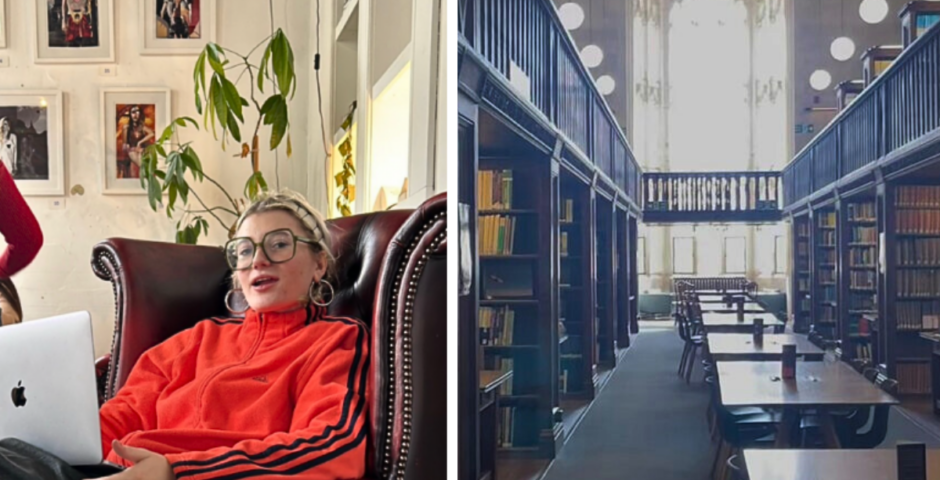
Bristol University reading week: To read or not to read?
Reading week — the academic equivalent of a ‘pause’ button that absolutely nobody uses as intended

Reading week, sometimes rebranded as “independent study week” or “enhancement week” (because branding is everything), emerged in the late 20th century as UK universities expanded modular degree structures.
As coursework and contact hours multiplied, institutions such as University College London and University of Birmingham began carving out mid-term breaks to allow students to catch up on reading, consolidate learning, and reflect on their studies.
The theory was noble: A structured opportunity for scholarly contemplation.The practice? Less monastic retreat, more strategic procrastinating. By the 2000s, reading week was firmly entrenched in the academic calendar at many institutions, though not universally.
Some universities embraced it; others quietly removed it, citing concerns that students treated it as an early holiday rather than an academic checkpoint. The debate continues. Is it a vital breathing space, or an elaborate national excuse to go home, load on snacks and do a load of washing?
At institutions like University of Leeds and University of Bristol, Reading Week still prompts the same annual ritual: A migration. Halls empty. Trains fill.

In truth, what has changed most is not student behaviour but the pressure surrounding it. With higher tuition fees and increasingly competitive graduate markets, students are more aware than ever that Reading Week is supposed to be “productive.” The guilt has intensified, even if the trebled screen time remains undefeated.
Of course, this is not universal. Libraries at King’s College London and University of Nottingham remain impressively full during Reading Week. There is always a visible cohort of hyper-organised students who treat it as a personal academic Olympics. They colour-code. They summarise. They emerge stronger.
The other, equally respectable, half emerge rested and slightly confused about what day it is.
One persistent tension is that Reading Week isn’t technically a “holiday”. Universities are keen to stress this. Emails are sent. Reminders are posted. Words like “consolidation” appear frequently.
Students, meanwhile, interpret the absence of lectures as freedom.



Some universities have experimented with structured workshops, employability sessions, or compulsory check-ins. Others quietly allow the week to function as a pressure valve — a moment to breathe in increasingly intense term schedules.

In recent years, mental health conversations have added a new dimension. For some students, reading week genuinely offers necessary rest. For others, the unstructured time heightens anxiety. The week can be both a sanctuary and a stressor — sometimes within the same 24 hours.
Despite digital transformation, rising fees, and changing student cultures, certain reading week constants remain: “I’ve done absolutely nothing” quickly translating into the mythical and elaborate to-do list that never makes it out the notes app, followed by a freeing sense of defeat and acceptance.
Yet, quietly, new forms of procrastination are at play good and strong. A deep clean of a room and an internship application at 11.58pm. Progress occurs in strange, nonlinear ways.
So, Has reading week Changed? Structurally? Not much. Emotionally? Absolutely.
Where it once felt like a bonus breather, it now carries the weight of expectation. But its core paradox survives: It is both the most productive and least productive week of term.
In the end, reading week remains a peculiarly British academic invention — a scheduled pause that reveals everything about student life: ambition, exhaustion, creativity, avoidance, resilience, and the remarkable human ability to clean an entire kitchen rather than read an article or book chapter you have been meaning to since September.
And come Monday morning, across campuses from Oxford to Manchester, students return — some refreshed, some repentant, all united by the comforting knowledge that next term, they will definitely use Reading Week properly. Maybe.
For more of the latest news, guides, gossip, and memes, follow The Bristol Tab on Instagram, TikTok, and Facebook.


Latest
Are sports socities at UofG too exclusive?

Making a team might require hard work and dedication, but fitting into the social circle can feel like a whole other competition

Film documenting the killing of civilians in Gaza now showing at Tyneside Cinema

NAZA depicts interviews with 24 Israeli soldiers and intelligence officers
New to Birmingham? Here are the best study spots in the city

Whether you’re dodging your flatmates or convinced a change of scenery will fix your productivity, here are some spots where you’ll be able to buckle down (hopefully)

Things to do for Halloween if you didn’t get Salvos Tickets

Don’t feat, there’s more to Halloween than just the club

Six iconic halloween costumes for brunette Bristol girls

With summer now a distant memory, spooky season is upon us ladies

From pumpkins to parties: here’s a round-up of Halloween events happening in Lancaster

A guide to all of Lancaster’s best Halloween events

Love Is Blind’s Cam didn’t ‘do great’ when Aneha critiqued his looks at their engagement

He thought, ‘Wow, does she hate me?’

Lots of the Love Is Blind S11 cast aren’t from Boston – here’s how far apart the couples live
Blake and Erika live in different states

Miranda Hart’s painful reality with illness as Celebrity Traitors marks her iconic return to TV

For years, she was told it was just stress
Interview: Alexander Newman, outgoing Editor-in-Chief

From an unpublished study of Italian seduction to the top of the masthead in record time: the outgoing Editor-in-Chief on manifestation, media barons and why first years should be kept well away from microphones

The flatmate red flags Leeds students need to watch out for (and how to avoid them)

Don’t trust your flatmate? Here’s how to fix that
Newcastle food hot spots worth spending your maintenance loan on

If you’re going to splurge, splurge at these spots x

Top tips for securing the perfect student house in Birmingham

It’s like Escape to the Country, except we’re in Selly and there’s not a blade of grass in sight x
‘Everyone needs to fart’: Bristol bus driver loses tribunal claim after ‘significant flatulence’ incident

A Bristol bus driver has lost her tribunal claim after being dismissed on probation, with the judge ruling there was no discrimination or harassment

Traitor Maya Jama outed herself at breakfast, and we (and the Faithfuls) didn’t catch it
Gotta love a classic Freudian slip

Bristol road closed off after bomb squad called to neutralise suspicious item

Bomb experts have been called to Park Street after a suspicious package was left unattended

Stew’s workplace shares hilarious videos poking fun at his time on Love Is Blind

Posted on the actual work account

Here are all the famous people you didn’t know went to university in Leeds

All five major Leeds universities have some pretty famous alumni

Want to live your Strictly dreams? Here are the best places to dance in Cardiff

Cardiff, its time to get your dancing shoes on and cha-cha-cha your way into the night