
Review: In its performative male contest, the Cambridge Union isn’t in on the joke
Too long, occasionally funny, your future husband probably wasn’t there

The Cambridge Union has always had its finger on the social pulse of the world at large. The Baldwin-Buckley debate on the cost of the American dream was seen as one of the most impactful moments in the propagation of civil rights. Baroness Mallalieu’s appointment as president in 1967 predated colleges going coeducational.
Recent fellows include tech giants Sam Altman and Jen-Hsun Huang. With a history of always knowing how to read a room and who to put in it, it is a wonder that union got their performative male contest so wrong. What started out as a silly and charming night was stretched out into an overly long and surprisingly political event that sacrificed self-referential humour for campus celebrities.
The term performative male has become synonymous with campus culture. Stemming from an internet trend about men who superficially engage with progressive interests in order to endear themselves to women, Cambridge certainly has no shortage. They can be found tote touting around Sidge, dressed in flannel and jorts, often listening to your favourite artist’s favourite artist (with wired headphones, naturally). I’m sure you have a picture-perfect image of someone you know.

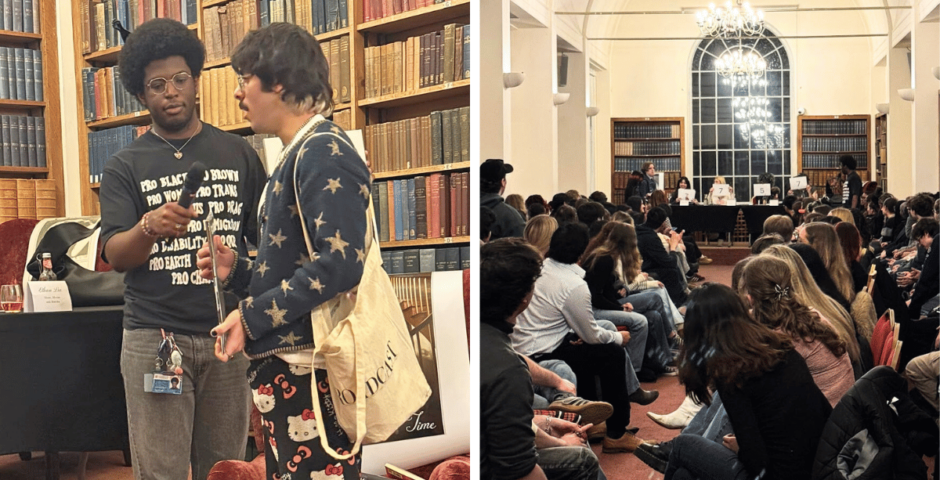
With their predilection to Cambridge, and the trending contests to determine the biggest performative males on campuses across the country, this event writes itself. Select 10 students, have them line up in front of an audience pitch themselves and have the audience vote. Bish. Bash. Bosh. Forty minutes of fun.
Instead, the packed room was subjected to close to one hundred and forty minutes of poor stand up as a seemingly endless list of candidates was called up for interrogation by a panel of four judges and a Sisyphean cycle of excerpts by Judith Butler, Clairo and Sylvia Plath.
The night was not without its bright moments of genuine brilliance. One deliciously goateed Italian candidate kept returning the mic to female members of the panel to hear women’s voices while he grated his own pepper grains by hand. Another offered an in-depth lecture on the nature of coffee. One managed to bring his guitar and serenade the room with clairo. Strokes of genius emerged as one candidate, on the phone to his mother, announced he had applied to Newnham in order to be closer to Virgina Woolf.
These buds of humour blossomed into side splitting laughter as closest thing to a peoples’ princess since Diana took the stage. In denim jorts and a blue patchwork flannel, candidate five declared himself to the room and all onlooking women declared themselves in his DMs.

While all other candidates showcased a talent (normally a dry reading of your high school English teacher’s favourite book) he offered himself up to the crowd as the shoulder to cry on after a night out. The following twenty odd candidates were unable to top this and there’s only so many poems one can hear in a night, so I’ll spare the full report.
Unfortunately, a joke doesn’t work without a punchline, and Cambridge’s young men were let down by the judiciary who seemed to have a misunderstanding about their mandate.

The panel of four was comprised of Viral Debater Tilly Middlehurst, local influencer Ethan Lee, Drag Queen and “Cambridge is chopped founder” Guillotina and Ex-Cambridge TikToker Emily Tian. It felt like for a large part of the competition, there wasn’t an understanding about what the competition set out to do.
This was demonstrated when a candidate pronounced Simone du Beauvoir’s name wrong leading to admonishment and seeming genuine offence from Tilly who was judging feminist literature – missing the ironic nature of a performative male. This was a pervasive theme throughout most of the night (they seemed appalled at another candidate bringing period pads)- that the judges, rightfully passionate about their interests, seemed offended by the humour of candidates rather than able to riff alongside them.
On the contrary, one of the judges seemed too focussed not on querying the candidates but instead achieving a soundbite or a punchline that would win the audience over making wisecracks and commentary over their performances (oft to deaf ears). Another judge also took his matcha category a little too seriously to the point that the joke swiftly ran dry.
Emily Tian was a bright spot in a dark room deftly balancing dry humour with a deep knowledge of topics the candidates were talking about and an enviable ability to draw out engaging answers through her line of questioning.

Where the judges truly fell short was in their awarding of the prize (and arguably entry) of George Abaronye, the disgraced former president-elect of the Oxford Union who after losing his own motion of no confidence claimed a stolen ballot. For the onlookers, promised a surprise special guest, this was the equivalent of asking Santa for a puppy and receiving a taxidermied goldfish.
By the time Abaronye arrived at the podium, most of the audience had left, tired of the panel’s self-aggrandising and bored of the cycle of identical candidates. The result of the competition underpins the issue with the competition and perhaps union politics more widely. The judges were so focussed on looking inwards at their own narratives and heroes in a realm in which they and their friends are internet celebrities, they expect adulation to be brought to them and their contemporaries.
The truth is that the majority of the room did not care who was there or who won, and they did not care about student politicians sending a half baked message to the Oxford Union. They had come for a fun night out, and for about half of it, that is what they received.
Final verdict: 2.5/5
For more of the latest news, guides, gossip and memes, follow The Cambridge Tab on Instagram, TikTok, and Facebook.


Latest
Influencer apologises after backlash over ‘grossly inappropriate’ Lindsay Clancy post

‘Why do you feel comfortable getting paid off the back of a tragedy?’
The ‘homophobic’ drama surrounding this notorious OnlyFans lad… who makes p*rn for gay men

He’s been banned from TikTok now, but each video he’s posted has made it SO MUCH WORSE

Where the cast of The Inbetweeners are now 12 years on, as Netflix announces third film

Jay, Simon, Will and Neil are all coming back

JP Miller’s dad has a 40-year criminal history, including dark allegations made against them both
Accusations against Reginald Wayne Miller are over a 40 year period

A key witness in the Mica Miller case tragically died not long after she was found

Johnnie Jacobs was at the scene when Mica died
The UK universities which spent the most money on ‘restructuring’ and cutting staff’s jobs

Several Russell Group unis spent millions on voluntary severance schemes
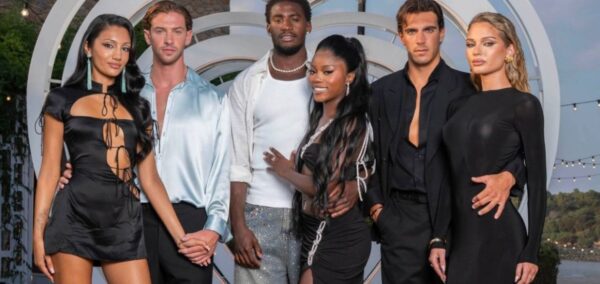
The three Love Island 2026 cast members who brutally weren’t invited to the NTAs
Two of them are finalists
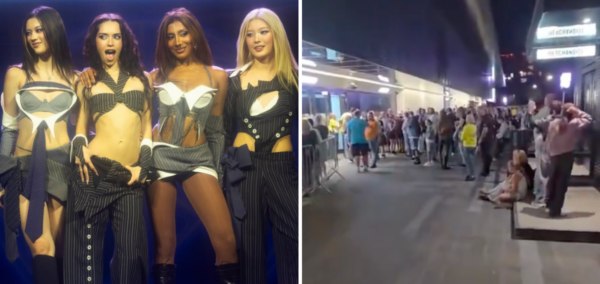
The KATSEYE tour drama explained, from ticket chaos to backlash over their young fans

There’s been a LOT going on
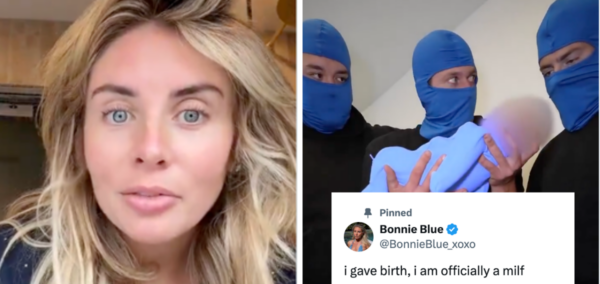
Bonnie Blue seemingly banned from Insta after these new videos featuring newborn with masked men
It looks like these videos have resulted in her second Instagram ban

The reason Gemma Owen secretly split from her millionaire property heir boyfriend, Red
‘We just came to a bit of a crossroads’

These are the most controversial things JK Rowling has ever said, as Harry Potter returns
It’s really, REALLY bad
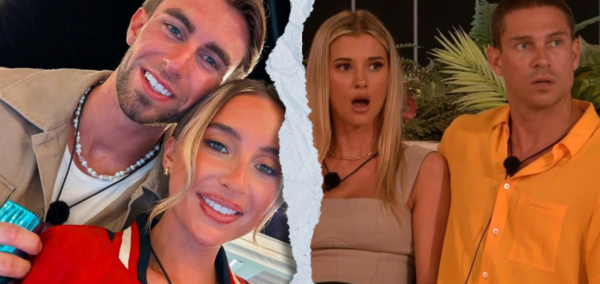
Priya and Aidan both share statements confirming sad reason they split after Love Island
This is such a shame!

The full 17-minute 911 call Mica Miller and her sister made when JP said he was ‘armed and ready’
Mica and her sister placed the panicked call when JP Miller said he was coming to get her

Cruise drama explained as ‘petty icon’ pulls off elaborate sting operation to confront friend
She used a ‘hook-up’ app to find him on the cruise she was supposed to be on

Co-workers who duct taped American Airlines passenger to plane seat reveal what it was like
They were on their way back from a work trip and had to step in

JP Miller’s case update after Death of the Pastor’s Wife, as he’s due in court next month
His federal case has moved forward
Ranked: The best Too Good To Go surprise bags to collect near UCL campus

We tried the most popular locations so you can get the best bang for your buck