
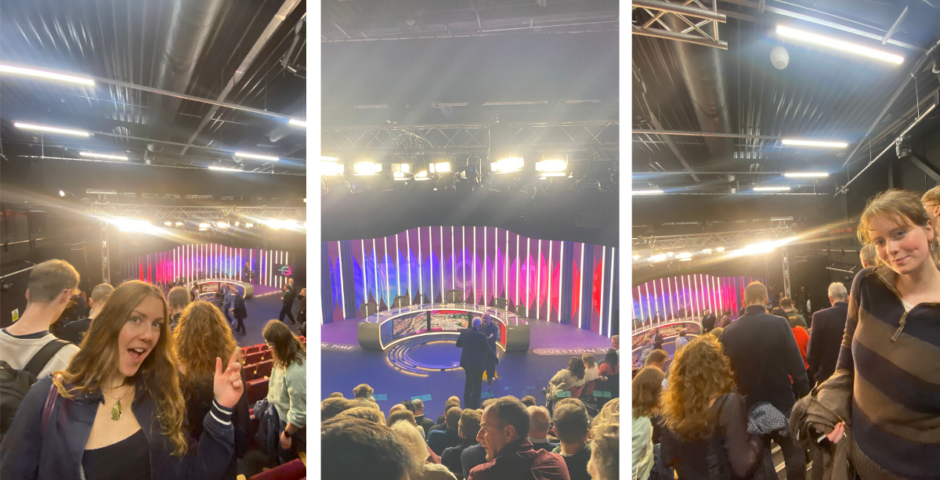
I went on BBC Question time to talk about Bristol students’ issues: Here’s why you should too
The Bristol Tab took on Fiona Bruce and Nadine Dorries

Let’s be honest, it’s not the most glamourous TV show of all time. BBC Question Time is the kind of show you tend to associate with your parents, or even grandparents, sat in front of the TV complaining about whatever’s been in the news that week.
Travelling up and down the country, Question Time allows the public to actually interact with the people that represent them, seeing a panel of four politicians or commentators facing a series of questions from the audience.
As a politics student, the programme has always been on my radar, so when I heard the show was coming to Bristol I applied to be an audience member. Somehow myself, and a group of us from The Bristol Tab, got invited, so I spent my evening with Fiona Bruce rather than pre-ing for a Thekla Thursday.
The show asks every audience member to submit two questions, with the chance of being selected to ask them in front of the panel. I chose to focus mine on student issues, discussing the prevalence of expensive and unsafe housing in Bristol. It seems like everyone I know has had experience with mouldy houses, leaky ceilings and blocked drains, all whilst paying extortionate costs to private landlords.
The panel was revealed to be made up of Green MP Ellie Chowns, Labour defence minister for the state Luke Pollard, Conservative MP Ben Spencer and Daily Mail columnist and ex-Tory MP Nadine Dorries. An interesting mix.

We arrived at the venue SGS Wise Campus in Stoke Gifford, at 5pm, ready for the taping at 7pm before being broadcast to the nation at 9pm. Question Time films as if its live, so anything you say will be headed for national TV, making the pressure pretty significant. None of our team got our questions chosen, however throughout the programme audience members get the chance to put their hands up and comment.
After a briefing with Fiona Bruce, who is as iconic in real-life as she is on TV, we headed in and took our seats.
Most Read

The final question focused on local housing issues, with the question coming from – who was looking to buy his first home – said he could no longer afford the rising housing costs in Bristol and said he was facing having to leave the city entirely. This led Labor’s Luke Pollard to push on the government’s housebuilding plans, as well as Ellie Chowns challenging the minister on implementing rent freezes and building more social housing.
In a city home to tens of thousands of students, it felt like the conversation didn’t adequately reflect the problems they are face when it comes to housing. The building of new homes does little to aid students living in uninhabitable rented properties, and I made this point to the panel.
I described the experiences of both me and some of my friends, who have all individually experiences dampness, mould, leaks and safety issues in their rented accommodations. Telling the country I lived in a mouldy house was definitely a statement.
Luke Pollard countered my point by detailing Labour’s new Renters Rights Act, which is due to come into effect in May. Although hugely significant in enhancing the rights of tenants to complain about unsafe conditions, and ending no-fault evictions, the act crucially neglects Awaab’s law. Designed to protect renters from issues like mould and damp, Awaab’s law requires landlords to mount a response within 24 hours of them being reported. When the law comes in in May, it crucially misses problems such as fire safety and does not require landlords to act within the 24-hour timeframe.
Putting this point to the panel, I had one of the scariest moments of my life, with Fiona Bruce asking me to explain the law to the audience – and subsequently the country. While I didn’t manage to get my response fully answered, I still feel it was hugely important to speak out.
That’s my wider point within this article. The story of me likely embarrassing myself on national TV (I refuse to watch the clip) isn’t particularly relatable, but signing up for these kinds of random opportunities definitely is. Go to that random club night your friend is raving about, attend that university talk about something you’re mildly interested in, email that company about work experience. Why not?
My biggest advice to anyone is to sign up, however lame it might seem, even if you have to do it on your own, because genuinely – you might end up on national TV.
Latest

The Lost Paintings: A Prelude to Return at Bristol Museum and Art Gallery

19 June – 27 September 2026
The Lost Paintings: A Prelude to Return, running until 27 September, brings together 53 Palestinian artists from Palestine and the diaspora. Each artist was invited to respond to one of Tomb’s lost painting titles.
The mother of missing Jack O’Sullivan blames police for ‘total failure’ to find him

The most recent update in the Jack O’Sullivan case
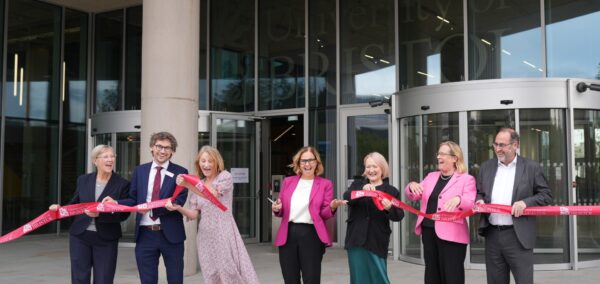
New Sloane Robinson Building opens: Temple Quarter

First step towards the new Temple Quarter Enterprise Campus
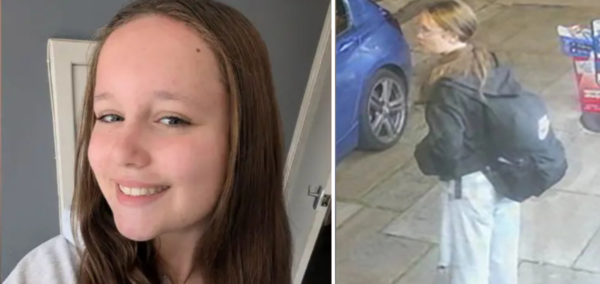
Missing 13-year-old found in Manchester city centre after eight day search

Police have confirmed the teenager is safe and well
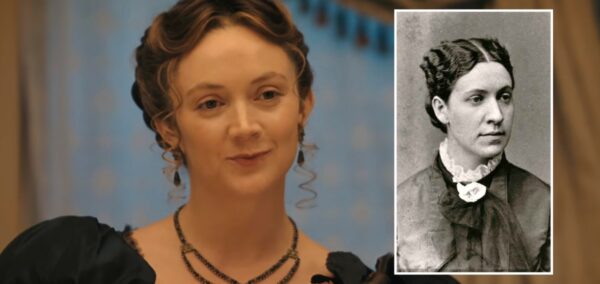
Who Lizzie Borden’s sister Emma was and if they were close, because Monster gets it all wrong

She never got married for a start
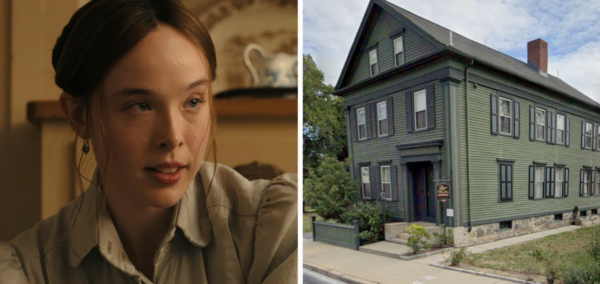
The real life Lizzie Borden house is still standing today, so here’s what it’s used for

It’s one of the most visited true crime landmarks
What Lizzie Borden was actually like in real life, according to the people who knew her
Monster keeps describing her as ‘plain’
Was Lizzie Borden in love with her maid Bridget? The real life theory around her sexuality
People dug up notes and have tried to prove the theory for decades
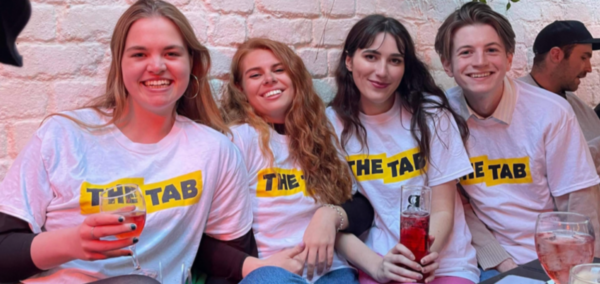
Calling all aspiring journalists! How to join The Bristol Tab

Come to our open meeting on the 28th of September at 8pm at The Beckford (In Senate House)
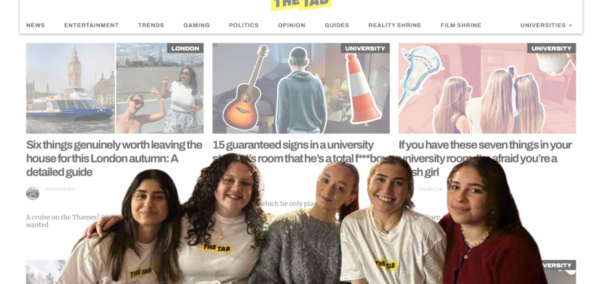
Stop what you’re doing: The King’s Tab is looking for new writers AND content creators

Come to our open meeting on Thursday 1st October, 5pm at The Vault!

Channelling your broke uni student lifestyle

Not everything needs to be accompanied by a £5 iced latte, here’s how to be more mindful
The York Tab is recruiting new writers and we want YOU!

Open meeting Monday 28th September, 6pm in SLB/004!
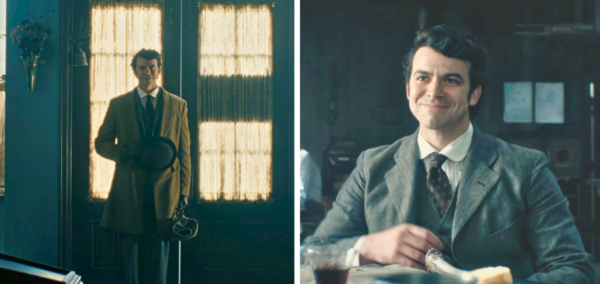
Here’s who the uncle in Monster: The Lizzie Borden Story was, and what Netflix makes up

John Morse really did stay in the Bordens’ house
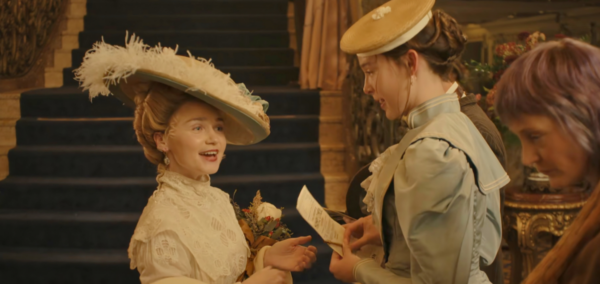
Er, Lizzie Borden’s meeting with the actor Nance O’Neil was nothing like Netflix’s Monster
Their paths didn’t actually cross for another 14 years
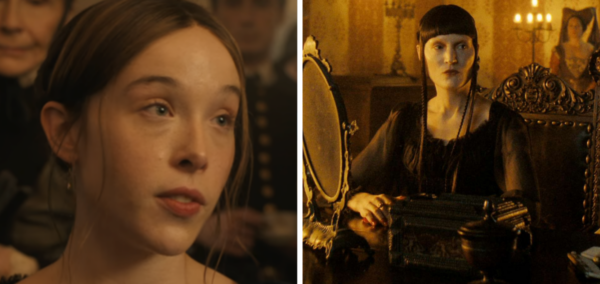
With 600 alleged killings, this minor character in Lizzie Borden should have been the Monster

HUGE missed opportunity
Did Andrew Borden have a stutter? Charlie Hunnam breaks down accent and voice in Netflix show
The actor has fully explained it
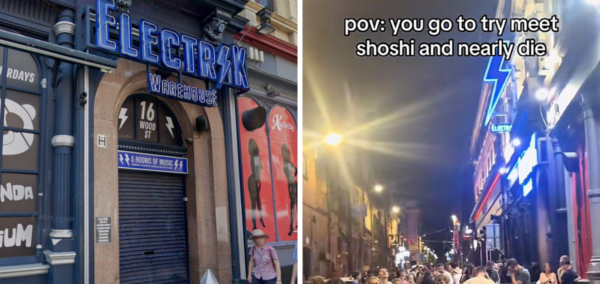
Elektrik Warehouse responds to alleged ‘crowd crush’ concerns at Shoshi event

‘It was just lucky nothing insanely bad happened’
Uni of Edinburgh confirms 25 days of strike action over five weeks, affecting Welcome Week

Am email sent to Edinburgh University students read ‘staff are not obliged to tell us if they plan to take part, which means we cannot tell you who is or is not’

There’s a really smart way to hack your Spotify Wrapped results for 2026 – before it’s too late
The cut-off for data tracking is very soon!
Meet OnlyFans’ gay ‘golden boy’ Ashton, and the thirsty clip that’s earned him 33 MILLION views
The clip is seconds long, but it leaves an impression