

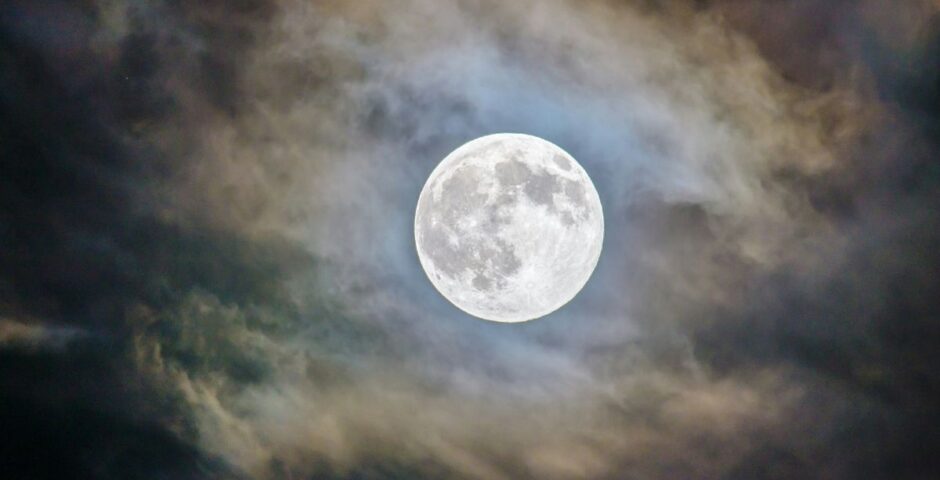
Leeds and Cambridge University project will teach Muslim moonsighting practice
Moonsighters Academy is a project run by leading university astronomers
A research project by the University of Leeds and University of Cambridge is being used to teach Moonsighting to 38 Muslim community leaders across the country.
Moonsighting has been used for hundreds of years as a method of determining the Islamic calendar for marking significant events like Ramadan and Eid.
Imad Ahmed, the Academy’s project coordinator told the BBC the course aims to “bring the moon back home and into our own eyesight”.
It includes the use of the University of Leeds’ rooftop observatory and their state-of-the-art 35cm telescopes, located at the top of the Sir William Henry Bragg building.
The Islamic calendar is based on lunar cycles, with the start of each month marked by the sighting of the first crescent moon.

via Unplash
The practice requires specific astronomical conditions and visibility, which is why most mosques in the UK rely on the sightings from other countries, such as Saudi Arabia or Morocco.
“When Muslims first came to the UK, they faced a problem that many people face in British astronomy – the cloudy weather,” said Ahmed.
“They settled on a solution to follow the moon of a different country”.
The reliance on other countries has led to disagreements, or so called “moon-wars”, between mosques in the UK depending on which country’s moon they follow, as different countries see the crescent moon on different days.
This means that it is irregular for communities to observe events such as Ramadan or Eid at the same time.
Ahmed added: “Growing up, something I and all Muslims in the UK is every single Ramadan or Eid, we didn’t seem to know when we should be celebrating, and this has caused a lot of hurt in the community.


“What we’re trying to do is train people astronomy, not just because it’s a contemporary problem, but because all Muslims have a really strong history in astronomy.
“Moonsighting is a national sport and we all need to work together. I want to go from moon fighting to moonsighting and moon uniting”.
The course, which began in January and will run for nine months, has been created alongside the moonsighting organisation, the New Crescent Society, of whom Ahmed is the director.

via Unsplash
Dr Emma Alexander, an astronomer at the University of Leeds and project co-lead said: “One of my favourite aspects of working in astronomy is being able to share it with others, especially when I can help ignite sparks of curiosity about our universe and shake off stereotypes of who astronomers are.
“The course has opened up much more of an interest in the interlink between astronomy and culture in general – how people within different communities, different faiths interact with the night sky”.
The 38 participants in the project include imams, school teachers, artists and business owners of varying ages.
Aliyah Khan, who works as a science teacher and forest therapy practitioner said she applied for the course in the hope of “educating the next generation” of Muslims in the UK.
Khan explained: “Where I grew up, we have two major mosques and neither of them agree on the same date for Ramadan or Eid. In school, I was the only one doing Eid on a different day to my friends. It’s quite isolating and splits the community”.
“We can see the moon from Britain, we don’t need to have someone in another country looking at it for us. It’s a way of bridging scientific knowledge and Islamic practice,” she added.
Featured image via Unsplash

Latest
Nine major scenes Christopher Nolan’s The Odyssey left out that completely changed the story

Can’t believe the bag of winds storyline was cut
Ian Diaz appealed all four of his convictions after A Toxic Love Story, so here’s why it was denied
He is in a federal prison now
A look at Angela Connell Diaz’s life now and surprising job, five years after jail release

She’s an active member of the community
Bonnie Blue details the x-rated accident that occurred at her ‘milk me’ stunt, and I’m wincing

Machinery and flesh don’t tend to go together, no

Dumped Islander reveals most ‘disingenuous’ cast member, who made ‘derogatory’ comments

The Love Island 2026 villa has been frosty at times
From the pyramids to MI5: Inside Anastasia Kingsnorth’s wildest podcast conspiracy theories
Who knew AI stood for ancient intelligence?

Here are five things in Lancs that are more exclusive than seeing The Odyssey in IMAX
If you think seeing Nolan’s new blockbuster in one of the 45 IMAX theatres worldwide is the epitome of exclusive’ you have not fought for a seat in the library during exam season
Meet infamous p*rnstar Gattouz, and the explicit reason he’s bigger than Bonnie Blue
He’s actually bigger than Bonnie, js
Lancaster Police appeal for information about ‘racist incident’ outside Moorlands Islamic Centre
Police are investigating the incident that occurred last week in the city

It’s time! Here’s everything you need to know about Liverpool Pride 2026
Divas, dolls, and allies alike, it’s time for one of the city’s most exciting and unforgettable weekends of the year: Liverpool Pride!


An investigation into *that* filthy ‘leaked’ Justin Bieber video, as people demand an OnlyFans
The 12-second dirty video has gone viral
Who’ll be successful after Love Island 2026, ranked by how many Instagram followers they gained
The top three have already won


A guy crashed one of the MAFS Australia 2027 weddings and got loads of juicy insights
The show is filming right now
KJ Apa opens up about severe eating disorder he struggled with whilst filming Riverdale
He also described how Cole Sprouse helped him with addiction

Remember the YouTuber Fred? His life has changed 20 years on, and he’s married to a male model
The annoying teen was the first person to hit one million subscribers on YouTube

Beauty influencer dies following mysterious complications after getting cosmetic surgery
She leaves behind a six-year-old daughter
Set designer stabbed to death in her New York home hours before husband found dead in park
The couple’s 11-month-old son was found unharmed