
KCL study reveals almost a third of Gen Z men agree women should ‘obey’ their husbands
Far fewer baby boomers held this view

A new King’s College London study has found almost a third of Gen Z men believe a wife should obey her husband.
According to a global survey of 23,000 people, 31 per cent of Gen Z men agree women should follow their husbands’ orders and 33 per cent say a husband should have the final word on important decisions.
Gen Z men were twice as likely as baby boomer men (born between 1946 and 1964) to have traditional views on decision-making within a marriage, with just 13 per cent and 17 per cent of baby boomer men agreeing with those statements respectively.
Far fewer Gen Z women agreed a wife should always obey her husband, with the percentage being around 18 per cent. An even smaller share of baby boomer women held that view (six per cent).

The 29-country survey, which included the UK, the USA, Brazil, Australia and India found young men today are more likely than those in older generations to hold traditional views about gender roles.
Conducted by Ipsos in the UK and the Global Institute for Women’s Leadership at King’s Business School to mark International Women’s Day 2026, the survey revealed massive differences between different generations of men when it comes to gender roles.
The survey also gave some information on the opinions of Gen Z men as to how women should conduct themselves.
Almost a quarter (24 per cent) of Gen Z men agree a woman should not appear to be too independent, compared to 12 per cent of baby boomer men. Among women, agreement was notably lower, at 15 per cent for Gen Z and nine per cent for baby boomers.
Most Read



Attitudes towards sexual norms also differ sharply across generations: 21 per cent of Gen Z men think a “real woman” should never initiate sex, compared with only seven per cent of baby boomer men. Just 12 per cent of Gen Z women agreed with this statement, but both baby boomer men and women were aligned at seven per cent for this question.
59 per cent of Gen Z men agreed men are expected to do too much to support equality, compared to 45 per cent of baby boomer men. Again, this was higher than the proportion of women who shared this view (41 per cent and 30 per cent respectively).
Despite being the most likely to believe that a woman should not appear too self-sufficient, Gen Z men were also the group most likely to believe that women who have a successful career are more attractive to men, with 41 per cent agreeing with this statement, compared to 27 per cent of baby boomers of both genders.

Professor Heejung Chung, Director of the Global Institute for Women’s Leadership at King’s Business School said: “It is deeply concerning to see traditional gender norms persisting today, and more troubling still that many people appear to be pressured by societal expectations that do not actually reflect what most of us believe.”
“Our data reveals a striking gap between people’s personal views, which are far more progressive, and what they imagine society demands of them. This gap is particularly pronounced among Gen Z men, who not only appear to feel intense pressure to conform to rigid masculine ideals, but in some cases seem to also expect women to retreat to more traditional ways of being.”
Kelly Beaver MBE, Chief Executive of Ipsos in the UK and Ireland, said: “This year’s survey shows us that we are witnessing perhaps a great re-negotiation of how both men and women inhabit gender roles in today’s society. Particularly among Gen Z, our data shows an interesting duality: They are both the group most likely to agree that women who have a successful career are more attractive to men but are simultaneously most likely to agree that a wife should aways obey her husband and that a woman should never appear too independent.”
The Hon Julia Gillard AC, Chair of the Global Institute for Women’s Leadership at King’s Business School, said: “As a society, we need to resist the pressure to go backwards and accelerate the place of change. Good research is critical to reasoned debate and forward progress.”
Featured image via Unsplash



Latest

Did Andrew Borden have a stutter? Charlie Hunnam breaks down accent and voice in Netflix show

The actor has fully explained it

Elektrik Warehouse responds to alleged ‘crowd crush’ concerns at Shoshi event

‘It was just lucky nothing insanely bad happened’

Uni of Edinburgh confirms 25 days of strike action over five weeks, affecting Welcome Week

Am email sent to Edinburgh University students read ‘staff are not obliged to tell us if they plan to take part, which means we cannot tell you who is or is not’

There’s a really smart way to hack your Spotify Wrapped results for 2026 – before it’s too late
The cut-off for data tracking is very soon!

Meet OnlyFans’ gay ‘golden boy’ Ashton, and the thirsty clip that’s earned him 33 MILLION views

The clip is seconds long, but it leaves an impression

Real-life significance of Lizzie Borden’s period and if she suffered from menstrual problems

It’s a big part of Monster: The Lizzie Borden Story

My straight boyfriend does gay OnlyFans, but I’m scared he’ll leave over one thing he keeps saying
He replied, ‘It’s always been my rule since day one: If the cameras are on, it’s not gay’

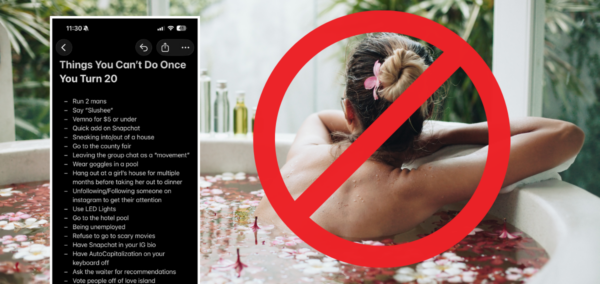
This viral list ‘years in the making’ claims these 21 things are FORBIDDEN once you turn 20
If you do any of these you should reevaluate your life, apparently

Woman whose Love Is Blind partner tried to kill her says he still contacts her from prison
He was sentenced to 15 years

Why Ed Sheeran is ‘furious’ as details emerge about the 40-minute call that got Macklemore fired
‘He’s been thrown under a bus’

Miley Cyrus reveals her emotional final conversation with Dolly Parton before she died
‘That’s what made us so perfect’

Nick Mohammed to appear in Traitors West End production

The influence of Durham’s student theatre scene

Three universities rank higher than Oxbridge in The Times’s league tables for 2027

The new top university in the UK isn’t part of the Russell Group

Inside the vibey life of Lizzie Borden actress Ella Beatty, who has two very famous parents
I’m sorry, dating rumours with Hugh Jackman?

So, that nursery rhyme about Lizzie Borden is almost completely factually incorrect
I can’t believe children actually sing it

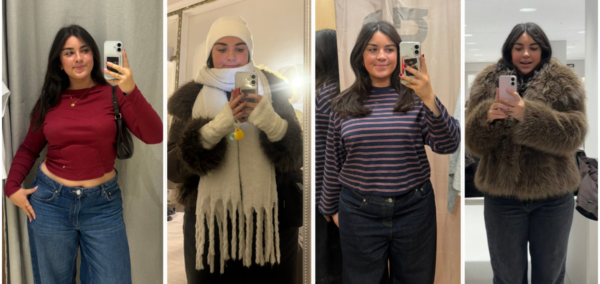
What to wear for lectures when you go to uni in the North

Despite the weather warnings, signs may suggest your 9am is still manageable

LA nonprofit founder arrested after stealing $7.5m for luxury nightclub and Tahiti holiday
He spent public money meant to help the homeless

What you think Welcome Week will be like VS the reality at Birmingham University

Don’t panic if you don’t have the same experience as everyone else