

Too much of a good thing: the victims of university overcrowding
We all think we deserve to be here, but something has to give

Picture this: It’s nine in the morning; I’m wet through. My jeans are a few shades darker than when I set off on my ascent up St Michael’s Hill. Trooping through the foyer of the ASS, I begin the final climb of my journey; trudging up the stairs, trying desperately to disguise my wheezing and sweat from my fellow students. It all sounds familiar, I’m sure.
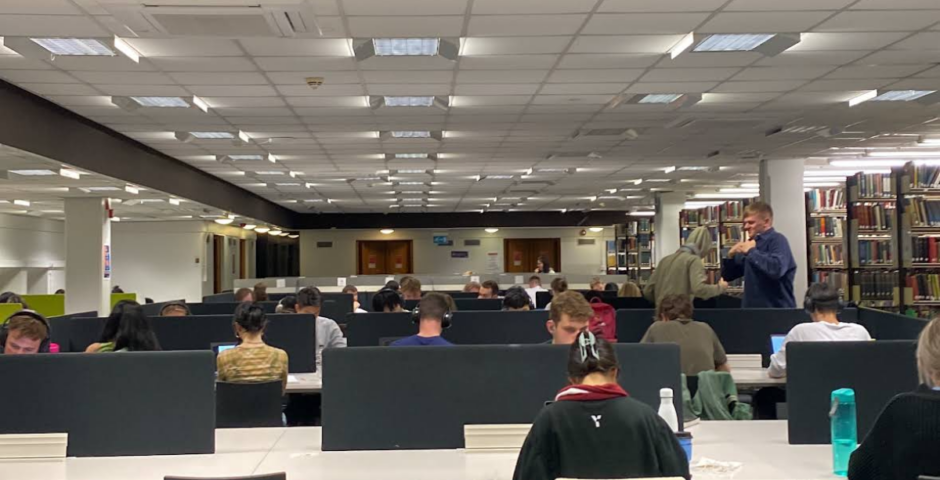
Rows of desks are already half full, some with their occupants in place, hunched over laptops; others occupied only by a jumper or a blank notepad. I peel off my coat and take up one of the remaining seats, and think: how has it come to this? Why has getting a seat in the library become a competitive sport? Why is the university not able to cater for its full complement of students? A worrying thought arises from behind a dense fog of university-blaming sentiment: Am I the problem?

When Tony Blair set out to provide more of the population with a university-level education, this was surely not what he had imagined. The New Labour target of 50 per cent of young people going to university was achieved in 2018, almost twenty years after the aim was announced. According to the House of Commons Library, in the year he made the announcement, 443,000 students applied for university places, and of those applications, only 335,000 were accepted. This compares to 565,000 accepted applicants out of 758,000 in 2024. But has the 50 per cent target surely come at a cost? Universities are now close to bursting, without the facilities or capital to maintain a worthwhile student experience.
When my mum came to Bristol to study history in 1986, she arrived at a university with around 7,000 students, part of a national student population of 359,450. When I came down to Bristol to start my history degree in 2023, I arrived at a university with close to 30,000 students: a mere fraction of the 2.9 million students in the country. Since 1986, the second half of Hiatt Baker has been completed, the Unite properties began to be available from the early 2000s and metal works opened (eventually) in 2024. The accommodation has stretched to the requirement gradually, but it would be dubious to claim the standard of student living has been maintained. I doubt freshers to Bristol would be excited to live in Bedminster over North Village or leafy Clifton. There is a substantial amount of mental gymnastics required to say that living next to an overpass and a shopping centre that the residents of Print Works are treated to is preferable or even equal to looking down on the quad at Wills or over the gardens at Goldney.



It’s not just in your first year that you will suffer from overcrowding at Bristol University. Arriving outside a mouldy house in Redland alongside fifty other bidders in your second year, ringing up the estate agents to get your bid in, all to ultimately get rejected because someone was willing to put down six months of rent to live in a house with all the natural light of a prison cell and a carpet that hasn’t been replaced since John Major was in office. Something has gone wrong. My Mum’s room in a charming house in Hotwells in 1987 set her back a moderate, almost pleasant, £80 a month. Comparatively, my room in a bottom-floor flat in Clifton cost a belt-tightening £823 a month. Adjusted for inflation, that still leaves a disturbing £582 gulf. We are paying more for less. Admittedly, when she was at Bristol, Clifton was, in her words, “a bit of a dive” compared to the £7-pint wonderland it has become. Regardless, this increase seems completely disproportionate.
In your final year at the university, you will again be the victim of this increased university attendance. Thursday morning will come, with a deadline looming and a dissertation sitting unfinished on your desk. You will make the foolish mistake of sleeping off a night on the triangle for an extra half an hour. So, when you make it to the library tired, unmotivated, the taste of VK not quite gone; you will be greeted with a library already filled. After you have failed to find a place to sit, you instead perhaps try and book some office hours with your tutor, but you will find again that someone has been quicker, and the next available booking is not until you graduate. All of these are symptoms of a system operating over capacity.
But if we agree that there are too many students at university, then who shouldn’t be here? The temptation is to punch down, look to the former polytechnics or the plate glass universities. The instinct is never to think that we are the ones pushing the dial over capacity. We include ourselves in the comfortable masses, not the problematic fringe. Without even considering the impact that increased university attendance will and is having on graduates’ employment, the oversubscription of universities is degrading the university experience. So, if the prospects after university are grim and the student experience we have all been sold is being diluted by the massive increase in university attendance, why are we still all flocking? And if we all think we aren’t the ones who shouldn’t be here, then it doesn’t seem like changing anytime soon.
Latest

Love Is Blind’s Stew addresses relationship with Jax now, as people spot clue they’re back together

This is all over the place
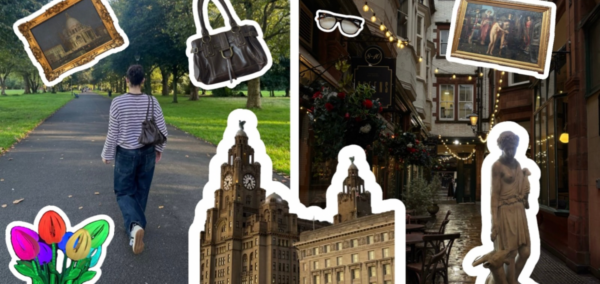
Five free things to in Liverpool this autumn

When the student finance is running low these activities will keep you occupied x
Just how rich Stew from Love Is Blind really is, with his swanky job and claims of family money
He bragged of splitting his childhood over two homes
Work improvement on railway means no York to Leeds trains

There will be no trains running the key route between York to Leeds due to rail upgrades
Two Traitors and one Faithful ‘struggled’ while filming The Celebrity Traitors season two

Maya Jama, Rob Beckett and James Acaster found different parts of the experience difficult

The most popular 2026 Halloween costumes are here, but the Obsession one is majorly icky

I’m sorry, how does one go about dressing as a NeeDoh cube?
Russell Group universities criticised by Amnesty over how they handled pro-Gaza protests
Amnesty investigated how unis disciplined students
Friend claims Romesh is ‘nothing like’ how he seems on Celebrity Traitors and has one main aim
‘He’s a competitive person’

Former Traitors stars break the illusion of what they eat, and breakfast will never be the same
I didn’t realise they can basically order anything at the hotel

UWE student jailed for life for murdering his housemate in Filton

Zach Coughlan, 23, must serve at least 28 years for murdering Jamie Collins, 21

‘Superficial, no romance’: Everything Love Is Blind’s Jax has admitted she didn’t like about Stew
She has listed off his ‘red flags’

One more reason to love Celebrity Traitors’ Michael Sheen: How he spends his fortune
Celebrities, take note

An analysis of Bake Off icon Mo’s baking experience, since he shunned bread and biscuits
His former teacher clarified what he actually does bake

James Acaster and Romesh Ranganathan have a long history beyond Celebrity Traitors ‘feud’

‘You’re a mate and I’m a fan’

Celebrity Traitor James Acaster addressed Rob Beckett relationship weeks before ‘teasing’ claims
Rob and Romesh were described as ‘very different people’ away from the cameras
‘Most people think we’re mad’: Nottingham student plans row across the Atlantic
Notts student James and his friend Noah will be one of the youngest teams to take on the race
Sheffield MP calls for abandoned university buildings to be sold

Abtisam Mohamed has called on Sheffield Hallam University to include affordable and social housing within its redevelopment

Bake Off’s Paul, Alison and Noel detail what Nigella Lawson is like to work with
Noel Fielding compared her to Cleopatra


Bake Off’s vibey Clara has big plans after the show, including a huge move to America
She’s one of the last two women in the tent