

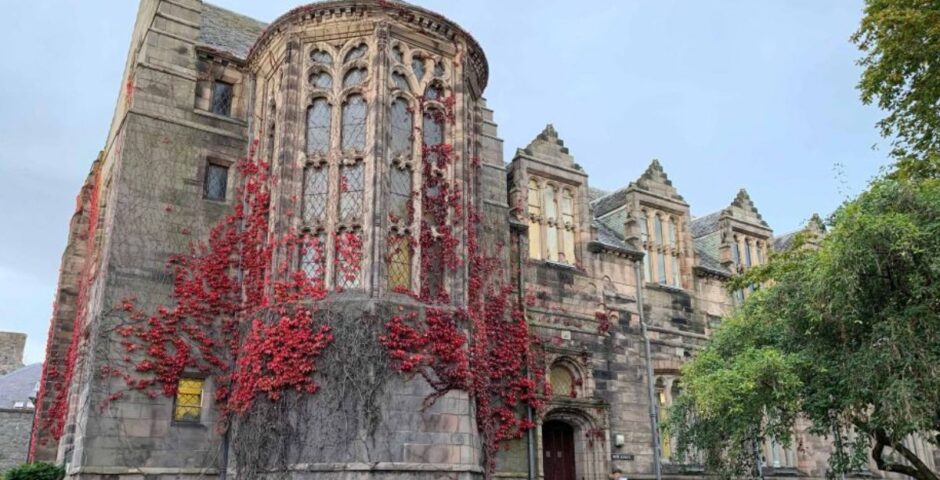
Breaking even a ‘real challenge’ for Aberdeen University, warns new principal professor
‘I’d hope that we can make the change that we need to make at the university over the next couple of years without resorting to redundancies’

Aberdeen University’s new principal has warned that getting the institution back to a break-even financial position by 2028 will be a “real challenge”, despite millions already being cut from its budget.
Professor Peter Edwards, who took up the role in November 2025, said progress had been made in identifying more than £5m savings, but admitted there is still “a lot of work to do.”
Speaking to BBC Scotland News, he said he hopes redundancies can be avoided, but stressed that universities need to take a “fundamental look” at how they are funded in the future.
The university reopened a voluntary severance and early retirement scheme in April in a bid to find £5.5 million in savings. Recruitment has also been frozen, with departments asked to identify further cost-cutting measures. It was recently confirmed that 41 staff members took up severance or early retirement packages.
Despite this, Aberdeen University said “wide-ranging measures” had helped reduce its projected deficit for 2024/25 to £4.3 million, and that it remains on track to meet the budget approved by its governing body this year. Work is ongoing to reach a break-even position by 2028.
Professor Edwards, who succeeded Professor George Boyne on 1st November, said: “It is my ambition, and the ambition of the senior management team, that this current financial year will see another improvement again.”
He added: “I think achieving a break-even in 2028 will still be a real challenge, because we are obviously continuing to see our costs increasing.”
Edwards also pointed to declining funding for Scottish students, arguing the current model needs to be reassessed: “There has to be a fundamental look at what that model needs to be in the future,” he said.
The comments come after a leaked report last month raised concerns about “power struggles” and a “toxic culture” at some university meetings. Professor Edwards acknowledged issues around behaviour, saying he wanted to foster a culture of respect.
The university has faced mounting criticism in recent years, including over redundancy plans and its decision in 2023 to stop offering single honours degrees in modern languages. That same year, its annual report warned there was “material uncertainty” over its ability to continue as a going concern.
Looking ahead, Professor Edwards said all undergraduate and postgraduate courses are under review, and did not rule out further cuts to degree programmes.
“We are looking to make sure that there is a market for them that they meet the needs of students, that they meet the needs of employers,” he said.



On potential job losses, Professor Edwards added: “We have had a number of colleagues leave us through voluntary severance schemes, but no-one has been made redundant.
“I’d hope that we can make the change that we need to make at the university over the next couple of years without resorting to redundancies.”
Aberdeen’s situation mirrors wider financial strain across Scotland’s higher education sector. Edinburgh University recently announced £140 million worth of cuts, while Dundee University required a £40 million emergency bailout from the Scottish government.
In response, a Scottish government spokesperson said ministers were committed to a “successful and sustainable future” for higher education.
They added: “We continue to invest over £2 billion in the post-school sector this year and provide the most generous student support in the UK.
“While ministers are open to exploring the future funding model of universities, we are clear this government will not reintroduce tuition fees. Access to higher education must be based on the ability to learn, not the ability to pay.”
The government said its commitment to free tuition has led to record numbers of Scottish students securing university places, with student debt levels remaining the lowest in the UK.
Professor Nick Forsyth, Acting Senior Vice-Principal and Vice-Principal (Research) said: “It’s a hugely testing time for the UK higher education sector which is why we launched our Adapting for Continued Success programme to ensure we are in the best shape to meet the needs of a changing world. The programme is developing options for possible new structures for the University which have been shared with staff and the campus trade unions.
“We have also been reviewing our portfolio of courses and programmes to ensure that we are delivering what students want and meeting market demand. We look forward to engaging further with staff, students and campus unions in the new year.”
For more of the latest news, guides, gossip and memes, follow The Glasgow Tab on Instagram, TikTok, and Facebook
Featured image via Pexels


Latest

A guide to treating the Sunday scaries in Selly Oak

Battling a Circo hangover with the impending doom of a 9am lecture? Welcome to an average Sunday in Selly Oak

More than two tonnes of plastic pellets may remain in the Tyne, researchers warn

A collision in July released around 17 tonnes of nurdles

Jax speaks out after toe-curling Love Is Blind reveal, and shares why she *really* ghosted Stew

She claims it had nothing to do with his appearance

A full record of how The Celebrity Traitors S2 cast voted at each Round Table session

Yup, we’re keeping track of all the stats

The Celebrity Traitors comedians whose fortunes are no laughing matter, from £1m to £6.5m

The fact Miranda isn’t the highest is criminal

Celebrity Traitors’ King Kenny was arrested after filming a prank on his university campus

He has a wild backstory from his YouTube career
Is this the downfall of Turnitin? Here’s what you need to know

Turnitin’s system is changing and students’ data could be used to train tools which use Artificial Intelligence

Fewer apps, more life: My experience at the launch of the social SuperApp ZYMIX

Inside the launch of the SuperApp that wants to clear out your home screen

The question we’re all thinking about: What exactly is happening with the library?

Everything you need to know about the JB Morrell Library refurbishment

Plans submitted to council for new research facility at York University

University of York’s Campus West could see a new research building after plans submitted to York Council

Wait, why was Barack Obama in Manchester city centre?

The former US President was spotted outside a hotel before speaking at Co-op Live

The Celebrity Traitors producers are already eyeing up big names for season three’s cast
Stephen Lambert wants Tom Cruise and ‘a big sports star’

Hannah Fry has crunched the numbers, and spotted a suspicious Celebrity Traitors voting pattern
It could be bad news for the Traitors
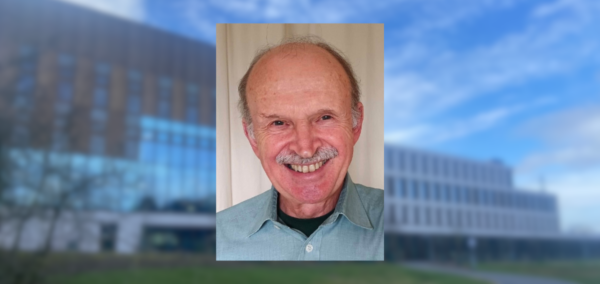
Former Lancaster University professor John Whitehead dies aged 76

John was a lecturer of mathematics and statistics

How to avoid the struggles that come with a part-time job at a Bristol university

After all, we do live in on of the most expensive cities in the UK.

All the public scandals The Celebrity Traitors cast have been in, from arrests to racist tweets
They’re not as wholesome as people think
Newcastle and Northumbria universities join forces for new Student Health Hub

Students of both unis can access the mental health service on Friday mornings

The net worths of the American Horror Story 13 cast prove who desperately needed that pay cheque
A $50 million net worth with two minutes of screentime? Nice

Three UK universities announced language course closures in 2026 – including Edinburgh
The University of Edinburgh is scrapping 90 programmes

‘She is phenomenal’: Traitor Hannah Fry has realised that she’s related to her co-star
‘I cannot tell you how much I admire her’