

As a recent university graduate, I’m either under or overqualified for every entry level job
With more people going to university than ever, graduates are worried their degrees won’t help them in the job market

For years, going to university was depicted as a route towards better career prospects. However, as the number of people getting into university continues to grow, so does the worry about what happens once they graduate.
The current tough entry level job market is a huge topic of conversation right now, with more than one million young people classified as NEET, meaning not in education, employment, or training, between January and March 2026.
Following A-Level Results Day, UCAS revealed that 262,820 18 year olds in the UK have been accepted onto degree courses, a rise of three per cent from 255,130 last year.
The total number of university applicants of all ages and domiciles has hit “a record high” of 695,740, up 4.6 per cent from last year’s total of 665,070.
The Tab spoke to recent graduates to find out their opinions of the record high number of people being accepted into university, in light of their own experiences entering the job market.
‘Degrees are becoming more worthless when entering the workplace’

via SWNS
Jess, who recently graduated from Bournemouth University, has been “applying on and off for jobs since January” of her third year. She recalled applying to “at least 20” jobs in total.
She reflected: “I think it’s great that there are more people going to uni. You learn valuable life skills and I truly don’t think I’d be the person I am without it.”
“However, I do think now that so many people are getting degrees they are becoming more worthless when entering the workplace. As so many people have degrees employers may not see them as valuable or impressive anymore.”
Mia, a Master’s student at the University of York, also said she is “glad that those thousands of students will get to enjoy the life-changing experiences university brings.”
Mia was able to secure journalism internships as a result of her work writing for student newspapers on campus.
However, she said: “I am worried that degrees are becoming less valuable as so many people see going to uni as the default without necessarily considering other options that could be better suited to them, plus a good degree nowadays is not enough to secure a good job.
She pointed out that employers “demand year of work experience,” meaning “degrees alone aren’t tickets to a good job despite all the debt that accumulates from going to uni.”



‘Networking seems to be the best way to enter an industry’

This youth employment crisis in the UK has been referred to as the “lost generation,” as young people are found to be “more uncertain about their future careers than ever before.” In fact, 46.6 per cent of young people are uncertain about their career options.
When asked about her personal experience in the job market, Jess said: “I definitely don’t think there are enough graduate jobs, especially in my industry (film).
“Networking really seems to be the best way to enter the industry, but if you have no contacts you’re quite limited, especially when there’s restricted grad jobs available.”
She admitted to not believing her university degree was giving her an “advantage” in the job market. Instead, she has found to be “either over qualified or under qualified for every entry level job.”
‘Entry level roles ask for years and years of work experience’

via Unsplash
Mia said she has been applying for jobs for a couple of months while finishing her Master’s degree, but has found the application forms “so time-consuming” when balancing the job search with finishing her dissertation.
She said: “I’ve just been diagnosed with autism as well, which I think will put me at a disadvantage in job searching as interviews and psychometric tests are designed for neurotypical brains. Only three in 10 autistic people of working age in the UK have a job.”
Mia also found that the “years and years of work experience” required for many available entry level jobs “is just not possible for most graduates to have obtained alongside studying.”
Although Mia doesn’t believe her undergraduate degree will make a difference in the job market, she is hoping her Master’s will give her “an edge over many other applicants.”
For more like this, follow The Tab on Instagram.



Latest

London university releases statement after professor sentenced for a child sexual offence

Barry Langford was a Professor of Film Studies at Royal Holloway



Young father-of-two died on day he was due to start at University of Glasgow

Young father tragically passes away at 24 years old after suffering a brain aneurysm

Bella Ramsey’s specific acting career gives them ‘an edge’ on Celebrity Traitors (they hope)
Their past roles have prepped them for Missions

12 of The Celebrity Traitors season two cast asked to be Traitors, and six to be Faithfuls
Three celebs couldn’t make up their minds

Maya Jama’s game plan for Celebrity Traitors is to avoid trying ‘too hard’ or ‘overthinking’
This is really devious tbh

Newcastle University buildings evacuated after ‘suspicious item’ found on campus

Police, fire crews, and fire engines arrived at the scene

12 things every Fresher gets wrong in their first few weeks at uni

From wearing your lanyard everywhere to leaving your washing-up until it grows its own ecosystem

Our Celebrity Traitors predictions include Maya Jama turning on her fellow Traitors

Here’s what we think will happen

I’ve just realised that three cast members from Celebrity Traitors were in Game of Thrones

Having flashbacks to Bella Ramsey being crushed by a giant




23 to 70: The ages of the Celebrity Traitors 2026 cast, from youngest to oldest

There’s a huge age range this year

James Blunt was a British Army captain before becoming a singer and joining Celebrity Traitors
He mentioned it on the show

Monster director finally admits why they forced Aileen Wuornos in a show about Lizzie Borden
Despite the name, Lizzie Borden is not the focus of the story

Shows and films you can watch about Aileen Wuornos, where she isn’t thrown into another story

Others tell her entire case, unlike Monster on Netflix
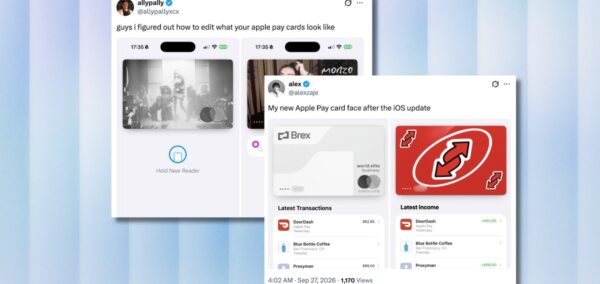
This viral tool lets you customise your Apple Pay cards, and here’s how to do it
You can personalise the entire design

James Acaster could be the Celebrity Traitors’ recruit, as filming reportedly paused for him
It’s not much of a cliffhanger

The ridiculous fortunes of The Celebrity Traitors: Their net worths, from £500K to £50 million
One of them could legit buy the castle three times over

The Celebrity Traitors rules explained, as Richard E Grant immediately let slip he’s a Traitor
There’s actually a slightly confusing loophole