‘I was disturbed by the level of groupthink’: Interview with Cambridge’s Free Speech Society
I spent an hour with the two co-founders of Cambridge’s new Free Speech Society. Here’s what they told me
 Eve Rann
|
One of the newest and most controversial student societies at Cambridge this year is the Cambridge University Free Speech Society (CUFSS).
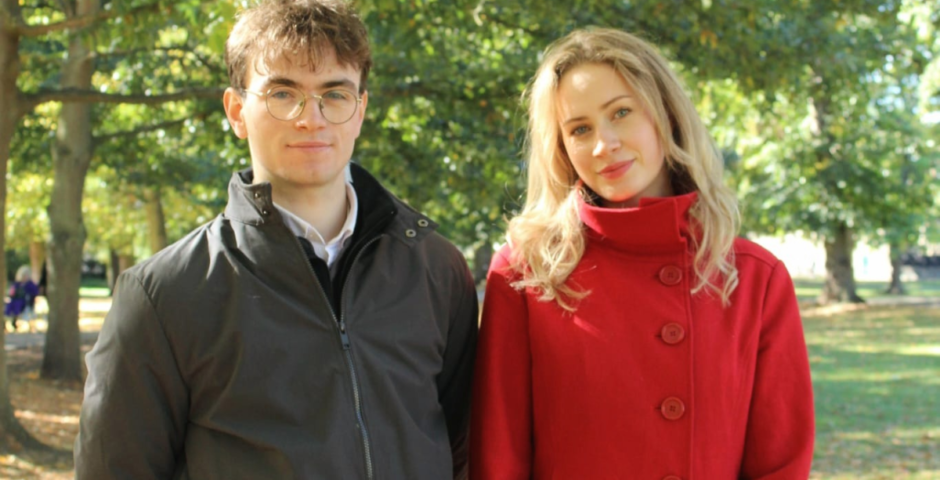
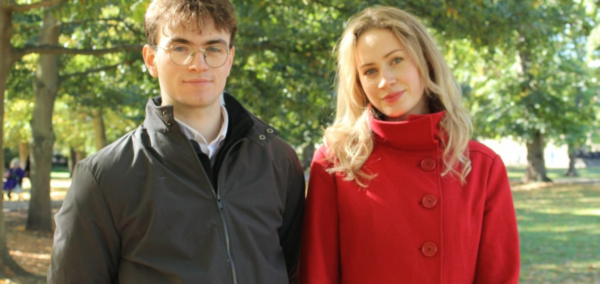
I sat down with Lavinia Rossetti and Oliver Crossland, the group’s two co-founders, to learn more about why they started the society, what they aim to achieve with it and what criticism they have faced from the student community.
Q: Whose idea was it to create a Free Speech Society?
Lavinia: I had an idea of a free speech society that included speaker events and discussion and that kind of thing, and Ollie had separately had the idea of a reading group… and we sort of ended up merging the two.
Oliver: Yeah, I definitely wanted to start a society at Cambridge that tried to expand on the seminar or supervision style outside of that environment, so students would have the opportunity to sit and read through texts before patiently discussing them, and we [Lavinia and I] so happened to meet, and we had these two different understandings of the society we wanted to create.
Lavinia spoke to me about the importance of free speech, and I realised that it was so intertwined with what I wanted to do as well – that is, build a space for slow, collaborative reading with other students, where we’re not trying to “win” in a debate, but actually trying to understand each other’s point of view. And so we kind of fused the two together.
Q: What is free speech?
Oliver: I would say that free speech is our ability to have constructive and peaceful conversations in an intellectually diverse society, as we have today.
It’s really a cultural achievement that over the course of hundreds of years through the Protestant religious wars and so forth that we have developed an ethic of toleration – a kind of mutual respect which is the foundation of a liberal society.
So I don’t think that we can really think of free speech independently of that as just a right or levy that we can claim, and that I can say [such-and-such] because I’m appealing to this authority that is free speech. It’s a culture that we participate in, and it’s so interwoven with everything else, that if we abandon it or components associated with it – [namely,] toleration, open mindedness, confidence in reason – it’s not just free speech that declines, but the basis of a modern liberal democratic society. And that’s really what we’re trying to defend.
Lavinia: And that’s a debate we can have at the Free Speech Society! We can have the debate about what free speech is and what these principles are that we’re talking about. Is a liberal democracy even really what we want to be aiming for [in the first place]? These are all conversations we are open to having.
Q: Some argue that the university is already a space designed for free speech, with platforms like the Cambridge Union available to students interested in debate. What, specifically, was the need for a new student society to address this issue?
Lavinia: There’s nothing inherently wrong with the Cambridge Union, but it’s doing a very different thing from what we are.
The Cambridge Union is very much about more adversarial debate – you have your five minutes to make your point and get heckled a little bit, and you sit down, and that’s it. There’s no real productive discussion going on.
Even when they’re inviting speakers that might be more controversial, like Katie Hopkins recently, nobody’s actually having a conversation – and speakers don’t have the time to put their views across in a productive way either.
So we wanted to create a place where speaker events are more discussion-based, opening up to the audience for an extended period of time ad having that conversation… and taking it to the pub afterwards.
And with the symposium we can deliberately present and give evidence on both sides of the debate, to really listen to arguments that have been steelmanned, and then coming together to talk about it in a way that doesn’t really happen at the union.
Oliver: I think we also want to take into account this contemporary moment where free speech – and even the appreciation of what free speech is – is deteriorating.
So we want to be more explicit in raising awareness of free speech rather than closing it in or weaving it into our formats. We want to be raising awareness of what it should be – which is inclusive, neutral. It’s important to the freedom of all of us, no matter our political views.
Q: You told Varsity that you believe there is a ‘free speech problem’ at Cambridge. Can you give me any examples of times where particular viewpoints have been suppressed or treated with hostility?
Lavinia: I think there definitely is. I had an experience last year when I joined the Cambridge University Society of Women, which is the university’s only single sex space.
I didn’t actually tell anyone I’d joined at first because I sensed that it wasn’t something people were going to like… but I was “outed,” as it were, because I followed them on Instagram… a whole sequence of events followed, and a lot of people from my college don’t talk to me any more, purely because I joined that society – not because of anything I said or did – indeed, no one had a conversation with me about it.
What disturbed me the most about my experience in first year was not that people disagreed with me or the aims of the society. I was really just disturbed by the level of groupthink where one person says “this isn’t okay, this isn’t a view that we tolerate” and suddenly everybody else goes along with it, and ostracises that one person for what should not be a controversial view.
It was this lack of any kind of conversation or listening to one another that made me think something needs to be done about that.
[I will say that] if people disagree with the aims of the Women’s Society just because I’m a member, it doesn’t mean you have to agree with that to join CUFSS. You’re more than welcome to come along and we can have that conversation.
Q: Who are you funded by?
Lavinia: We’re funded by the Free Speech Union, which offers the Ian Mactagart grant. They encourage students across the country to set up free speech societies, and they’ll fund you.
Oliver: And the way the Ian Mactaggart programme works is that they provide it to any kind of student society that in any ways tries to promote open conversation, so it’s not politically gated in any sense.
It’s also entirely independent; the societies are free from the influence of the Free Speech Union, and that applies to us as well. They have made that explicitly clear to us, that they want us to be pursuing things on our own terms, which is what we want to be doing.
We’re of course grateful that we receive their financial support to promote open debate at Cambridge.

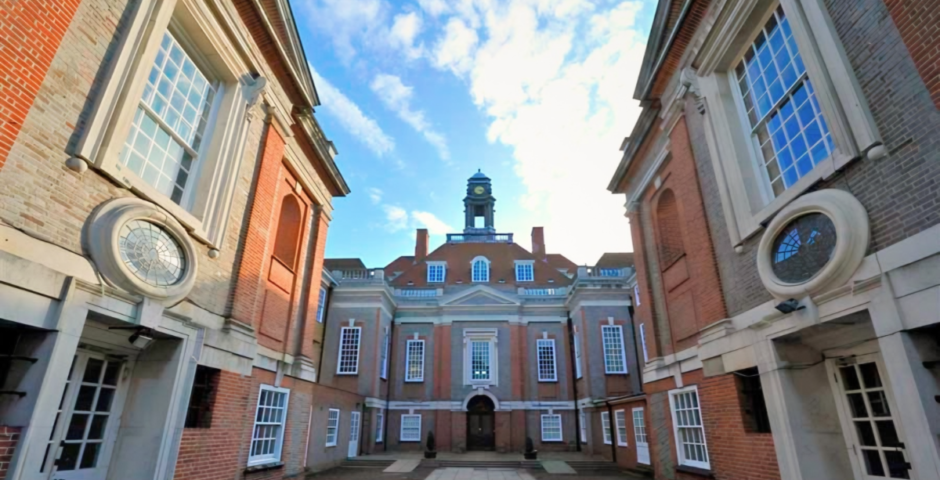
We are also signed up with the proctor’s office which means we’re officially registered as a student society but it is very much within our intentions to sign up with the Student Union in the future too.
Q: How would you respond to criticisms that it is not true ‘free speech’ if you have to pay £15 for membership?
Lavinia: To that we’d say that if anyone is having genuine financial hardship, you can always come to us and there is the possibility to pay the fee. It’s not that you can’t come if you can’t pay!
We do have a membership fee, like most other societies do, just to help with the general running of things. Also, if anybody wants to come to the society that hates the society and hates what we stand for and wants to come to sort of cause trouble, they’re probably going to be a bit put off by that. So I think it makes sense.
Oliver: And our speakers programme is the one we’re trying to keep free. [As part of] the Ian Mactaggart foundation, we have to provide for the accommodation and dinners, so there’s already that kind of expense, and with the symposium there’s an additional expense which involves renting a room and purchasing beverages to enjoy the evening. So unfortunately it’s necessary. But again, as Lavinia says, we’re very much enthusiastic about helping anyone who needs additional support to participate in the society.
Q: Some of your critics have commented about the dangers of creating a free speech society where all ideas are permissible. Are there any views you’d consider too extreme to be discussed on your platform?
Lavinia: Where speech is illegal, we won’t platform it. But other than that, no.
Q: Varsity’s article about your launch called your society ‘divisive.’ Why might it be considered ‘divisive’?
Lavinia: I think that we’re trying to do the exact opposite of [excluding people from participating]. The fact that it may have divided opinion shows why it is so necessary. We’re trying to bridge the gap between opinions. If people think we’re being divisive, I can only encourage you to come along and see that we are trying to platform across the political spectrum and listen to arguments in good faith, and have our own views challenged as well. There’s a diversity of opinion on our committee as well.
Oliver: I’d also like to add that one of the issues we’re experiencing across society today is that free speech is seen as this tool or instrument for covering one kind of speech, while not applying it as faithfully to other kinds of views. And in this context, free speech has become seen as something that is politically-coded: “It’s just for the right wing” and so on.
But what we’re trying to recover is that free speech is fundamentally neutral, and it’s that the thing that we can all agree on that allows us to disagree.
Q: You are launching a fortnightly paper called ‘The Meridian’. Can you talk to me about that?
Oliver: That’s correct. In the Instagram post it says fortnightly but what we really mean to say is that it’s open at all times. With that, we’re trying to open up for a more diverse range of viewpoints within student journalism on campus. But we’re keen to keep to the principles of free speech here [too], so every piece that gets posted gets right of reply to ensure that the debate continues online and no view can remain unchallenged.
Lavinia: Feel free to submit an article about why you don’t like us [CUFSS] or don’t think the society should exist, genuinely!
Oliver: And we’re trying to keep the journal as independent from the committee itself as possible, ensuring viewpoint neutrality.
Q: Have you received any comments personally about the society?
Lavinia: When I’ve mentioned it to my friends, they’re generally very supportive of it. A lot of people came to our first social and there was so much discussion. It’s all pretty positive.
Oliver: I’d say the same at my college. I’ve got some friends who are politically different and they’re still enthusiastic about it, having been to the social.
What is so meaningful is that, despite these disagreements, we’re still able to remain civil, and have an actual conversation. I think, especially in universities, there’s this enjoyment in disagreeing. And this [society] should be where we celebrate it. I think deep down many people do still enjoy this and do still celebrate it– we just don’t have the opportunity to do so.
Q: Is free speech more of a problem in higher education and on university campuses than elsewhere in society?
Oliver: Free speech is under threat everywhere, but I think particularly among young people today, debate has become especially polarised, and universities are where this polarisation accelerates. It’s certainly something we’re really concerned about.
I would also say that within academia itself, there is narrowing viewpoint diversity. Among the professors and the faculty, [I’d say] it has decreased from something like 50 per cent left and right [wing], and now it’s leaning towards 80 per cent.
This isn’t an issue in the sense that the “right” aren’t having their voice heard, it’s that it’s a matter of viewpoint diversity narrowing, and this just accelerates the polarisation at universities.
The students passing through the universities will go into society afterwards into the civil service, into jobs, and this will [continue to play out] there too.
But the problem within universities is very much emblematic of a national one. Tackling the problem at universities is really fundamental to supporting free speech elsewhere and into the future, and again it’s not just free speech [that we are defending], it is a liberal and free society.
Lavinia: I would also say that we love Cambridge, and this is not an attack on Cambridge! It’s not to say that there aren’t so many professors, supervisors and students here who are really open and genuinely want to foster the culture that we want to foster.
But I think there has been a noticeable decline in these values, as evidenced not only by my personal experience but by many people who went through a similar thing to what I did.
Oliver: Yes, and to reiterate, at my college, I’ve had very positive experiences with the faculty. This isn’t to be fatalistic about it and say there is an irremediable problem at Cambridge. What we’re trying to do is hopefully to provide an optimistic message that stands by the best parts of what Cambridge is about, and [reveals] where it might have frayed around the edges.
For more of the latest news, guides, gossip and memes, follow The Cambridge Tab on Instagram, TikTok, and Facebook.
Eve Rann
|



Latest

Every single reason the upcoming HBO Harry Potter series just feels weird and off

There are so many things wrong with it
‘I was disturbed by the level of groupthink’: Interview with Cambridge’s Free Speech Society
I spent an hour with the two co-founders of Cambridge’s new Free Speech Society. Here’s what they told me
More Vampire Diaries stars weigh in on Nathaniel Buzolic’s wild claims as he fights with TV niece

Publicly beefing with the teenager who played your niece is not a good look

Cardiff among the priciest places for festive celebrations, recent study shows

Ho-ho-ho-oh no, skint again

Cold and losing motivation? We’ve got the ultimate survival guide to a Newcastle winter

The dark days are hard for most to handle

Why HBO is remaking Harry Potter as a TV show, with the exact same story all over again
They should’ve done a spin-off
What joining different Birmingham uni societies says about you

Your societies tell us more about you than your hinge profile ever will, so here’s what your Freshers’ Fair sign up reveals
Apparently everyone is doing the ‘My Moon My Maaaaan’ couples trend wrong, and TikTok is unhappy
A cute trend to do with your partner, IF you can get it to work
Couple complain they can’t send their children to private school, despite earning £239k

They don’t have Netflix, and only order tap water in restaurants
The item Wayne Rooney has smuggled into the I’m A Celeb camp, and how he’s hiding it
He had it all planned out

Newcastle University research featured in Blue Planet III

Having your work in a David Attenborough narrated series is the dream
Lancaster University postpones planned changes on Turnitin use until next academic year

Through UCISA, Lancaster University is ‘working collaboratively with other universities to lobby Turnitin’
Exploring the trend of Hollywood’s religious rebranding, courtesy of an unlikely PR guru: Jesus
A Bible is cheaper than a lawyer
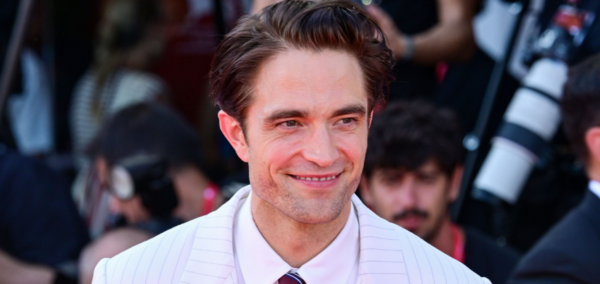
Robert Pattinson’s old interview about becoming James Bond has resurfaced after casting news

He thought he’d be terrible
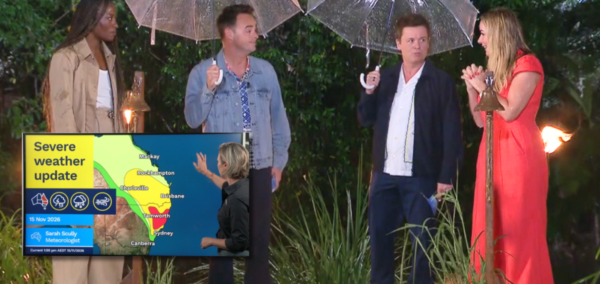
Filming of I’m A Celeb’s premiere was stopped due to ‘nightmare’ storm, and we didn’t see it
Dec was ‘delirious’ by the end of it, and it sounded low-key terrifying
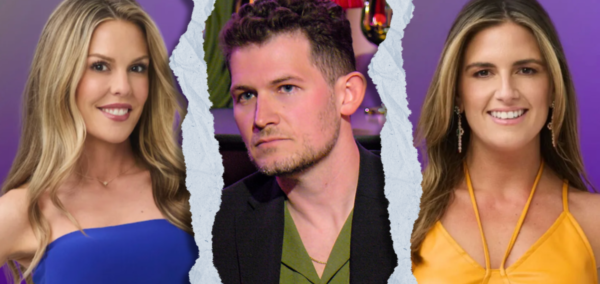
Matt the beekeeper went to Mexico retreat with his fiancée and had huge drama cut from Love Is Blind
There’s now beef between the woman he got engaged to and Michaella

Anya turns on Elise in The Body as a ‘fight or flight’ response, Kristina Bogic says

The actor believes Anya ‘always wants to do the right thing’
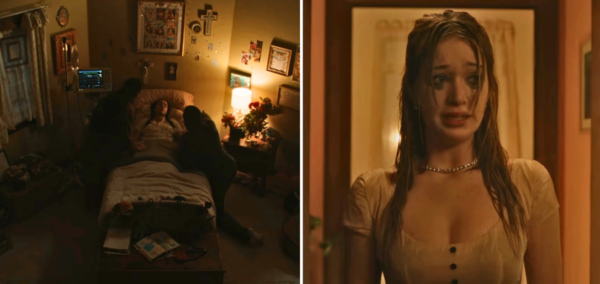
Grace is… what? The cast of Netflix’s The Body explain what the eerie final line means
‘The beauty of the show is that it stays within the mystery’