

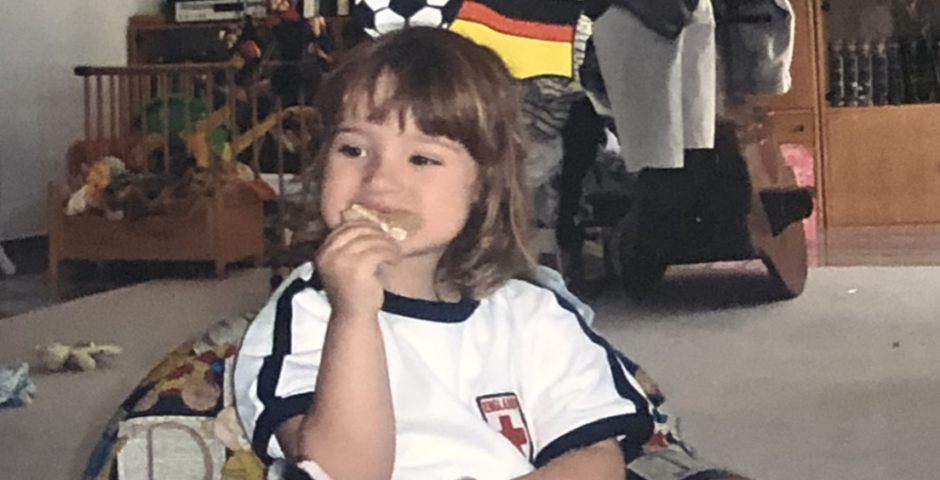
Citizens of everywhere and nowhere: The third culture kids of Durham
Stories from the TCKs of Durham University

When Bridgerton season four dropped, I was fully prepared for regency raucousness: Corsets, candlelit scandal, and Benedict Bridgerton continuing his reign as the ton’s most charming Casanova. What I was not expecting was to be confronted with a quiet, unsettling question about identity, specifically, what it means to belong everywhere and nowhere at once.
That moment came not from the show itself, but from an interview with Luke Thompson, the British actor who plays Benedict Bridgerton (yes, the massively fit one). Thompson was born in Britain but moved to France as a child, where he spent the next twenty years of his life.
In the interview, he described feeling simultaneously at home and not at home, a sensation he connected to the idea of being a “third culture kid”. He went on to explain that acting itself mirrors this experience: Existing in an in-between space, never fully here nor fully there, but always interwoven between identities.
Until that moment, I had never considered myself a third culture kid. But something about his words lodged itself uncomfortably close to home.
Despite my British accent, which does occasionally slip, and my British passport, I grew up in Germany. It wasn’t until I came to Durham that I truly began to realise how German I actually am, in spite of my enduring love for a good cup of Earl Grey.
Somewhere between countries, languages, and cultural expectations, I’ve found myself constantly oscillating: Not quite British enough, not quite German enough, and always aware of the gap between how I see myself and how others see me.

That feeling, of being suspended between worlds, never fully anchored, made me wonder whether other Durham students felt the same way. Was this sense of cultural in-betweenness a private confusion, or a shared experience quietly shaping our university lives?
Before diving into their experiences, though, it’s worth asking a more basic question.
What is a third culture kid?
The term “third culture kid” (often shortened to TCK) was coined in the 1950s by sociologist Ruth Hill Useem, alongside her husband John Useem. It refers to children who grow up in a culture different from their parents’ home culture for a significant portion of their developmental years. The “third culture” itself is not a country, but a shared space created by people who live between cultures, borrowing pieces from each, while fully belonging to neither.
For many third culture kids, identity becomes fluid rather than fixed. Accents shift. Customs blur. Home becomes less of a place and more of a feeling, one that is often hard to explain and even harder to locate.
At a university like Durham, with its international student body and globally mobile cohort, these experiences are far from rare. Yet they’re not always visible. Third culture kids don’t necessarily “look” international, nor do they always fit neatly into boxes like home or overseas student. Instead, they often exist quietly in the margins, translating themselves depending on the room they’re in. Here is what the third-culture kids of Durham had to say about their experiences:
Oscar, third year politics and philosophy student at St Aidan’s College
“My sister and I grew up in Canada, with an English dad and a Danish mum. I was always aware of how unique our cultural combination was, but it never seemed like too big a deal. As kids, all it meant was we had different traditions at Christmas and Easter, and spoke a different language at home. That perspective started to change when I was eighteen, backpacking with friends.
“I met a psychologist at a hostel in Nice. She seemed to know things about me that I couldn’t even articulate myself. She, like me, had grown up in a country which neither of her parents were from; her parents were dutch and scottish, but she was proudly Kenyan. She spoke with confidence and awareness about what that meant for her. I was stunned. Her words rang true for me too, but how could someone know so much about me only from learning about my background? That was the first time I ever heard the term ‘third culture kid’.



“Fast forward to now. I’m on exchange for a year, in Zurich. My biggest challenge has been my accent. People ask me where I’m from, and I wrestle the same problem each time. If I say London, they won’t believe me; if I say Toronto, it won’t feel like the truth. Little things like this are often what reminds me of my third culture-ness, but the reality is much bigger. It’s enabled me to connect with people in a deeper way than I had ever expected. It’s helped me to keep a truly open mind in new cultural experiences, just as I’ve done at home my whole life. Most of all, it’s equipped me with a better sense of where home really is for me.”
Emily, third year economics student at college of St Hild and St Bede
“I guess superficially there’s the weather and the lifestyle, I used to revise for my GCSEs at beach clubs and there was a lot of brunching in Abu Dhabi, but on a deeper note I found assimilation into British culture harder than I thought. One thing that really surprised me was that I found it weird for people come up to me and hug me in public. In an Arab country there’s very little PDA and the level of respect means it would always be asked/consensual. So to have someone hug you from behind without acknowledging first used to shock me. It’s not that I didn’t want to be overly friendly, I just wasn’t used to it.

“Thinking about it, I also love international celebrations such as Lunar New Year, Diwali, and Ramadan/Eid. I’m not sure if it’s a Durham thing but I found many of my British friends weren’t as keen to attend international based events as I was. I definitely found being a TCK meant I’m rather extroverted and outgoing and I’m not bothered by short-term/passing friendships. I didn’t really find freshers week too daunting as opposed to those that had been at the same school, with the same peers their whole life.
“Walking up to someone and striking up a conversation was one if the easy parts. Funnily enough, and reflecting on my friendships now, many of my friends are also TCK. One of the first friends I made was my corridor neighbour who also did economics; we bonded over having lived in Dubai, and that 40 minute walk from Hild Bede to Mill Hill Lane for our first lecture flew by as we talked about life abroad.”
Dan, third year politics and philosophy student at College of St Hild and St Bede
“In the UK in general it’s definitely a sense of not fully belonging in either country. My Spanish accent is quite English as is my appearance so it’s hard to feel fully Mexican sometimes, especially when we go to visit and I get treated as a tourist. But coming here, meeting other Mexicans and have them validate the culture I have and know is really comforting really. Talking about shared experiences, mundane things like particular pastries they sold over there, it’s quite comforting really.

“In short, speaking to students across the university revealed just how familiar this feeling is. Many described a constant negotiation of identity: the exhaustion of explaining where they’re “really” from, the strange homesickness for places that no longer exist, and the simultaneous privilege and loneliness of cultural adaptability.”

Perhaps that’s why Thompson’s words resonated so deeply. To be a third culture kid is not simply to be confused, it is to be layered. To live with contradiction. To be, in many ways, always becoming.
And maybe that’s not such a bad thing after all.
For more of the latest news, guides, gossip, and memes, follow The Durham Tab on Instagram, TikTok, and Facebook.



Latest
There’s one ‘dangerous’ detail in the Ed Sheeran scandal that a politician says we’re overlooking

Alexandria Ocasio-Cortez is right… once again


Cambridge college informs students they can’t move into their chosen rooms when term starts

Affected students will receive compensation estimated to be £400


Health expert reveals how dangerous HYROX poop incident really is after ‘biohazard’ concerns

Everyone’s right to be freaking out


New one-day Lancaster music festival cancelled due to financial hardship after months of postponement

Rapper Tinchy Stryder was supposed to make a headline appearance at the event

Explaining that resurfaced video of Macklemore ‘mocking Jewish people’, and how he responded
‘If this guy is your human rights hero, you’ve got a serious problem’



Very few celebs are publicly backing Ed Sheeran, but the ones who are speak VOLUMES
Alexa, play clown music

From University of Edinburgh Student to Edinburgh Councillor, Ruth Elliot Reflects on her Journey into Politics

In a conversation with The Edinburgh Tab, Ruth Elliot discusses student life, her role as Vice President Community, and her goals as councillor
Slow Horses season six isn’t the same, so here’s why the show’s creator Will Smith quit

‘I sadly couldn’t keep going’

Bonnie Blue’s video birthday messages to 16-year-olds are the final nail in the coffin
‘Maybe one day, me, you, and your dad can take a trip’

It’s been a whole 10 years since This Is Us started, so here’s where the cast are now
Justin Hartley re-married in the same year he divorced Chrishell Stause

HYROX has actually just added new ‘faeces’ rule, so here’s what it means for athletes

Joanna Wietrzyk should consider herself lucky
Calling all aspiring journalists and content creators: Join The London Tab!
Come to our open meeting on Tuesday 29th September, 7pm at the Institute Bar

Billionaire who paid actress $4.5million to marry him wants cash back after she sacked him off
The crypto tycoon paid a ‘bride fee’