

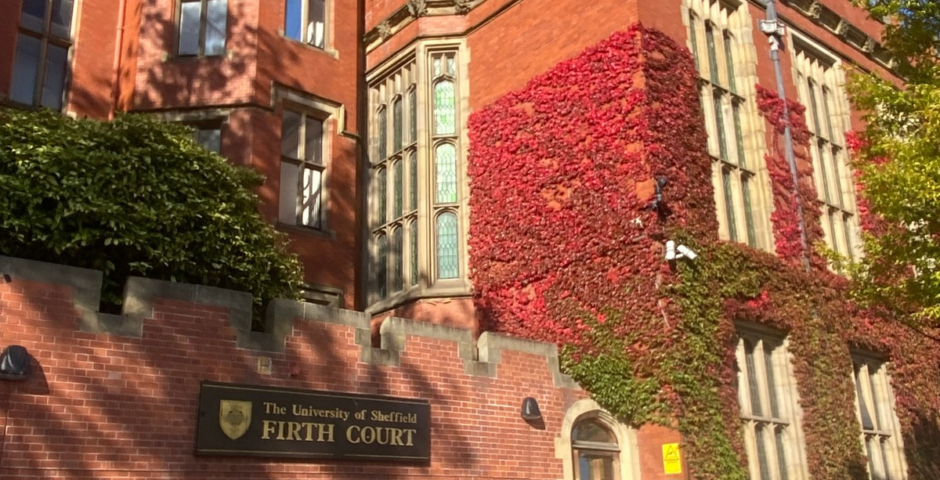
Three University of Sheffield researchers have been named as the UK’s top future innovators
The list highlights the people behind impactful, life changing research.
The three academics from Sheffield are leading research that has delivered breakthroughs in digital technology for healthcare, manufacturing, and low-carbon fuels.
Universities UK’s Future 50 innovators list celebrates the researchers, founders and artists behind life-changing research.
Professor Sue Hartley, Vice President for Research and Innovation at the University of Sheffield, said: “I’m incredibly proud to see three Sheffield academics be recognised as some of the UK’s leading innovators.
“They each represent the vision that we have for research and innovation at the University of Sheffield: working with our partners in communities and industry to address the major challenges of our time.”
The initiative is part of Universities UK’s campaign, Future Universities, to highlight the vital role universities play in creating opportunities, supporting innovation and long-term growth across the UK.
Professor Heidi Christensen, Professor Zoltan Kis and Professor Mohamed Pourkashanian have been recognised for leading research to spot signs of dementia earlier, speed up vaccine production and accelerate the development of sustainable aviation fuel.
Professor Heidi Christensen
Professor Heidi Christensen is the Head of the School of Computer Science where she leads the technical development of CognoSpeak.
CognoSpeak uses a virtual AI to talk with patients and analyse their voice and language for early signs of dementia, stroke related decline and cognitive changes in motor neurone disease.
With NHS memory assessment waits up to 151 days, patients can instead complete a 15 minute screening at home on a laptop, giving families earlier access to treatment and support.
On being selected for the list, Professor Christensen said: “I’m delighted to be recognised as one of Universities UK’s 50 Future Innovators. CognoSpeak is the result of a truly interdisciplinary collaboration, bringing together researchers in computer science, healthcare professionals, patients and their families”
“Dementia has such a profound impact, not just on individuals but on their families too, and the possibility of helping people get answers, support and treatment earlier is what continues to motivate our work.”



Professor Zoltan Kis
Professor Zoltan Kis is a professor of Bioprocess Engineering where he leads RNAbx, an automated “process-in-a-box” platform for making RNA vaccines.
RNAbox runs continuously, producing seven to ten more mRNA and is small enough for vaccines to be made locally. That could give communities in low and middle-income countries faster , fairer access to vaccines and help the world respond within 100 days to a new pandemic.
Professor Kis said: “I am delighted and honoured to be named one of Universities UK’s 50 Future Innovators, a recognition I share with the whole RNAbox team at the University of Sheffield, our funders and our partners.
“The RNAbox was inspired by the transformative potential of mRNA technology, both for vaccines that prevent infectious disease and for therapeutics that treat a wide range of diseases, including cancer. I hope the RNAbox will make these medicines faster to produce, more affordable and available closer to the patients who need them.”
Professor Mohamed Pourkashanian OBE
Professor Mohamed Pourkashanian is Head of the Energy Innovation Centre at the University of Sheffield. Working with Virgin Atlantic, Boeing and Rolls-Royce, he played a leading role in Flight 100 in November 2023, the first transatlantic commercial flight powered entirely by sustainable aviation fuel.
Flight 100 proved that 100 per cent sustainable fuel works in existing engines without modification, a major step towards cutting aviation’s emissions and creating skilled jobs in the UK.
He was appointed OBE in 2023 for services to net zero research and innovation.
On being selected, Professor Pourkashanian said: “I am honoured to be selected as a UK Future Innovator and would like to share this recognition with the team at the Energy Innovation Centre here at the University of Sheffield.
“The Flight100 project was a great example of academic, industrial and technical collaboration, which highlighted that flight using 100 per cent Sustainable Aviation Fuel (SAF) is a safe and realistic way we can expect to fly in the future.”

Latest

Second sloppy I’m A Celeb 2026 editing error shows how staged the jungle really is

It’s becoming a joke now

GTA 6 has a surprisingly detailed relationship system for Jason and Lucia, and here’s how it works
It’s more involved than expected

How to make driving easier in the GTA 6 settings, because the steering is so annoying
My car is constantly wrecked

University of Cambridge student argues ‘there’s a decent chance that AI kills all of us’

He reckons the odds are above 20 per cent

Hundreds of students and activists take to the streets of London for International Youth Strike
Students across the UK and Europe protested against their governments on Friday, demanding ‘the possibility of a dignified future’


Two secret radio stations and playlists are hidden in GTA 6 – what they are and how to unlock them

You need them for 100 per cent completion
Mariella’s friends have shared more context behind her I’m A Celebrity kitchen arguments
‘There’s a lot more to her than people are seeing’

The most tiny detail in GTA 6 that took developers months and months to perfect
I can see why it took so many years


‘I was really worried’: Joanna Page’s husband shares concern as she breaks down on I’m A Celeb

Mariella Frostrup has now made two people cry
The Death of Original Thought: Is AI Stripping Creativity from Education?
Are you sacrificing original thought for convenience?


Stuck at what to by? Here’s our Christmas gift-guide for York students
Are you a York student? Here’s what you need on your Christmas list this year

Hypothermia and potential frostbite? Here’s the REAL deal about clubbing in Newcastle during winter
There’s an ironic battle between looking hot and staying warm
York University ranked top 10 for its plant-based menus
University of York has been ranked in the top 10 universities for promoting plant-based food choices at catered events

Pidge: The new app delivering grand dinners and great dates to Cambridge students

“Cambridge has a secret app,” and it strives to transform the way students connect

Bus driver strike to cause chaos over York’s festive weekend warns Union
A union has warned of “travel chaos” in York as bus drivers plan to strike over the festive period


Tab Talks: Interview with Lancaster-based author Ian Edwards
Author Ian Edwards shares his insights about becoming an author and the publication process.