
The Death of Original Thought: Is AI Stripping Creativity from Education?
Are you sacrificing original thought, creativity, and independent thinking for convenience?
AI usage at university
University has traditionally been regarded as a place where individuals learn to think independently, challenge established ideas, and develop perspectives.
It is supposed to be an environment that encourages curiosity, intellectual exploration, and the ability to think for oneself. As artificial intelligence becomes increasingly embedded in higher education, there is a growing concern that the very qualities universities are designed to cultivate are being undermined.
A student’s perspective
AI has undoubtedly transformed the way that students approach their education. Complex theories can be explained in seconds, and entire assignments can be structured with a carefully worded prompt. Tasks that once required hours of reading, critical thinking, and interpretation can now be completed in a fraction of the time.
On the surface, this appears progressive. Students are meeting deadlines, and information is more accessible.
Although beneath this lies the uncomfortable question: if students are no longer required to think through the process themselves, what exactly are they learning?
The problem is not necessarily the existence of AI itself, but the extent to which people have begun to rely on it. There is a fundamental difference between using technology to support learning and using it to replace the process altogether.

The loss of creativity
Creativity is not simply the ability to produce something aesthetically pleasing or entirely original. In an academic environment, it is the ability to approach familiar questions from unfamiliar perspectives, make unexpected connections, and challenge controversial explanations.
Creativity is what allows one student to interpret a psychological theory differently from another, or to develop an argument that goes beyond what has already been established.
AI operates by generating responses based on patterns in existing information. Although it can produce convincing material, it neglects the opportunity for originality.
When students repeatedly turn to AI for inspiration, there is a danger that academic work begins to look increasingly similar. This leads to a wider consequence, as students lose confidence in their own thinking and interpretations.
Over time, this could create a generation of students who are highly proficient at prompting technology but less confident in their ability to think without it. This distinction is only growing more significant.


Unknown questions will remain unknown if no one is willing to investigate.
Are universities responsible?
Considering the academic culture that universities create, the overuse of AI almost makes sense. With increasing workloads and competitive grading systems, students prioritise efficiency over efficacy.
Banning AI is unlikely to be the solution. Artificial intelligence has already successfully integrated itself into our everyday lives, including professions. The challenge for universities is to establish an educational environment in which technology complements independent thought rather than replaces it.
The purpose of university should extend beyond receiving a diploma. It should be about developing individuals who can question information, think critically, and approach problems independently.
These are skills that can not be downloaded or prompted.
The University of Edinburgh was contacted for comment. In response, a spokesperson highlighted the University’s existing guidance for students and staff on AI use. This included information on training, University-supported tools and external advice.
While guidance can help students understand how to use AI appropriately, questions remain about how universities can ensure that technology supports rather than undermines independent learning.

Final thoughts
Artificial intelligence has the potential to make education more accessible and to support students in ways that were previously unimaginable.
If students become so accustomed to having answers generated for them, they risk sacrificing something far more valuable than traditional academic methods.
The greatest concern is not that AI can think for us. It is that we may eventually lose the desire to think for ourselves. At what point do we stop teaching AI to think like us, and start allowing it to teach us how to think like it?
If university is no longer a place where students learn to think independently and develop ideas of their own, then it is worth asking what, exactly, a university education is supposed to achieve. If your achievements are generated from AI usage, do you still consider it your achievement?


Latest
The Death of Original Thought: Is AI Stripping Creativity from Education?
Are you sacrificing original thought, creativity, and independent thinking for convenience?


Stuck at what to by? Here’s our Christmas gift-guide for York students
Are you a York student? Here’s what you need on your Christmas list this year

Hypothermia and potential frostbite? Here’s the REAL deal about clubbing in Newcastle during winter
There’s an ironic battle between looking hot and staying warm
York University ranked top 10 for its plant-based menus
University of York has been ranked in the top 10 universities for promoting plant-based food choices at catered events

Pidge: The new app delivering grand dinners and great dates to Cambridge students

“Cambridge has a secret app,” and it strives to transform the way students connect
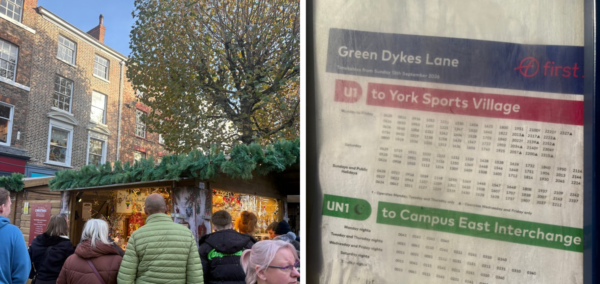
Bus driver strike to cause chaos over York’s festive weekend warns Union
A union has warned of “travel chaos” in York as bus drivers plan to strike over the festive period



Tab Talks: Interview with Lancaster-based author Ian Edwards
Author Ian Edwards shares his insights about becoming an author and the publication process.

Can Manchester students be stylish, sustainable and skint?
Manchester’s Good Clothes Show asks whether sustainable fashion can be student-friendly

7 Side Quests to do before Semester One Ends

Semester One is coming to an end. Here’s some ways to make the most of it!
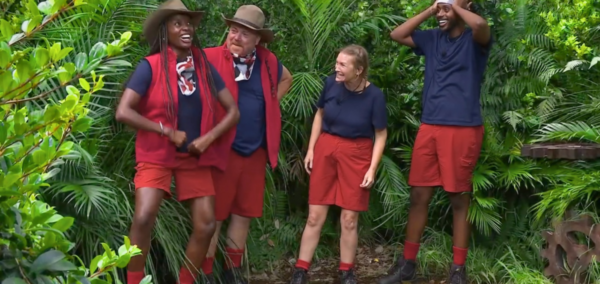
‘Keith Lemon’ confused us, but four more of the I’m A Celeb cast don’t use their actual names

Er, Ricky Wilson is not called ‘Ricky’

University students explain why they joined protests on 20th November
‘Students are saying our future is important’

Don’t forget about the new I’m A Celeb bushtucker trial rule that’s changed everything

It feels more produced every year

Rebekah Vardy and Coleen Rooney have both been on I’m A Celeb, but there’s a huge difference
They had a very public feud

GTA 6: How many chapters there are in total, and a full list of all the missions

It’s absolutely huge


The full rumoured cast list for Love Island All Stars 2027
We don’t know the host, but we do have an idea of the Islanders

From morning to night: The full daily routine of the I’m A Celeb 2026 campmates
They don’t go to bed until 1am

Student loan running low? Here’s 4 cheap student recipes you need to try this winter
None of them take more than twenty minutes – we know you’ve got deadlines