

Can you be stylish, sustainable and skint in Manchester?
Manchester’s Good Clothes Show asks whether sustainable fashion can be student-friendly
Your friends want to go to Disco Spoons this Friday, and you have absolutely nothing to wear. For many students, they head straight to Shein, Primark or Zara come to mind. You can’t blame them – £30 for a whole outfit is hard to beat.
But when your new jeans start ripping after a couple of months, that bargain doesn’t seem quite so appealing.
Fast fashion might be kind to your student loan in the short term, but it’s not always kind to your wardrobe or the environment. So, is sustainable fashion actually an affordable alternative for students?
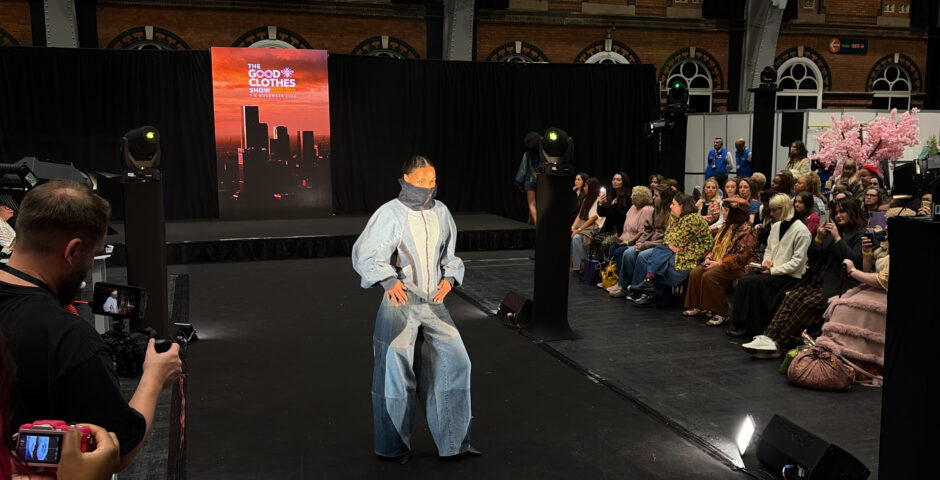
This year’s Good Clothes Show landed at Manchester Central on 7th to 8th November, bringing together independent, vintage, pre-loved and slow-fashion brands. With catwalks, workshops, expert talks and market-style stalls, it offered a glimpse into what the future of fashion could look like.
Is thrifting worth it?

Thrifting is an incredible alternative from fast fashion. Luckily for us, it’s largely inexpensive – unless you’re searching for an original 2001 John Galliano J’adore Dior shirt. In that case, you’re on your own. Don’t get me wrong, I’ll still be seething with jealousy from afar.
If you love the 2000s, then Joey Bevan loves you. A fashion stylist at The Good Clothes Show, Joey is also a costume designer, producer and TV host. When he speaks to The Tab, he’s backstage, rushing models into position for the runway.
“You guys are all into the nineties, Y2K, and you’ve still got the pieces, and I hate the fact that I was at fashion school in 2001, and the style that I used to wear is now vintage. So, wear it, because it was great when I did.”
Joey becomes animated when discussing fashion, and it’s easy to see why. He’s collaborated with Beyoncé, Lady Gaga, Dior, Dolce & Gabbana, Queen Elizabeth and King Charles III. He’s certainly someone worth listening to.
He’s not wrong about us still having the pieces from the past. Doomscrolling on Vinted can result in finding the craziest clothes. Even Charlie XCX sells her concert outfits on the platform.
Buying second-hand gives clothes another lease of life, keeping perfectly wearable pieces out of landfill and reducing the demand for new production.
Joey’s advice to students?
“[Students should be] thrifting. There’s so many sustainable brands that do upcycling where they don’t cost an arm and a leg. But I would just say thrifting.”
Do you have to spend a fortune to shop sustainably?
From thrifting to upcycling, there’s something for every student. Small businesses can be quite expensive sometimes, and that’s not me hating on them. The time and effort that goes into each garment warrants the price.
Unfortunately, as students, we’re not exactly known for our heavy wallets.
That’s why Vinted is my new best friend. Everyone I know seems to be either buying or selling, and you can find everything from pre-loved favourites to items still with their tags attached.
And if you’re really looking to save money, learn to sew. A needle and thread can go a long way. Repairing holes or upcycling an old garment means you can give your clothes a new lease of life without spending money on replacements.
With an estimated, 350,000 tonnes of clothing waste ending up in UK landfills every year, making the most of what you already own matters.
Can finding your own style help?

Having a sense of personal style can also build up your confidence and sense of self.
And you don’t have to stick to one particular aesthetic. Stylist, Sophie Lorimer, tells The Tab she doesn’t either:
“When you really, really know what it is that you love, and what suits your body, you’re more likely to then spend a little bit more because it’s going to last you longer.”

Just because you like a piece of clothing, it doesn’t mean you have to buy it. It might not actually suit you when you put it on, or you realise once you’re home that it was an impulsive buy.
A wardrobe full of impulsive purchases is hardly a sustainable one.
Is fast fashion really the worst thing ever?
Students are often fooled by the wording brands use to sell their products. While fast fashion is undeniably more affordable for many young people, some brands also make sustainability claims that aren’t quite what they seem.
Fashion designer, Ellie Brown agrees, warning about greenwashing – when a company exaggerates sustainability efforts, sometimes making misleading claims to persuade the consumer that they’re doing more for the environment.
“Polyester is not the devil. It has its time and place. Recycled polyester, on the other hand, is greenwashing. Don’t listen to it. It’s awful because once you recycle polyester in that way, it’s even harder to break down.”
If you walk into any shop on Market Street, you are practically guaranteed to see ‘made up of at least 50 per cent recycled polyester’ on any given label. It is like a pandemic.
“As long as you cherish your garment and repair it, and use it for as long as you can, it doesn’t necessarily matter so much what the fabric is, but how you prolong the lifespan of that garment,” she said.
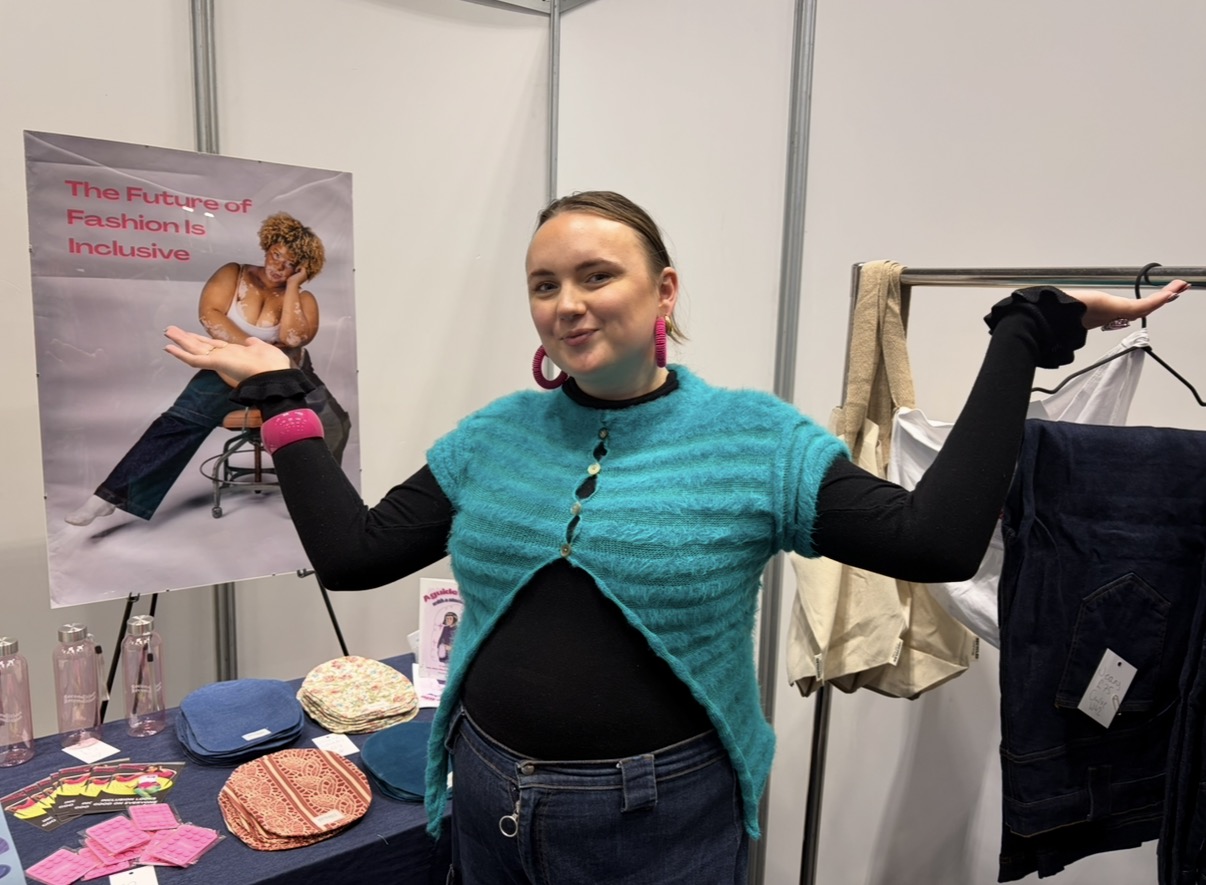
Ellie is the founder and creative director of Recondition MCR, an adaptive clothing brand for individuals with disabilities. Her designs were featured this year in The Good Clothes Show. As she speaks to The Tab, she’s manning her stall. Posters for the Reconditioned Jean are hung up, and she has brought her iconic disco ball.
Her advice? Invest in clothes you’ll actually wear.
Staple pieces can save a struggling wardrobe. Too many statement pieces you’re not entirely convinced by can leave you with a wardrobe full of clothes but nothing to wear.
“Invest in those staple pieces that are really going to work hard in your wardrobe. Spend a bit more on those pieces that you’re going to use time and time again, because if you buy those pieces in a fast fashion shop, they aren’t going to last you.
“If you go to small businesses that really invest in the quality of those pieces, those are the pieces that you’re really going to cherish and go back to time and time again.”
Like Joey, Ellie loves buying pre-owned. The second-hand sector of the fashion industry makes up approximately 2.4 billion pounds in the UK, and the industry will only grow more.
“Buy second-hand, get on Vinted, get down to your local charity shop. Especially when you go to a charity shop, not only are you getting something for a really good price, but you’re also supporting a charity.”
Should the future of fashion be entirely up to students?
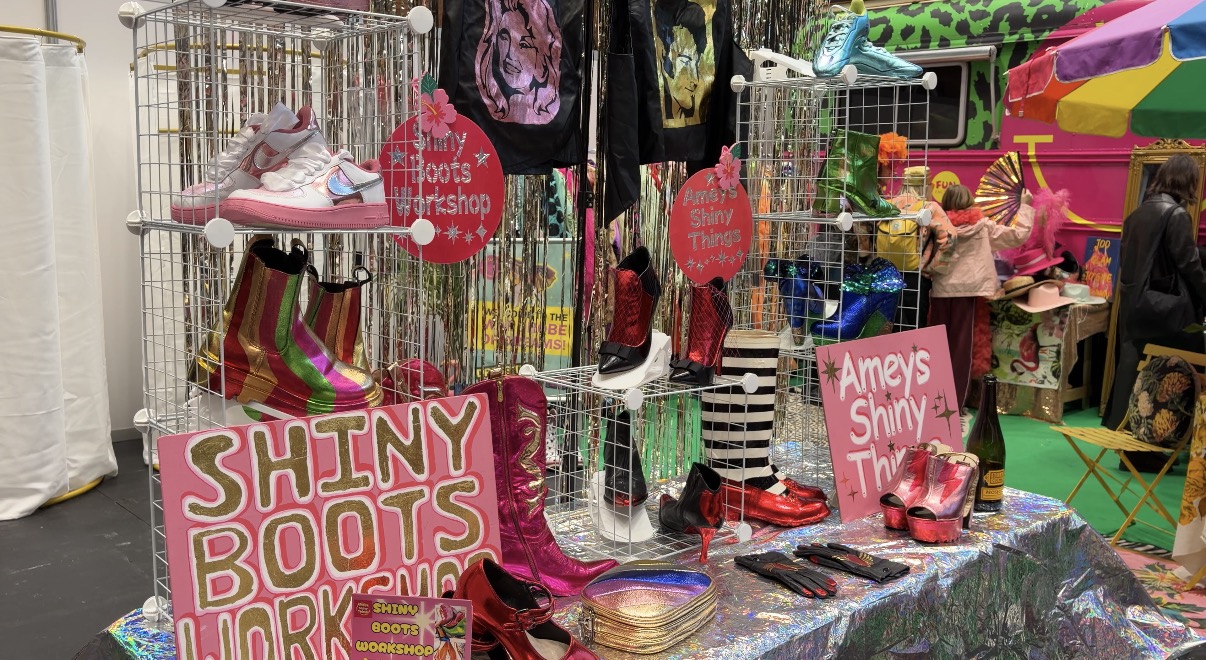
It’s no lie that students make up a large portion of the fashion industry.
However, while everyone should do their part in supporting the environment, we should also hold fast fashion companies accountable.
The corporations that dump chemicals into our waterways, deforest our trees, and produce mass textile waste will do more harm to the environment in the long run.
By boycotting fast fashion, shopping on second-hand websites such as Vinted and Depop, and buying from charity shops, you help change the trajectory of the future fashion industry.
Is it fair to burden students alone with the responsibility of sustainable fashion?
If we really want change, it cannot just be us. Large companies need to be held accountable, such as Primark, H&M, and Zara.
Signing petitions, shopping on Vinted instead of in store, and supporting smaller businesses (when you’re financially ready, we all know how skint students are…) can all help, but there needs to be something more.
Putting pressure on the government and your local MPs and councillors is how change happens. This is where the real power lies.
The Good Clothes Show is a reminder of what the future of fashion can look like if everybody puts their full effort in.

Latest

7 Side Quests to do before Semester One Ends
Semester One is coming to an end. Here’s some ways to make the most of it!

‘Keith Lemon’ confused us, but four more of the I’m A Celeb cast don’t use their actual names

Er, Ricky Wilson is not called ‘Ricky’

University students explain why they joined protests on 20th November
‘Students are saying our future is important’

Don’t forget about the new I’m A Celeb bushtucker trial rule that’s changed everything

It feels more produced every year
Rebekah Vardy and Coleen Rooney have both been on I’m A Celeb, but there’s a huge difference
They had a very public feud

GTA 6: How many chapters there are in total, and a full list of all the missions

It’s absolutely huge


The full rumoured cast list for Love Island All Stars 2027
We don’t know the host, but we do have an idea of the Islanders

From morning to night: The full daily routine of the I’m A Celeb 2026 campmates
They don’t go to bed until 1am

Student loan running low? Here’s 4 cheap student recipes you need to try this winter
None of them take more than twenty minutes – we know you’ve got deadlines


What actually happened in the Wagatha Christie case as Wayne Rooney discusses it on I’m A Celeb
‘It’s … Rebekah Vardy’s account’

Students to walk out of all 24 Russell Group universities for the International Youth Strike
Protests are planned in more than 100 cities and towns today

When Lucia becomes completely playable in GTA 6, and you swap between her and Jason
There’s a mission where it happens

Every cheat code in GTA 6 and how to unlock each one, from money to ammo
You can instantly get $250k

Abbott Elementary’s Janelle James reveals how she ‘bullied’ her way into GTA 6 radio role
‘It’s very important to me’
Jax and Stew have finally shared their relationship status after Love Is Blind season 11
‘I’m super glad through the chaos of the experience I met Jax’

Explainer: Why are York students protesting today?
University of York and York St John students are expected to take part in a national walk out today

Here are all 42 radio hosts on GTA 6, because there are so many rogue ones
It goes from Lana Del Rey to Weird Al

Bigfoot and UFOs: All the weird and wonderful things people are stumbling upon in GTA 6
‘Absolute cinema the way it all played out’