
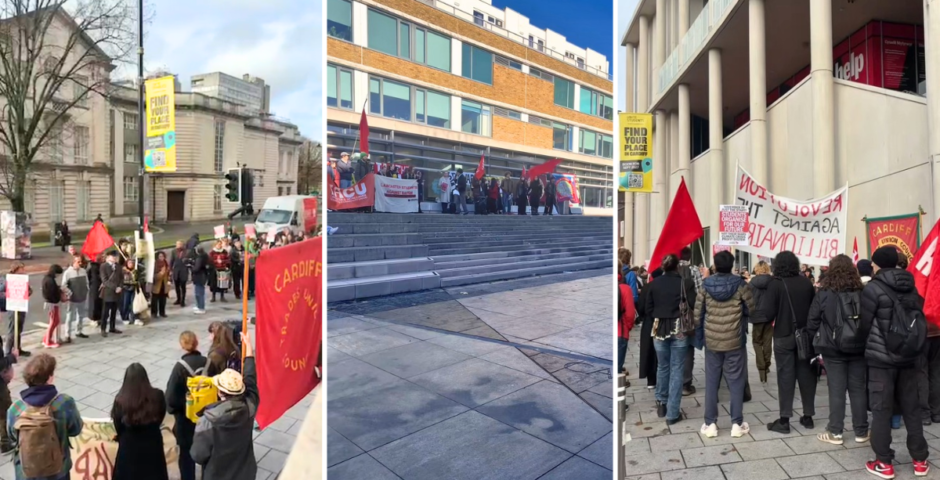
University students explain why they joined protests on 20th November
‘Students are saying our future is important’
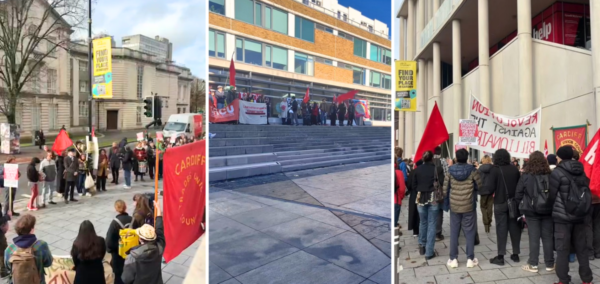
University students across the UK are striking on 20th November. Here’s why, according to the actual students who are protesting.
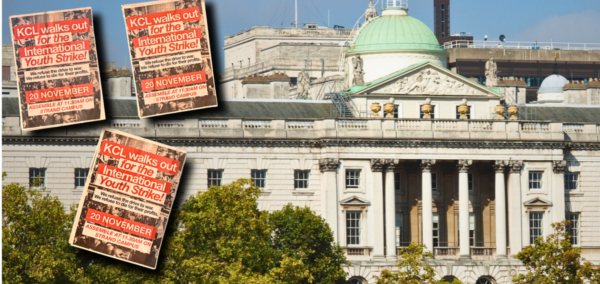
These walkouts aren’t just happening in the UK, but throughout Europe. The general sentiment among protesting students is that governments are prioritising militarisation over young people’s futures.
Demonstrations are happening for the International Youth Strike across Austria, Belgium, the Czech Republic, Croatia, Denmark, Finland, France, Germany, Hungary, Ireland, Italy, Malta, the Netherlands, Norway, Poland, Portugal, Slovakia, Slovenia, Spain, Sweden, Switzerland, Turkey and Romania.
In the UK, protests in various cities and towns have been organised by several groups, including the National Union for Students, as well as the European Left Youth Network, the Scottish Palestine Solidarity Campaign, Socialist Students in Britain, the Socialist Worker Student Society (SWSS), the Stop the War Coalition and Young Greens.
Concerns with militarisation
The slogan for the International Youth Strike is: “Fight for our future, not their wars.” The manifesto for the protest calls for “an end to militarisation, rearmament, and austerity imposed in the name of war”. Students across university feel their governments are prioritising military spending over young people.
In the UK, many of the protesting students are calling for the government to scrap the Defence University Alliance. This new initiative exits to increase research in the defence sector and encourage students to find careers in that area
Kwabena Devonish, the joint secretary of Stop the War Cardiff, told The Tab: “Students are saying our future is important, and actually this is the time to fight back for it, because we’re seeing how governments are also pushing towards the rise of militarism and pushing towards this drive to war.
“Actually, those wars are not fought on our behalf as working class people and as students. They’re fought for the people at the top, so that’s why we’re coming out and saying, ‘Enough is enough.'”


The affordability of university
On its landing page for the 20th November protests, the National Union of Students says: “The UK Government’s Autumn Budget failed to address the concerns of students and young people. No action on student loans and debt, no action on education funding, and a slowing in the rise of young people’s wages.”
Socialist Students would like the UK to “scrap tuition fees, cancel student debt and bring back living grants”, then introduce “a £15 an hour minimum wage for everyone, with no lower rates for young people”.
Many protesters are highlighting issues with the cost of living for students in their area.
For example, at Lancaster University, students are particularly concerned by the rents on campus. Lancaster University Tenants Union has organised workshops to coincide with the protests. A protestor told The Tab she hoped the protests would increase conversation about various issues, including “the campus rent. She wants “to see how we can work on achieving a longer term goal of that”.
Cuts to higher education
Many of the UK’s universities are struggling for money at the moment, due to increased running costs, a drop in international students, and little change to tuition fees. To save money, several universities have resorted to cutting hundreds of jobs and closing courses.
Alongside students’ International Youth Strike, university staff are holding protests today. The University College Union (UCU) and Unison have declared 20th November “a national day of action”. The UCU is encouraging members to join local rallies, or organise committee meetings or fundraising events.
For more like this, follow The Tab on Instagram.
Latest
University students explain why they joined protests on 20th November

‘Students are saying our future is important’

Don’t forget about the new I’m A Celeb bushtucker trial rule that’s changed everything

It feels more produced every year

Rebekah Vardy and Coleen Rooney have both been on I’m A Celeb, but there’s a huge difference
They had a very public feud

GTA 6: How many chapters there are in total, and a full list of all the missions

It’s absolutely huge


The full rumoured cast list for Love Island All Stars 2027
We don’t know the host, but we do have an idea of the Islanders

From morning to night: The full daily routine of the I’m A Celeb 2026 campmates
They don’t go to bed until 1am

Student loan running low? Here’s 4 cheap student recipes you need to try this winter
None of them take more than twenty minutes – we know you’ve got deadlines

What actually happened in the Wagatha Christie case as Wayne Rooney discusses it on I’m A Celeb
‘It’s … Rebekah Vardy’s account’
Students to walk out of all 24 Russell Group universities for the International Youth Strike
Protests are planned in more than 100 cities and towns today

When Lucia becomes completely playable in GTA 6, and you swap between her and Jason
There’s a mission where it happens

Every cheat code in GTA 6 and how to unlock each one, from money to ammo
You can instantly get $250k

Abbott Elementary’s Janelle James reveals how she ‘bullied’ her way into GTA 6 radio role
‘It’s very important to me’

Jax and Stew have finally shared their relationship status after Love Is Blind season 11
‘I’m super glad through the chaos of the experience I met Jax’
Explainer: Why are York students protesting today?
University of York and York St John students are expected to take part in a national walk out today

Here are all 42 radio hosts on GTA 6, because there are so many rogue ones
It goes from Lana Del Rey to Weird Al
Bigfoot and UFOs: All the weird and wonderful things people are stumbling upon in GTA 6
‘Absolute cinema the way it all played out’

HBO just released new Harry Potter series posters and everyone’s slating the ‘cheap’ wands
The Elder Wand looks like a dog’s fetching stick
New padel facilities to open up near Lancaster city centre
The new padel centre will feature six playing courts