

With a track record this appalling, how can anyone trust the NUS to tackle anti-Semitism?
Cambridge has a duty to make a stand and sting campuses across the country into action, writes Jewish student Adam Crafton

Voting is now open in the NUS disaffiliation referendum. Vote by following this link. Vote Yes for disaffiliation or No to remain affiliated.
On Friday, I had a startling conversation with Sophie Jackson, a Jewish student at the University of Warwick.
Sophie was one of those who instigated a campaign for NUS disaffiliation on her campus. A referendum was held and the remain vote won comfortably with a 64% majority.
I made contact with Sophie to express my surprise that the remain campaign had secured a landslide victory and I enquired as to whether her team had forcefully made the allegations of anti-Semitism within the NUS.
Sophie’s reply shocked me. “We have a very small Jewish community here at Warwick and frankly we have enough issues,” she explained. “There was a risk to politicising ourselves. There have been issues with people writing anti-Semitic comments in library books, to give one example.
“As a community, we felt it safer to avoid Malia and the anti-Semitism accusations because we didn’t think it would be well-received. Some of the Warwick Student Union’s sabbatical officers and our NUS delegates had voted for her at national conference and we just felt we would be shot down if we alleged Malia’s comments were anti-Semitic. We also had the instance of Aysegul Gurbuz here, the 20-year-old Labour Councillor who was standing for the SU’s Ethnic Minority Officer and has previously tweeted that Adolf Hitler is “the greatest man in history”. So you can see why we are wary.”
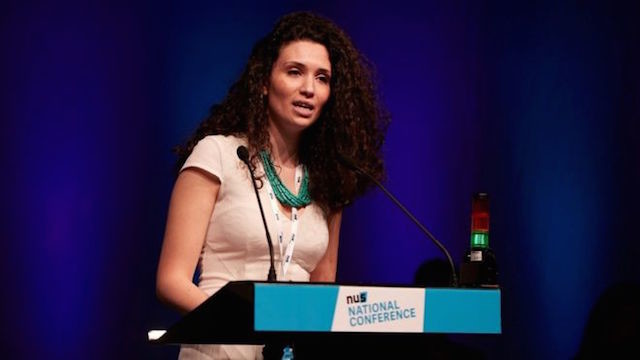
Malia Bouattia: The NUS President at the centre of a storm
So, there we have it. In 2016, Jewish students at red brick universities are reluctant to highlight anti-Semitism for fear of retribution.
This toxic political climate is not isolated to Warwick. At Edinburgh this month, posters appeared on faculty walls that encouraged people to read up on Holocaust denial. They described the extermination of six million Jews as the “greatest swindle of all time” and “nonsense.”
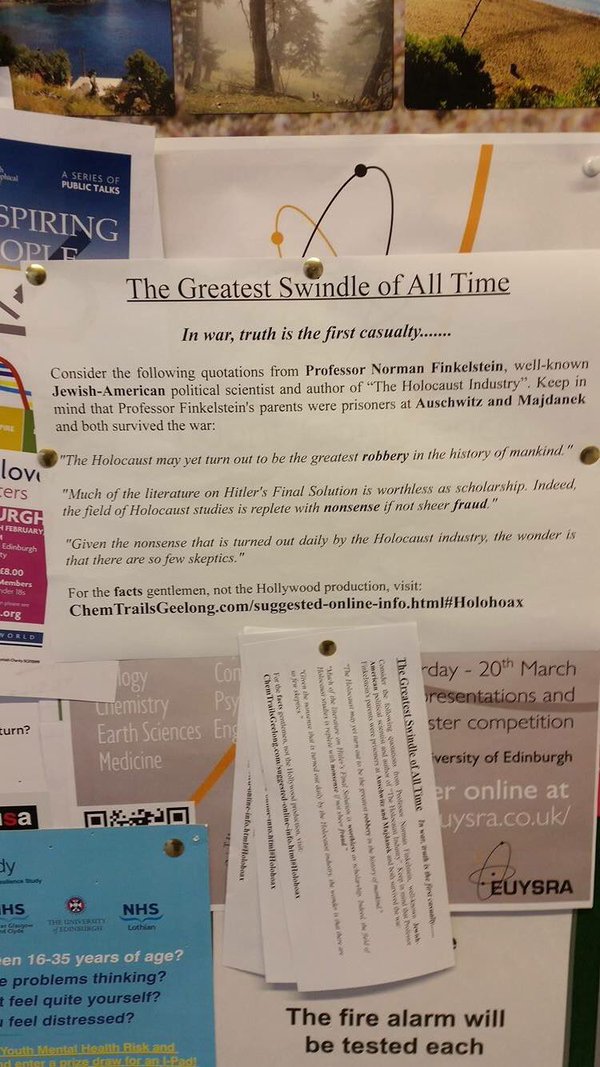
Letters encouraging Holocaust denial on Edinburgh campus


Jewish students across the country are under threat. At Oxford, two chairmen of the student Labour club quit citing anti-Semitism earlier this year. The two students argued that they noticed “some kind of problem with Jews” in the club, that the “word zio was part of the lexicon” and “rockets over Tel Aviv” was a common chant among certain factions. In a Labour Party inquiry released last week, Jan Royall, the author of the findings, made “eleven recommendations for immediate and sustained action”, such were the depths of her concerns. The students involved have been subjected to vile personal and in some cases anti-Semitic abuse in the aftermath of the events.
So anti-Semitism, in its latest guise, is reaching the point of pandemic.
***************
THE question that emerges is one of trust. Do we trust the National Union of Students to challenge anti-Semitism?
By now, we all know about Malia Bouattia, the 28-year-old President Elect of the NUS who made anti-Semitic comments while in her position as the leader of the organisation’s Black Liberation Campaign. I have enquired with the NUS as to why she has not been suspended pending investigation over her conduct, in the same way several Labour Party members have been recently. I have received no clear response.
To recap, Malia described Birmingham’s large Jewish community as a “Zionist outpost” and made declarations about the “Zionist-led media” and spoken of the power of “the zio and neo-con lobby”. She is still to apologise.
Over the last few weeks, I have scrutinised the NUS, speaking to fellow Jewish students around the country and gathering their experiences along with mine and those in Cambridge. Sadly, a damning picture has emerged of an organisation that is rotten to the core and in urgent need of a shock to its system.
The NUS is the organisation where Jewish students are the only minority group not to be represented by any liberation campaigns.
The NUS is the organisation that last year removed guaranteed Jewish representation from the ARAF [Anti-Racism and Anti-Fascism Committee]. When that decision was taken, the National Union of Jewish Students’ director Russell Langer described the ARAF as “the only area of NUS’ work where Jews have been traditionally welcomed.” Izzy Lenga, who sits on the National Executive Council, described it as a “shameless attempt to push Jewish students out.” Wes Streeting, the Labour MP and former NUS President, described the move as “ugly and unjustifiable.”
And so we carry on.
The NUS is the organisation whose conference cheered with howls of delight as a woman from Chester University spoke against the Commemoration of Holocaust Memorial Day.
https://www.youtube.com/watch?v=C_O9h0-glCg
The NUS is the organisation who, when stating the ‘liberation case’ for remaining affiliated to the body on their website last week, failed to mention the words Judaism, Jewish or anti-Semitism even once.
The NUS is the organisation which – in a cover-page feature on anti-Semitism in the New Statesman – has this month been described as characterising a ‘poisonous perspective’ of ‘conspiratorial anti-Semitic anti-Zionism’ by Peterhouse, Cambridge professors Brendan Simms and Charlie Laderman.
The NUS is the organisation whose women’s campaign representative on the National Executive Council for 2016/17 only this week shared a piece by the Electronic Intifada that supported the claims that anti-Semitism complaints by the Oxford Labour Club are a “scam”. When challenged the next day she delivered a fudged excuse in explanation. It is a stain on our Cambridge student community that this particular woman, Amelia Horgan, was our CUSU Women’s Officer last year.
*The original version of this article did not include the line ‘When challenged the next day she delivered a fudged excuse in explanation.’ This has been corrected.
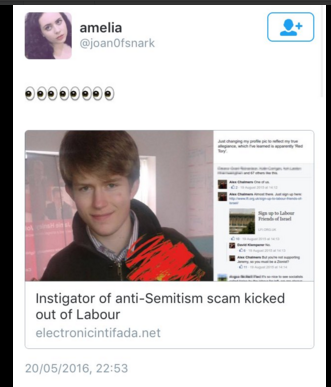
NUS NEC member for 2016/17 appears to endorse the Electronic Intafada
The NUS is the organisation whose conference in 2012 saw the Union of Jewish Students’ information stand desecrated by pro-Palestine protestors.
The NUS is the organisation that will welcome the politician Yasmin Qureshi to a Prevent conference in the coming weeks – she has previously made comparisons between Gaza and the Holocaust.
The NUS is the organisation that, in 2005, left the current shadow Minister for Mental Health Luciana Berger with no choice but to resign from her position. She was a National Executive Committee member but was spat at for being Jewish at an NUS conference and she was left appalled when her fellow council members refused to condemn a comment at SOAS that burning down a synagogue is a rational act.
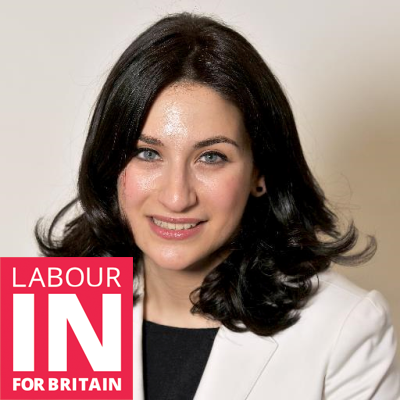
Labour MP Luciana Berger encountered anti-Semitism in the NUS
Upon resigning, she wrote of her most recent conference: “To my dismay, for all the talk about the values of equality, diversity and respect at last week’s NUS conference, in practice nothing could be further from the truth, in relation to anti-semitism.”
So these problems are not new. Jewish students within the NUS have noticed this malignant tumour spreading throughout the organisation.
From here, there are two questions that emerge.
1) Can you trust the NUS to combat anti-Semitism?
2) If the answer to this is no, can Cambridge achieve more in challenging anti-Semitism by remaining within the movement or do we make a bigger impact by stamping our feet and slamming the door on the way out?
One of the most pleasing aspects of the referendum in Cambridge has been the freedom Jewish students have been granted to define anti-Semitism for themselves. As I have demonstrated, this privilege is not extended elsewhere on campuses and certainly not within the NUS.
We are fortunate to be at Cambridge, a truly magnificent university. There are times that the responsibility can be a burden – the days we just want to get pissed and act like dicks on Jesus Green without cameras waving in our face spring to mind.
But there are also times that the responsibility should inspire us – the Cambridge student community should be proud that Jewish voices have been heard in this debate and disaffiliation could provide the national impetus that would compel the NUS to take anti-Semitism more seriously.
Cambridge students have already tried to change from within. At the recent NUS conference, Olly Hudson delivered an outstanding speech that called the organisation out on its anti-Semitism. Within hours, however, the room had elected a woman who only a fortnight earlier had received a signed letter of complaint from 57 Jewish societies across the country. On the day of the conference, nobody questioned her previous rhetoric. The sorry truth is that we are lone voices fighting a solitary battle.
The desperate reality is that not one major NUS figure has admitted that Malia’s rhetoric is anti-Semitic. Instead, her comrade and vice-President Shelly Asquith has described it as a ‘right-wing media attack’. This polemic has now received extensive coverage from The Economist, The New Statesman, The Guardian, The Independent and the BBC. You try telling that lot that they are a load of right-wing nuts.
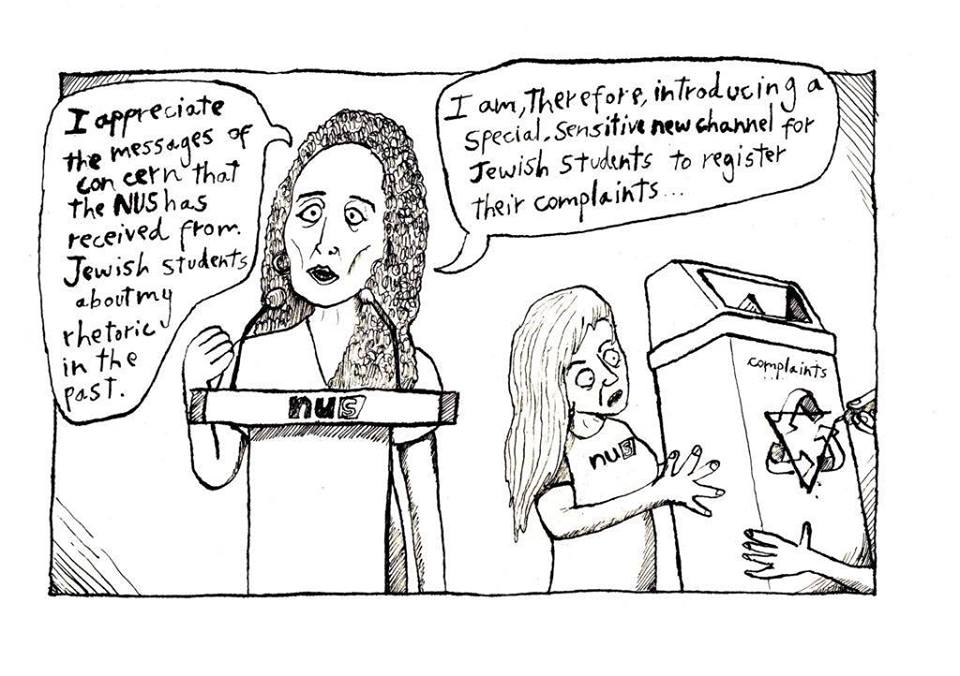
Credit: Ben Brown
On a BBC Radio Four programme last weekend, the vice-President Richard Brooks said that if Jewish students have concerns, they should get involved. Sorry Richard, but in 2016, no minority group should be told that they must stand as a delegate or get involved in order to avoid oppression and discrimination.
The NUS will also tell you they are conducting an inquiry into institutional racism within the organisation. What they are rather more sheepish about is the fact this was first called by Malia herself and was targeted at BME discrimination primarily and was due to be concluded in January. They are now co-opting anti-Semitism into this and claim it will be finished in the summer. The details are murky, to say the least.
Richard also claims he will introduce a motion at the next NUS conference to restore Jewish representation on the ARAF committee. This is all very well, but can anybody trust a council that removed the Jewish representation in the first place and is not prepared to call out their new President’s anti-Semitism? And can we place our faith in a conference that just voted Malia in with more than 50% of the vote to reverse this decision?
These are the questions you must wrestle with before placing your vote.
In the coming days, you have the chance to make a statement against anti-Semitism. And it’s all about trust. Do you really trust the NUS to reform and become a welcoming environment for Jewish students?
Latest

Selling Sunset’s Chrishell calls out her ex Jason Oppenheim after ‘out of touch’ video

Ex mum and dad are fighting!
19-year-old Manchester woman spent £2k on matcha in a year leaving her with acne and severe migraines

‘I know addiction is a strong term to use, but it was a truly unbelievable experience’

In defence of those of us still watching Made in Chelsea
Forgive a girl for wanting a weekly dose of Chuggs

Celebrity Traitors star Hannah Fry has a ‘mathematically rigorous’ plan to catch Traitors

She developed ‘the most statistically perfect approach’ for the show
University of Nottingham restructuring plans approved after staff strikes last week
The second phase of Future Nottingham 2 is going ahead
Cardiff University students outraged over a meme page’s ‘disgusting’ confession post
Students are urging each other to boycott Cardiff Uni Banter
Edinburgh Uni principal Sir Peter Mathieson announces he’s stepping down at end of his term

The principal and vice-chancellor of the University of Edinburgh will depart at the term’s completion, leaving in 2028


Celebrity Traitors 2026 week one theories: A secret Traitor in the mix and Julie to be recruited

Two episodes in and I’m already invested
Gypsy Rose Blanchard says last phone call with partner Ken Urker was about family dispute
‘He was deeply distressed by the situation’

London student who filmed viral video of Gillian Anderson scolding fans defends her
Gillian Anderson told off ‘distracting’ theatregoers

No! Celebrity Traitors editing moment has people convinced about who is getting banished

Dear Claudia Winkleman, please intervene

Are you an aspiring journalist or content creator? The Liverpool Tab wants you!

Come to our open meeting on Tuesday 6th October, 6:30pm upstairs in The Fly, Hardman Street!

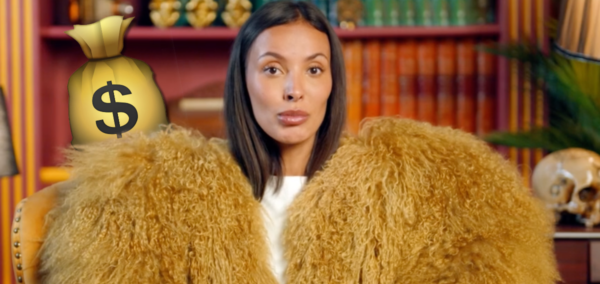
We’re just two episodes in, but already Maya Jama’s Celebrity Traitors wardrobe costs thousands
One coat cost more than my entire closet

Here’s which Leeds Uni society each Gilmore Girls character would join

What if Rory, Lorelai, and the rest of Stars Hollow’s residents swapped Connecticut for Leeds?
The Verity film removed one of the Crawford children from Colleen Hoover’s original book

‘That’s the best change we could have made’
Celebrity Traitors’ Celia Imrie gave a wise warning to Richard… which he evidently ignored
They spoke before he went on the show; maybe he should’ve written it down?
This year is slightly different, so here is the episode schedule for Celebrity Traitors this week
The timings for episodes three and four are very precise