

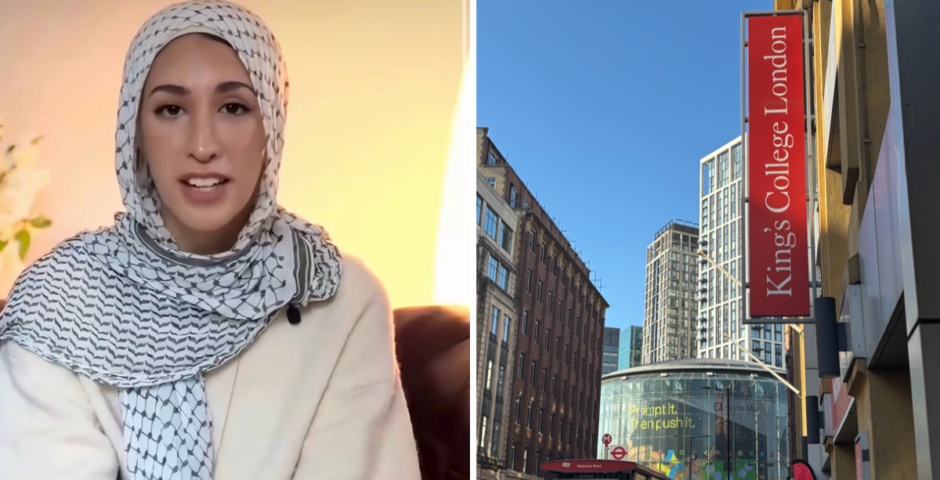
King’s College London reported a student to counter terrorism over pro-Palestine essay
The student was told to write two reflective essays over her protest activity
King’s College London reported a student to the government’s counter terrorism programme over an essay detailing her pro-Palestine activism.
Niamh Grant, a social sciences student at KCL, was told to write a “reflective essay” over her involvement in the 2024 student solidarity encampment movement, which led to her suspension in May 2025 over alleged misconduct. Niamh was a leader in negotiations with KCL during the encampment.
The university accused her of creating an obstruction which “led to the physical injury of staff” after entering a kitchen area of the uni, according to Novara Media, a claim Niamh denies.
The topic of her first essay included her “horror at the suffering of Palestinians.”
Novara Media reported that in her essay, she wrote: “fFrom the Palestinian people, one message resounds: To end the genocide. It is not enough to simply acknowledge Palestinian suffering, not enough to sympathise, and not enough to feel guilt. This belief must induce an imperative. I believe that to be a student is to care about the morality of my institution, and it is because I care about the responsibility given to me as King’s student that I care about my university’s investments in the Israeli arms trade.”
The university allegedly did not find her first essay satisfactory, with the head of student conduct telling Niamh: “I cannot consider this essay provides the necessary assurance that you will not cause any further health and safety concerns, that you appreciate how your actions impacted other members of the King’s community and that you understand the importance of the university’s policies and procedures as related to protest and behaviour.”
In her second essay to the university, she made reference to Imam Hussein, a historic figure in Islam, who “sacrificed his life in standing up against oppression.” Niamh compared the interruption of her studies to Hussein, and wrote that Hussain and his family had left an example of “how we should sacrifice for the cause of fighting injustice and establishing justice on Earth”. Novara Media reported that this reference was the bases of her referral to Prevent, the counter-terrorism programme.
Niamh told Novara Media that the Prevent referral was “incredibly Islamophobic” and a “method of intimidation”. She alleged that a Christian student who wrote that they took inspiration from the sacrifice of Jesus Christ would not have been flagged to the government’s counter-terror scheme.
Dr Layla Aitlhadj, director and senior caseworker at Prevent Watch, called the referral “horrifying.”



She said: “To be told that your ‘reflective piece’ doesn’t quite meet the level of reflection that is state sanctioned really just reinforces the fact that Prevent is hugely at odds with freedom of thought, expression, consciousness and belief, particularly within a university setting, where you should being encouraged to critically compare ideas.”
Aitlhadj called Prevent a “political tool rather than one of security” that’s consistently weaponised to “sanction and silence people with regards to pro-Palestine solidarity.”
“Schools, colleges and universities know they can use the threat of counter-terrorism where there isn’t anything unlawful happening, because they need people to silence themselves.”
Niamh is still under suspension, and has also been reported to KCL’s misconduct committee over allegations that she failed to adequately comply with the essay penalty. She has also been accused of “acting in an intimidating and hostile manner” by criticising university staff in her essay over links to the 2003 invasion of Iraq.
A spokesperson for King’s College London said: “We have never and would never bring misconduct proceedings forward on the basis of religious or political expression or for protesting lawfully and safely. We want everyone at King’s to feel safe, and will always uphold our students’ rights to lawful freedom of expression including the right to lawful protest. Like all universities, King’s is required by law to have Prevent policies and procedures in place to safeguard students who may be at risk of harm. These are entirely separate to misconduct processes, applied after careful assessment of what is best for the individual student and their circumstances, and always balanced with our commitment to lawful freedom of expression. A student’s identity or religious beliefs would never be grounds for a referral to Prevent.”
“In this instance, the student’s behaviour and contents of their reflective exercise suggested that there was a risk of harm that met the statutory threshold for a referral to the Prevent programme. This was subject to extensive governance, including by a Freedom of Expression advisory group who independently assessed the reflective essay with no identifying details about the student or her specific beliefs, and determined that a referral to Prevent was an appropriate safeguarding action.”
The Israeli Embassy has been contacted for comment.
Featured image via @asapalestine on Instagram

Latest
The 10 UK universities with the most international students, as visa numbers decline

64 per cent of people at LSE are international students
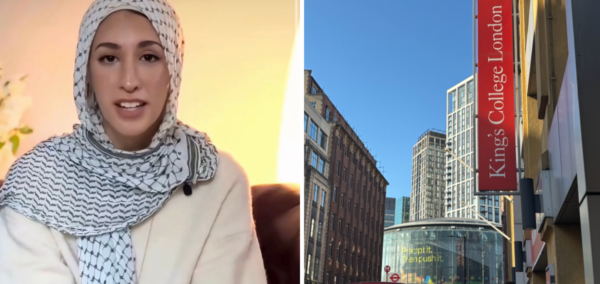
King’s College London reported a student to counter terrorism over pro-Palestine essay

The student was told to write two reflective essays over her protest activity

Awful at shooting in GTA VI? Changing the settings will make you a glorified assassin

This is for all the aimless players out there

Here’s how each Lancaster college would fare in The Hunger Games
Sorry in advance for killing most of them off

The perfect guide to celebrating Christmas with your Lancs uni flatmates
Everything you need to know about making the most of Flatmas
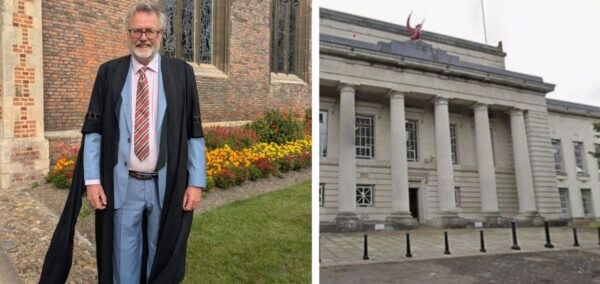
Cardiff University face REF challenge from ex-professor who was denied emeritus status
James Whitely had worked at the university for 35 years but did not receive an emeritus title

The full GTA 6 Chapter 5 mission list and how long it will take to complete

Don’t worry, it’s totally spoiler free
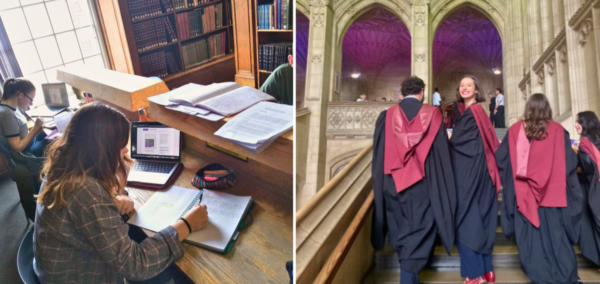
Report exposes the university subjects students are getting more firsts in than a decade ago
Coursework-heavy degrees have seen a bigger rise in grades
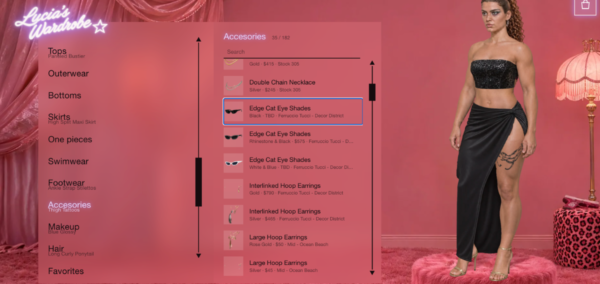
There’s an addictive website where you can plan outfits for Jason and Lucia in GTA VI
It’s giving Alicia Silverstone’s closet app in Clueless

Making the most of winter: The Sheffield Tab’s guide to curing the winter scaries
It’s winter now: It gets dark early, it’s absolutely freezing and you may feel less okay about life. And that’s okay

37 helpful GTA 6 tips I wish I knew from the start – and you will too
I had no idea some of them existed

The 15 hidden GTA 6 controls and fun hacks you probably had no idea were even a thing

Some of these are life changing

How much I’m A Celeb costs to make in total, and why it’s more profitable then ever
Less people watch, but ITV is making more money

Ant and Dec’s infuriating reaction to Mariella Frostrup’s ‘micro-aggressions’ is so out of touch
It ‘became ‘a much bigger deal than it should have done’
From bed to lecture: Here’s a guide on how to survive a 9am at King’s
Take this as a sign that getting through that 9am isn’t as treacherous as it seems

One season of Love Is Blind resulted in two lawsuits that nobody is talking about
They’ve got nothing to do with the lawsuit involving multiple cast and crew members

Three super-special Cambridge date ideas for every season
Whether you prefer a slow relaxed evening or an exciting new experience, this guide provides a range of romantic date ideas for every couple

Specific decisions you make in GTA VI have consequences for the story… and the ending
Need to get Jason and Lucia that happy ending