

The growing Durham student journalism phenomenon
A deep dive into the student journalist community

The student journalism scene within Durham has grown rapidly across the last year, with new and pre-established newspapers and tabloids gaining more attraction. Publications are accessed in-person and online, with social media enhancing their presence and extending their reach to students. This has made student journalism accessible, and has allowed a freedom in creating new publications. Consequently, more niche magazines are popping up online, and more students are making debut articles. There are many possible reasons for this occurrence, and this deep dive hopes to explore what this suggests.
The Palatinate and The Durham Tab
The Palatinate is Durham’s “official student newspaper”, founded in 1948. The newspaper gains a lot of attraction from its established presence, with writers and editors covering a plethora of topics. They cover politics, news and sports, alongside arts and lifestyle within Indigo magazine. This broad range means that the Palatinate offers something for all tastes. Further, the online and printed distributions of the paper enhance their presence even more. Students frequently hand out copies of the paper outside university buildings, allowing writers a physical copy of their work. The Palatinate hence attracts a lot of students, with willing writers quickly taking up prompts. Each sub-section of the paper sticks to a formal, traditional newspaper layout, giving it a unique USP. However, other publications have since taken on different approaches and mediums to publishing articles.
The Durham Tab is a less formal student tabloid, which has increasingly gained more attraction across the last year. It has an online media presence and publishes all its articles online. By engaging with serious news and making social media posts around student life, it has sparked growing interest within students to contribute. This reveals that social media and the online space has become a major tool for student engagement. It has become an accessible medium of expression and helps and the growth of student journalism. The Tab creates prompts for students, or they can write on their own ideas. The only requirement is that articles must be connected to Durham or its student experience. This mixture of formality and informality creates a large scope for student interests, allowing writers creative and expressive freedom in what is written.
THREAD
However, other tabloids are even more specific with their niches, filling in the gaps with more subject-specific depth.
THREAD achieves this with its artistic focus. It is the sister magazine to DUCFS and aims to spotlight the work of creators. To make pieces as accessible to readers, they have online publications, termly printed magazines and a podcast. These different mediums enable the magazine’s wide, creative showcase. It focuses on the arts and creativity, using the different mediums to allow apt coverage of different art forms.
Maddie Hawtin, head of THREAD, has said that the publication has “creativity at the heart of it.” When asked about the recent surge in contributors and editorial applications, Maddie said she was “blown away” and that “[i]t shows how much people want to engage with writing and creative expression.” With the expansion of THREAD, the student journalist scene seems to have become more creative. There is less pressure to be formal within writing for publications, and it has become personalised. This reflects a greater desire for students to use writing as a creative outlet and as an art for themselves. Journalism has hence become more personalised and valued by both students and readers alike.
Unstitched
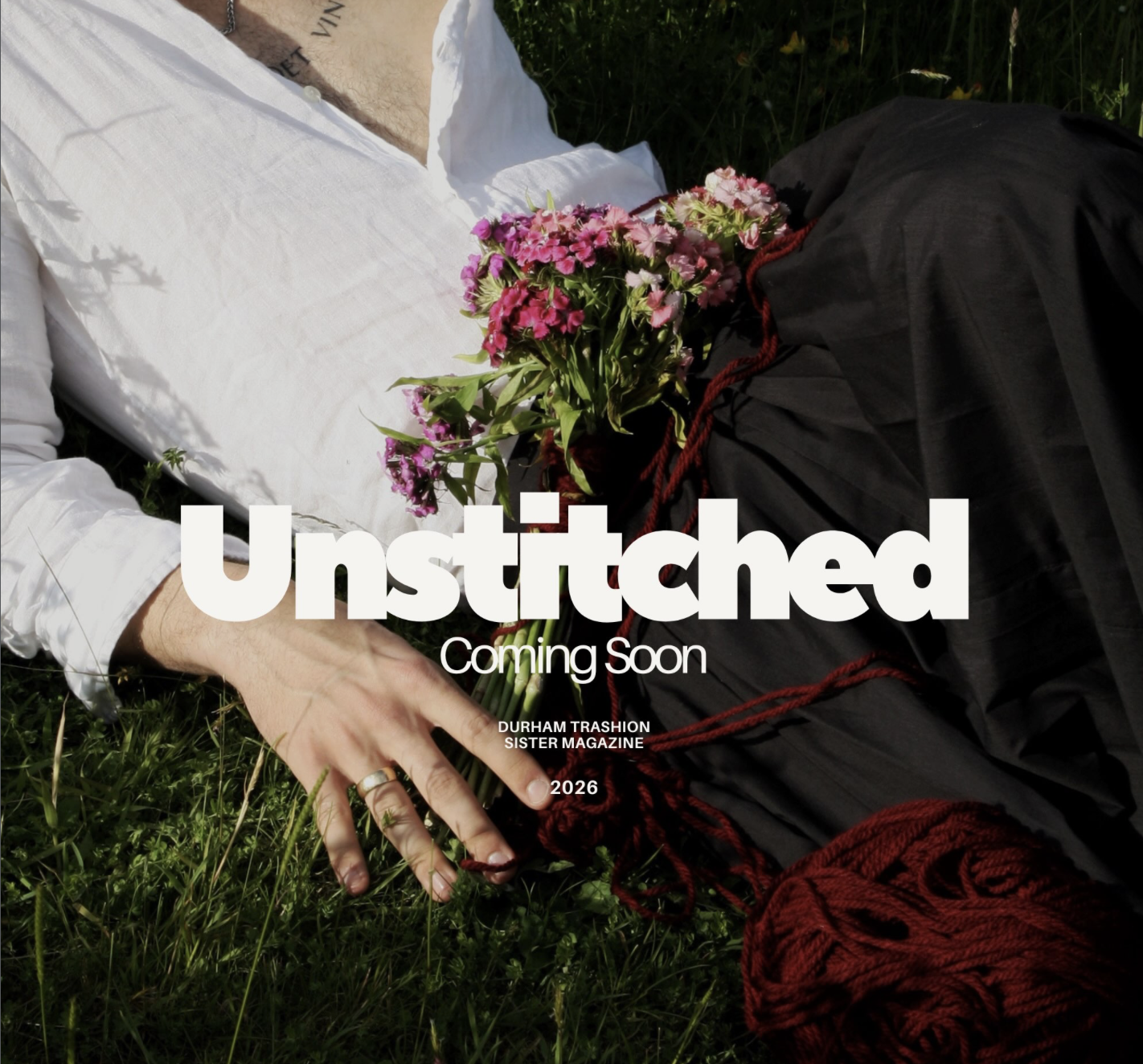
Photo credits: @weareunstitched Instagram.
Unstitched is an upcoming magazine started by Charlotte Morgan. The fashion-focused publication is sister to Trashion, Durham University’s sustainable fashion show. Charlotte has said that the magazine “will explore the intersections of politics, fashion and culture through student journalism.” She encourages writers to “‘unstitch’ the present, call out power, and reflect on the issues that matter most to them.” Whilst this maintains a focus on creative sectors, the publication allows for intersectionality, showing that the student journalist scene is becoming a space of democracy. Students are using the written word more and more for expression, personally and politically, allowing the space to become a form of political participation.
Castle and Cloister (C&C)
Castle and Cloister is a new publication from July 2026, which gained a lot of online attention over the summer. It aims to fill accessibility gaps within the fashion, travel and luxury sector. Daniel Alestrand, the founder and current Editor Emeritus, has said that other publications had an editorial scope that was “too limiting or [had] a lack of transparency.” His intentions in this role are to “solve the issue where many opportunities lack.” C&C fulfils this by allowing writers to write on activities that often require a wealthy economic background to participate. He has noted that the “luxury sector is huge at Durham University – everyone is so well connected. […] Journalism allows anyone at Durham to experience the luxury sector.” Student journalism, in this context, has become a tool to break down student socio-economic disadvantages.


The new Editor-in-Chief, Tara Phull, has noted her own passion for PR surrounding luxury and fashion, which she can express through her work for C&C. She also said “Daniel has created an amazing foundation for C&C and I hope to grow it further with events related to the publication, chances for our team to attend shows as journalists and really highlighting the luxury lifestyle and fashion we all know and love at Durham.” Student journalism, then, has not just become a space of self-expression, but also a tool of accessibility and as a gateway to different activities and experiences as part of the Durham student experience. It has allowed for more students to have their voices heard and given new opportunities that they have otherwise lacked towards their personal interests or career.
Brazen Magazine

Brazen Magazine Instagram page (@brazen.magazine).
Founded in April 2026, Brazen Magazine is a creative online tabloid that publishes critical pieces on literature and creative writing. Hailey Tang and Charlotte Wright founded the magazine in April 2026. They aim to create “a space for all things creative and literary” for students outside of academic pressures. The magazine spotlights literature by publishing these works. By the magazine publishing in a period where STEM is given greater importance, it allows students the accessibility to engage with the arts and show off creations to a public audience. The growth of this online magazine also suggests journalism as a creative outlet, and the individuality and passion for the subject has certainly meant that student journalism has become a more diverse and appraising space.
Duzz Magazine
Duzz Magazine is a fashion, culture and lifestyle magazine that offer feature stories, interviews and event coverage on Durham’s unique style. Betty Mitchell and Mariella Locke founded the magazine, aiming “to include everyone in what we are passionate about.” This proves that the journalist space expresses individual interests and celebrates the community gained from writing. The magazine is online and in print, with social media posts helping boost its reach. Subsequently, this makes their content accessible to students, but also provides a very wholesome space that welcomes new writers. The magazine is also growing, both in writers and their editorial team. The editors include Amelia Jones (EIC) and Alice Kirby, alongside Hyungbee Jung, Alexandra Miller, Zara Khan and Madeline Kimario being on the creative and logistics teams. More exciting opportunities will be available to students wanting to express their passions through writing.
She Wore Velvet
She Wore Velvet is a “new and insightful feminist magazine” ran by Nina Harris Smith. They publish their articles on Substack, with prompts being on a rolling basis.
They are currently working on interviews with guest speakers alongside their articles, using multiple mediums for their journalistic intentions. Nina has outlined that the aim of the magazine is to “give students a voice and provide a social media platform for them to discuss their experiences, thoughts and share valuable insight.” Further, she noted “Feminism shouldn’t be just another buzzword […] it needs to be explained and understood so we can achieve equality.” The vision for the publication is that it becomes a place of community, creating a safe space to discuss topics around gender and the feminist ideology. Students further use journalism as a political tool for expression and education.
The journalist space in Durham is growing in its diversity. Publications created are used for self-expression, creativity, or even creating more opportunities for students that want to get involved. Whilst each have different means and ends, the growth shows a celebration of the act of writing from this multifaceted sector. This mixture of serious news reportage to opinion pieces means that there is something for every student to enjoy creating and reading. Subsequently, the space is becoming more progressive and appealing to students, regardless of who they are.
For more of the latest news, guides, gossip, and memes, follow The Durham Tab on Instagram, TikTok, and Facebook.
Latest

Our Celebrity Traitors predictions include Maya Jama turning on her fellow Traitors

Here’s what we think will happen

I’ve just realised that three cast members from Celebrity Traitors were in Game of Thrones

Having flashbacks to Bella Ramsey being crushed by a giant


23 to 70: The ages of the Celebrity Traitors 2026 cast, from youngest to oldest

There’s a huge age range this year

James Blunt was a British Army captain before becoming a singer and joining Celebrity Traitors
He mentioned it on the show

Monster director finally admits why they forced Aileen Wuornos in a show about Lizzie Borden
Despite the name, Lizzie Borden is not the focus of the story

Shows and films you can watch about Aileen Wuornos, where she isn’t thrown into another story

Others tell her entire case, unlike Monster on Netflix
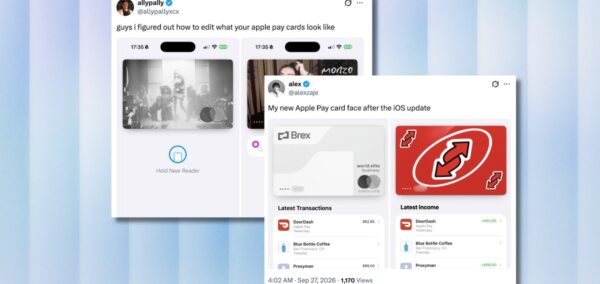
This viral tool lets you customise your Apple Pay cards, and here’s how to do it
You can personalise the entire design

James Acaster could be the Celebrity Traitors’ recruit, as filming reportedly paused for him
It’s not much of a cliffhanger

The ridiculous fortunes of The Celebrity Traitors: Their net worths, from £500K to £50 million
One of them could legit buy the castle three times over

The Celebrity Traitors rules explained, as Richard E Grant immediately let slip he’s a Traitor
There’s actually a slightly confusing loophole

Celebrity Traitors’ Richard E Grant lost his wife to cancer after epic 38-year love story
She passed away in 2021

AHS 13’s Leslie Grossman explains jarring way all the seasons connect, and I’m even more confused
Sarah Paulson alone is playing five characters from different seasons

Gypsy Rose describes being ‘in disbelief’ as details of partner Ken Urker’s death are shared
The investigation is ongoing

Celebrity Traitors producer shares if Richard E Grant really slipped up with Traitor reveal
I was on the edge of my seat

Mum of Christa Pike’s victim wants killer to face same fate as her daughter in raw message
‘If I could have gotten in that room’

The latest we know about Christa Pike’s condition in hospital, one day after failed lethal injection
She has been left with ‘blistering and burning’ on her arm
Gypsy Rose Blanchard releases statement as partner Ken Urker is found dead aged 34
They share a child together

There are co-star dating rumours about A Different World’s fittest star, Cornell Young IV
There’s gonna be about a million disappointed people