


Seven things I wish someone had told me before Uni
Some words of wisdom from a third year student who had to learn this the hard way
 Katy Vos
|
Katy Vos
|
Hello. Before we start, I think I should introduce myself (which is something you’ll be doing so many times over the next couple weeks you’ll probably forget your own name). I’m Katy, a third-year history student from Lancashire. I’m a proud member of St Chad’s (quite literally the GOAT college), and I’m also a first-generation university student. This means I didn’t necessarily have someone to tell me all the things you should know about Durham. But never fear, I’m here to make sure you don’t make the same awkward, and sometimes painful, mistakes I did. So, get your notebooks out, sit back and listen up. Here’s all my big-sister advice, words of wisdom and reassurance from someone who’s somehow made it to third year.
Your Freshers’ Week friends don’t have to be your friends for life (and that’s okay!)
Freshers’ Week: The week you’ve all been waiting for. It’ll be amazing, exciting and so much fun. But let’s be honest, it can also be one of the weirdest weeks of your life. You’re suddenly surrounded by hundreds of new people, introducing yourself over and over again, and somehow expected to find your future best friends within the first seven days. And don’t get me wrong, you absolutely can meet friends for life during Freshers’ Week. I certainly did.
But there’s something quite special about spending an entire week with people you might never speak to again. You can become convinced you’ve found your new best friends, only to realise a few weeks later you’ve completely lost touch. People might say you have to find your friendship group immediately, and if you don’t, you’ve somehow missed your chance. But that couldn’t be further from the truth.
Friendships can come from the most unexpected places, and they don’t all happen at the same time. So, if you’re worrying you haven’t found your people yet, please don’t panic. Freshers’ Week is just the beginning, not a deadline. Give yourself time, enjoy the experience and remember your friendship story doesn’t have to look like anyone else’s.
Don’t rush into housing
This is similar to my first point, but please don’t fall into the panic about finding your second year house immediately. I came to Durham the year after the infamous house-hunting queues, so naturally the second years were very keen to tell us all their horror stories. And when everyone around you starts talking about houses, group chats, and who they’re going to live with next year, it can feel like you need to have everything sorted immediately. You don’t.
There are two big reasons why I would recommend taking your time. Firstly, you don’t want to rush into signing a house with people. I’ve heard so many stories of people who signed for a house within the first couple of weeks, only to realise that they didn’t get along with their housemates. Second, panicking can be expensive. People can end up paying way more for accommodation because they feel like they have to secure something immediately. Sometimes, if you’d just waited a little longer, you could have found somewhere that suited you better and saved yourself a lot of money.
There’s also always the option of living in college, and, as someone who’s done it, I genuinely think there’s something really special about it. You get to be right in the middle of college life, and after university you’ll probably never get this opportunity again. So if everyone around you is panicking about houses and you’re sitting there thinking, “Wait… should I be panicking too?” — no. Take a breath. You have time.
You will get Freshers’ Flu, but that doesn’t mean you can’t be prepared for it

Freshers’ Flu is nearly as famous as (and arguably more feared than) Freshers’ Week itself. Student lifestyle will try to destroy you in many different ways, and one of those will be your immune system. I’ve never been as ill as I was after my first term. Between going out, losing sleep, and suddenly being surrounded by hundreds of new people, it’s basically a recipe for getting sick. Many people will insist they don’t have it, even when they very obviously do, and they’ll probably convince yourself that you can still go out.
But there are things you can do to make it a little easier. Firstly, look after yourself. Eat properly, drink plenty of fluids, and get some rest. Vitamin C is never a bad addition to a balanced diet, but don’t expect it to magically save you from Freshers’ Flu. And, most importantly, it’s okay to admit you’re not feeling well. You don’t have to go out every night. You don’t have to say yes to every plan. And you definitely don’t need to feel guilty for staying in. Sometimes the best night you can have is staying in with your friends, ordering a pizza, and putting on a film.
I know it can feel like you’re missing out when everyone else is going out, especially during Freshers’ Week and the first few weeks of term. But looking after yourself isn’t missing out. There will be another chance to make memories. Your immune system, however, would quite like you to go to bed.
As painful as it is, go to your lectures and do your reading
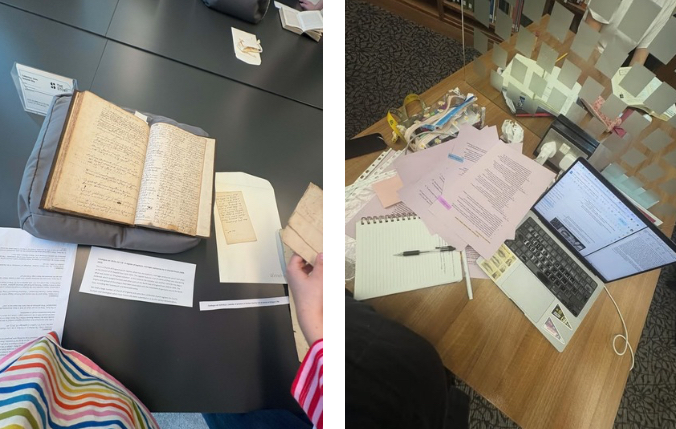



As painful as that 9am on a Thursday after a questionable Wednesday night social might be, please go to your lectures. Speaking as someone who’s missed one too many of them: They are actually important. There’s nothing worse than not only trying to settle into a completely new place, but also having to teach yourself 300 years of history about rice production because you avoided that 9am like the plague.
On a similar note, please do your reading. Your seminars are one of the most important parts of your degree, especially if you’re a humanities girly. There’s nothing more painful than when your seminar leader asks you a question about the reading you definitely, absolutely, 100 per cent did. And yes, sometimes the reading will be boring. But even getting the basic argument is better than turning up with no idea what anyone’s talking about. You don’t have to have read every single related article. Just turn up, do what you can, and give yourself something to work with. Your Wednesday night self may hate you, but your Thursday morning self will thank you.
Don’t fall into the “I only need to pass” trap
You’ll hear it so many times during your first year: “You only need 40 per cent to pass”. And technically, yes, that’s true. But please don’t let that become your entire academic strategy. If you’re thinking about applying for internships, research placements, or other opportunities over the next year or two, your first year grades can matter. Particularly if you don’t already have connections or a clear route into these opportunities, having a decent set of grades can help when you’re applying.
University is a huge life change. One or two bad grades aren’t going to define you, and they certainly don’t determine how capable you are. At the same time, that doesn’t mean you should deliberately settle for 40 per cent just because that’s technically all you need to pass. Because once you get into later years, those grades count towards your final degree. First year is your chance to shape your work into something better before the marks really matter. Trust me: You don’t want to get to second year and realise there were five things you could’ve been doing differently.
I know this can be difficult because first year is also so much fun. And you absolutely should enjoy it. Please don’t spend your entire first year in the library because you’re terrified of not getting a 2:1. But remember that, among all the nights out, formals, socials, and questionable decisions, you’re also at university to get that very overpriced piece of paper at the end of it. So don’t fall into the trap of thinking because you only need 40 per cent, you should only ever aim for 40 per cent. Think of first year as your practice run.
Get out of college

This was probably one of the most painful lessons I had to learn. I love Chad’s and all the weird and wonderful things that come with college life. The events, the committees, the formals, the random traditions that make absolutely no sense to anyone outside Durham — all of it’s such a huge part of what makes university special.
However, in first year, I made the mistake of making college my entire university identity. Because almost everything I’d built at university was connected to college, it felt like there was no real escape from it once things went south. What eventually became a bit of a lifeline for me was making friends and getting involved in committees and societies outside of college. And I think that’s something I really wish I’d understood in first year.
You can absolutely love your college. You should get involved. Go to the events, make friends, and embrace all the weird and wonderful things that make college life so unique. But don’t let it become your entire world. Join a university-wide society. Make friends with people from other colleges. Get involved in something you’re interested in, even if no one you know is doing it. Having a life outside college doesn’t make you any less involved in college. If anything, it gives you a bit of perspective.
Do what makes you happy

This is the best bit of advice I could leave you with. It is clichéd, but it’s also true. Your university experience should be defined by the things you love, not by what you think other people will find cool. The amazing thing about Durham is that, whatever you’re into, you’ll find someone else who loves the same thing. And it’ll never go how you imagine. I switched courses, meaning my three-year degree somehow became a four-year degree, partly because apparently I can never quite let go of SNK (Sunday Night Klute, arguably Durham’s best club night).
You don’t have to have everything figured out. You just have to be true to yourself, try to enjoy the things that make you happy, and give yourself grace when things don’t go to plan. There will be nights you never forget and days where you sit in your room wondering what on earth you’re doing. So if you’re worried that you’re not going to do it right, please remember this: There is no right or wrong way to do university. And as long as you’re being yourself, trying your best and doing the things that make you happy, you’re doing just fine.
For more of the latest news, guides, gossip, and memes, follow The Durham Tab on Instagram, TikTok, and Facebook.
Latest

Seven things I wish someone had told me before Uni
Some words of wisdom from a third year student who had to learn this the hard way

Netflix got several crucial details about Andrew Borden wrong in The Lizzie Borden Story

If he were alive, he’d be fuming

Author responds to backlash after using Cornell case to ‘promote’ her steamy dark fantasy book

‘Seven men accused. One university sued. An entire culture under scrutiny’

The Love Island golden trio: How Molly- Mae, Maura Higgins and Olivia Attwood will never be knocked off
An investigation into their unprecedented success

Newly single OG Love Island lad is apparently set for All Stars return after secret ITV chat
He coupled up with seven different girlies on his first season

Photos show what Lizzie Borden’s maid Bridget looked like in real life after Netflix’s Monster

She settled in Montana after leaving the Bordens

Passengers speak out after pilot stabbed co-pilot mid-flight, dropping plane 17,000ft in minutes
Thankfully, other pilots were on the flight and were able to land the plane safely

From John Wayne Gacy to Aileen Wuornos, all the real killers linked in Netflix’s Monster

It has featured way more infamous killers

People fuming as Zoe Sugg and Alfie Deyes send brand promo emails during internet break
‘I feel like a cash grab’

Monster’s showrunner explains the frustrating reason he invented half of The Lizzie Borden Story
I didn’t realise historical facts are optional



How Cornell kept a 2024 sexual assault case out of the public eye for nearly two years
The full allegations have only just become public


University of Bath launches investigation after ‘terrified’ students raise concerns about Rugby Club

Rugby Club members allegedly aimed to spike female students as an ‘initiation’

Perez Hilton has been reunited with his kids, his family confirm in detailed 500-word update
There are aspects of his recovery that are still ‘hard’

Sarah Paulson calls out ‘weird’ criticism of her portrayal of Aileen Wuornos in The Lizzie Borden Story
She’s defended how she told the story

Great British Bake Off’s first eliminated baker Danni has spoken out since leaving the tent
They’re pretty happy with how it all went

Rita Ora sued by her former manager in £3million legal battle over missing tour and TV cash
‘It’s sad it has had to come to this’

‘No remorse’: Victim’s mother speaks out as Christa Pike set to be executed after 30 years
She is travelling to Tennessee to witness her execution

Reality TV star found guilty of murdering wife after his AI songs about affair played in court
The woman he had an affair with testified against him in court