

From College Green to Westminster: growing pressure over Rosebank oilfield
Bristol Rosebank protestors’ demands gain urgency
The future of the controversial Rosebank oilfield has come under renewed political scrutiny following a House of Commons debate in which MPs rejected a Conservative motion calling for the North Sea development to proceed.
On Wednesday 18 November, MPs voted by 270 to 90 against the motion, which argued that developing Rosebank would support energy security, economic growth and jobs. Parliament instead approved a government amendment emphasising that any decision on the oilfield must follow a legally robust regulatory process.
The debate followed reports that 75 Labour MPs had signed a letter opposing the project, highlighting divisions within the governing party over the future of North Sea oil and gas extraction.
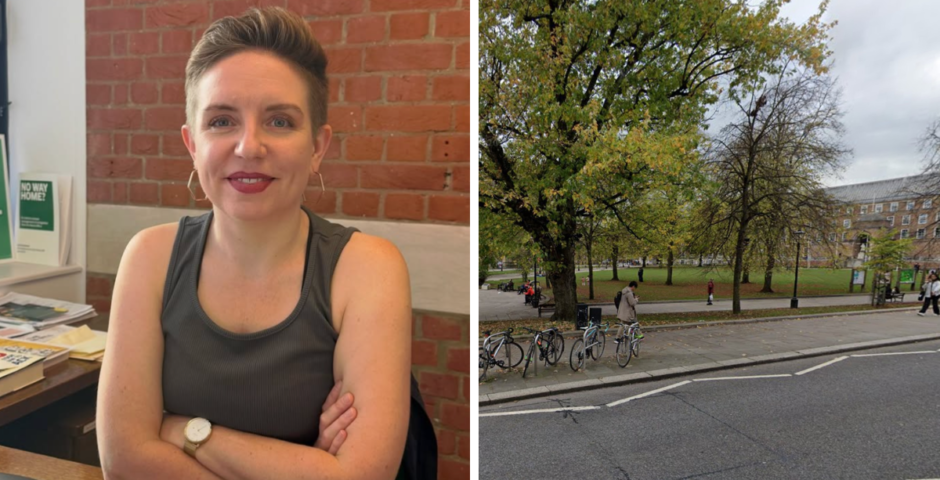
In Bristol, campaigners have been among those calling for the government to reject Rosebank, gathering on College Green on Friday 13 November alongside Bristol Central MP Carla Denyer.

Via Instagram
The demonstration brought together protesters opposing the controversial development amid concerns about its potential impact on the environment and the UK’s climate targets.
Two days earlier, Denyer had opened a Westminster Hall debate on Rosebank, urging ministers to reject the project. More than a dozen Labour MPs supported her in raising objections, with opponents arguing that the development was incompatible with the UK’s climate commitments.
Denyer warned fellow MPs that ‘the decision whether to approve the climate-wrecking Rosebank oilfield is a defining moment for this government and this parliament’.
The protest also marked eight years since Denyer, then serving as a Bristol councillor, proposed a climate emergency declaration. Bristol subsequently committed to achieving carbon neutrality by 2030, establishing an ambitious environmental target for the city.
Speaking to demonstrators on College Green following a musical performance by the Climate Choir, Denyer emphasised the risks associated with continued fossil fuel extraction and the consequences for future generations.



“Every fraction of a degree of global heating makes our future less safe and every drop of oil pumped from Rosebank contributes to that less safe future,” Denyer said.
“So today we all call on the government to make the right choice and to reject Rosebank.”
Denyer also linked the debate surrounding fossil fuel dependence to the ongoing cost of living crisis, arguing that moving away from oil and gas would be essential to protecting households from volatile energy prices.
“The prime minister has rightly promised action on the cost of living.”
“To do that, he needs to break the link between fossil fuel prices and electricity prices by getting off oil and gas, not deepen our reliance on fossil fuels on what is a fossil-fuelled cost of living crisis.”
The project’s future remains uncertain. On the same day as the Commons debate, Rosebank co-owner Ithaca Energy said it expected the government to approve the development before the end of 2026.
A spokesperson for the Department for Energy Security and Net Zero (DESNZ) said: “Any decision on Rosebank will be made through the quasi-judicial process, taking into account all relevant evidence, including environmental assessments and public representations received as part of the regulatory process.”
The department confirmed that the Energy Secretary will make a decision on whether to agree to the grant of consent in due course, adding that it was unable to comment further on individual projects.
With the government yet to announce its decision, the dispute over Rosebank continues to place questions of climate commitments, energy security and the future of North Sea drilling at the centre of political debate.
Latest

Bake Off’s final three share emotional letters ahead of the final and people are very confused
Don’t worry, no one has been eliminated

Unlocking hairstyles, and four other handy things you can use the WAiNK app in GTA 6 for

This feature will get more makeup for Lucia

Celebrities call out Mariella Frostrup over her ‘aggressive’ comment about AJ Odudu on I’m A Celeb
Her mum has also spoken out


Google review rankings of clubs in Edinburgh: Where is the best rated night out?
What the public really think about your favourite Edinburgh club x


Five foolproof ways to lower your Criminal Profile in Grand Theft Auto VI
Start driving over gravestones now!

GTA VI’s hidden buttons and mechanics are game changers, but the tutorial never covered them

Turns out I’ve been playing the game wrong


Don’t let deadlines ruin your vibe: Here’s how to get into the festive spirit in Liverpool
Who said you can’t be festive and academically stressed out?

Bath University students book lecture hall to plan their ‘crisis’ second-year house hunt
Finding student housing is ‘extremely competitive’ and ‘difficult’

11 things you must do before finishing Chapter 2 in GTA 6, because you can’t go back

Most of them revolve around the Starlet Motel

Euphoria star to Rookie actress: The rogue hidden celebs we all missed in GTA VI
Oscar winner Jeremy Irons, what are you doing here?
Who the secret I’m A Celeb 2026 smokers and vapers are, and the rules about it in camp

We never see it on camera

Seven ways to embrace the festive season in York
Missing home comforts? From festive markets to flat Christmas dinners, here’s how to make Christmas at uni feel a little more magical
GTA 6 includes a personal tribute to developers’ late family members, and it’s surprisingly moving
‘It means everything to me’

Which Durham degree would survive the longest on Bake Off?
Sorry humanities students, you lost out on this one…

There’s already Glee reboot drama, and it’s all about ‘major diva’ Lea Michele’s ‘awful’ antics
Thankfully, Lea Michele is unable to read the mean things her co-stars said about her
Cardiff University announce plans for new student accommodation
The new accomm will be situated beside the existing Talybont accommodation